Download Mendeley
Extended motif recognition tunes WW domain affinity in MAGI-IQSEC complexes.
Wang, J., Li, Y., Wu, Y., Lin, L., Zhu, J.(2026) FEBS J
- PubMed: 41870210 Search on PubMed
- DOI: https://doi.org/10.1111/febs.70509
- Primary Citation Related Structures:
9W5C - PubMed Abstract:
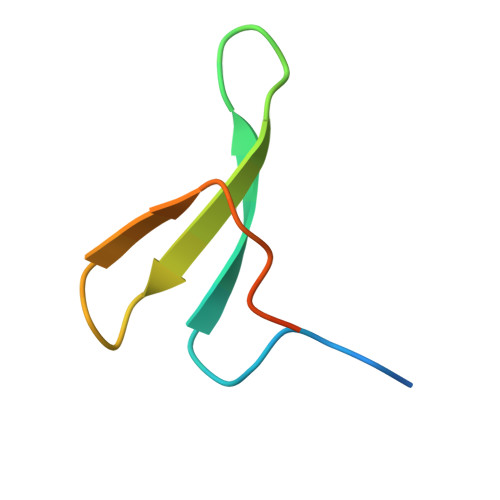
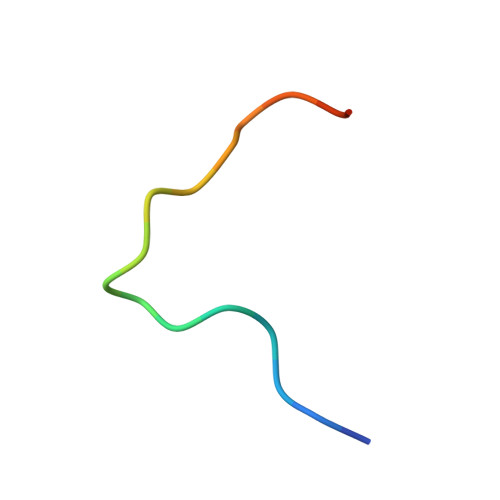
Many proteins containing WW domains interact with proline-rich PPxY motifs, raising questions regarding how they achieve specificity in cellular contexts. Here, we characterize the WW domain-mediated interactions between the MAGI and IQSEC protein families, which play critical roles in neurodevelopment and synaptic signaling. The high-resolution crystal structure of the MAGI3-IQSEC3 complex reveals that an extended sequence C terminus to the canonical PPxY motif in IQSEC3 engages a previously uncharacterized binding site on the WW1 domain of MAGI3. This extension interface enhances binding affinity by dozens-fold, and mutagenesis of key residues within this site abrogates complex formation, demonstrating its functional necessity. This bipartite recognition mode is evolutionarily conserved across MAGI and IQSEC family members. Our work elucidates the structural basis governing MAGI-IQSEC assembly and establishes a generalizable model whereby motif extensions enable high-affinity, specific target selection by WW domains, with broad implications for modular domain-mediated signaling networks.
- Bio-X Institutes, MOE Key Laboratory for the Genetics of Developmental and Neuropsychiatric Disorders, Shanghai Jiao Tong University, China.
Organizational Affiliation: