Download Mendeley
Engineering a novel light-chain single-domain antibody to enable IgG-format bispecific antibody design.
Wang, M., Xu, Q., Kong, Y., Zhong, Y., Yin, F., Liu, L., Yang, Z., Ying, T., Wu, Y.(2025) Antib Ther 8: 301-316
- PubMed: 41220811
- DOI: https://doi.org/10.1093/abt/tbaf020
- Primary Citation of Related Structures:
9VUZ - PubMed Abstract:
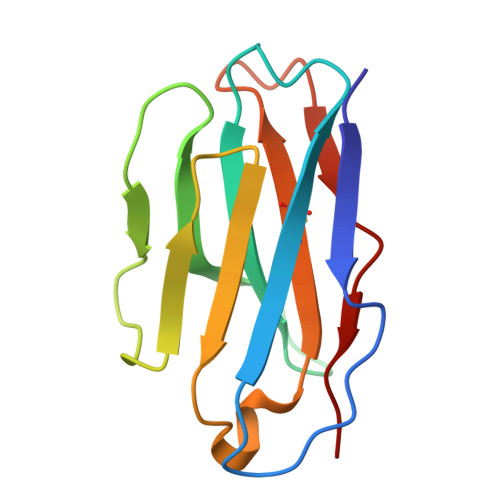
As one of the most promising classes of next-generation antibody therapeutics, bispecific antibodies (bsAbs) have gained increasing attention owing to their unique dual-targeting mechanisms. However, current bsAb formats often face challenges such as low expression levels, poor homogeneity, and unstable therapeutic efficacy due to their complex structures. Therefore, it is urgent to overcome the current technical limitations and develop novel formats of bsAbs with more stable structures and improved expression efficiency. Through rational design and phage display-based screening, we engineered a novel light-chain single-domain antibody (VHHL). Using modular assembly and replacement strategies, the VHHL was reconstituted into conventional immunoglobulin G (IgG)s and the resulting bsAbs were comprehensively characterized by size-exclusion high-performance liquid chromatography, biolayer interferometry binding assay, enzyme-linked immunosorbent assay, and flow cytometry. A light chain engineering strategy combining complementarity-determining region 3 (CDR3)-grafting with site-directed mutagenesis of CDR1/CDR2 was developed to generate VHHLs. Through phage screening, two mouse CD16-specific VHHL candidates with favorable binding affinities and biophysical properties were identified, and one of which was structurally resolved via X-ray crystallography (3.05 Å resolution). When incorporated into full-length IgGs, the resulting bsAbs retained high structural similarity to natural monoclonal antibodies and maintained dual antigen-binding capabilities through their respective light and heavy chains. Consequently, this study presents a novel IgG-format bsAb platform enabled by the integration of a rationally designed antigen-binding VHHL, providing a streamlined and versatile strategy for the development of multifunctional antibodies.
- Key Laboratory of Medical Molecular Virology (MOE/NHC/CAMS) and Shanghai Institute of Infectious Disease and Biosecurity, School of Basic Medical Sciences, Department of Pulmonary and Critical Care Medicine, Department of Liver Surgery and Transplantation, Zhongshan Hospital, Fudan University, Shanghai 200032, China.
Organizational Affiliation: