9VBJ | pdb_00009vbj

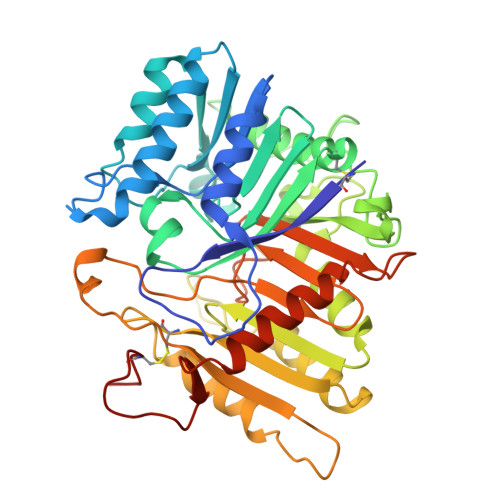
Cryo-EM structure of human PLD4 apo form


Experimental Data Snapshot

  • Method: ELECTRON MICROSCOPY
  • Resolution: 3.31 Å
  • Aggregation State: PARTICLE 
  • Reconstruction Method: SINGLE PARTICLE 

wwPDB Validation   3D Report Full Report


This is version 1.0 of the entry. See complete history


Literature

Mechanistic insights into single-stranded DNA degradation by lysosomal exonucleases PLD3 and PLD4 from structural snapshots.

Hirano, Y.Ezaki, W.Sato, R.Ohto, U.Miyake, K.Shimizu, T.

(2025) Nat Commun 

  • DOI: https://doi.org/10.1038/s41467-025-66261-2
  • Primary Citation of Related Structures:  
    9VBG, 9VBH, 9VBI, 9VBJ, 9VBK

  • PubMed Abstract: 

    Lysosomal exonuclease phospholipase D (PLD) family PLD3 and PLD4 degrade single-stranded RNA or DNA and regulate TLR7 or TLR9 responses. Polymorphisms of these enzymes are associated with human diseases: PLD4 is associated with inflammatory diseases, and PLD3 is associated with neurodegenerative diseases. Here, we determine the structures of substrate-bound PLD3 and PLD4 by cryo-electron microscopy. Our structures reveal that PLD3 rebuilds a substrate-binding pocket, depending on the substrate, mainly via motion of the Phe335-containing loop. Furthermore, we captured the structure in a metastable state that appears during substrate rearrangement following product release. Together, our findings identify the residues that underlie the distinct activities of PLD3 and PLD4. This study provides a mechanistic basis for the exonuclease activity of PLD3 and PLD4 in single-stranded DNA degradation.


  • Organizational Affiliation
    • Graduate School of Pharmaceutical Sciences, The University of Tokyo, Tokyo, Japan.

Macromolecules
Find similar proteins by:  (by identity cutoff)  |  3D Structure
Entity ID: 1
MoleculeChains Sequence LengthOrganismDetailsImage
5'-3' exonuclease PLD4
A, B, C, D
422Homo sapiensMutation(s): 0 
Gene Names: PLD4C14orf175UNQ2488/PRO5775
EC: 3.1.16.1 (PDB Primary Data), 3.1.4 (PDB Primary Data)
UniProt & NIH Common Fund Data Resources
Find proteins for Q96BZ4 (Homo sapiens)
Explore Q96BZ4 
Go to UniProtKB:  Q96BZ4
PHAROS:  Q96BZ4
GTEx:  ENSG00000166428 
Entity Groups  
Sequence Clusters30% Identity50% Identity70% Identity90% Identity95% Identity100% Identity
UniProt GroupQ96BZ4
Glycosylation
Glycosylation Sites: 6Go to GlyGen: Q96BZ4-1
Sequence Annotations
Expand
  • Reference Sequence
Oligosaccharides

Help

Entity ID: 2
MoleculeChains Length2D Diagram Glycosylation3D Interactions
2-acetamido-2-deoxy-beta-D-glucopyranose-(1-4)-2-acetamido-2-deoxy-beta-D-glucopyranose
E, F, G, H, I
E, F, G, H, I, J, K, L, M
2N-Glycosylation
Small Molecules
Ligands 1 Unique
IDChains Name / Formula / InChI Key2D Diagram3D Interactions
NAG
Query on NAG

Download Ideal Coordinates CCD File 
AA [auth D]
N [auth A]
O [auth A]
P [auth A]
Q [auth A]
AA [auth D],
N [auth A],
O [auth A],
P [auth A],
Q [auth A],
R [auth B],
S [auth B],
T [auth B],
U [auth B],
V [auth C],
W [auth C],
X [auth C],
Y [auth D],
Z [auth D]
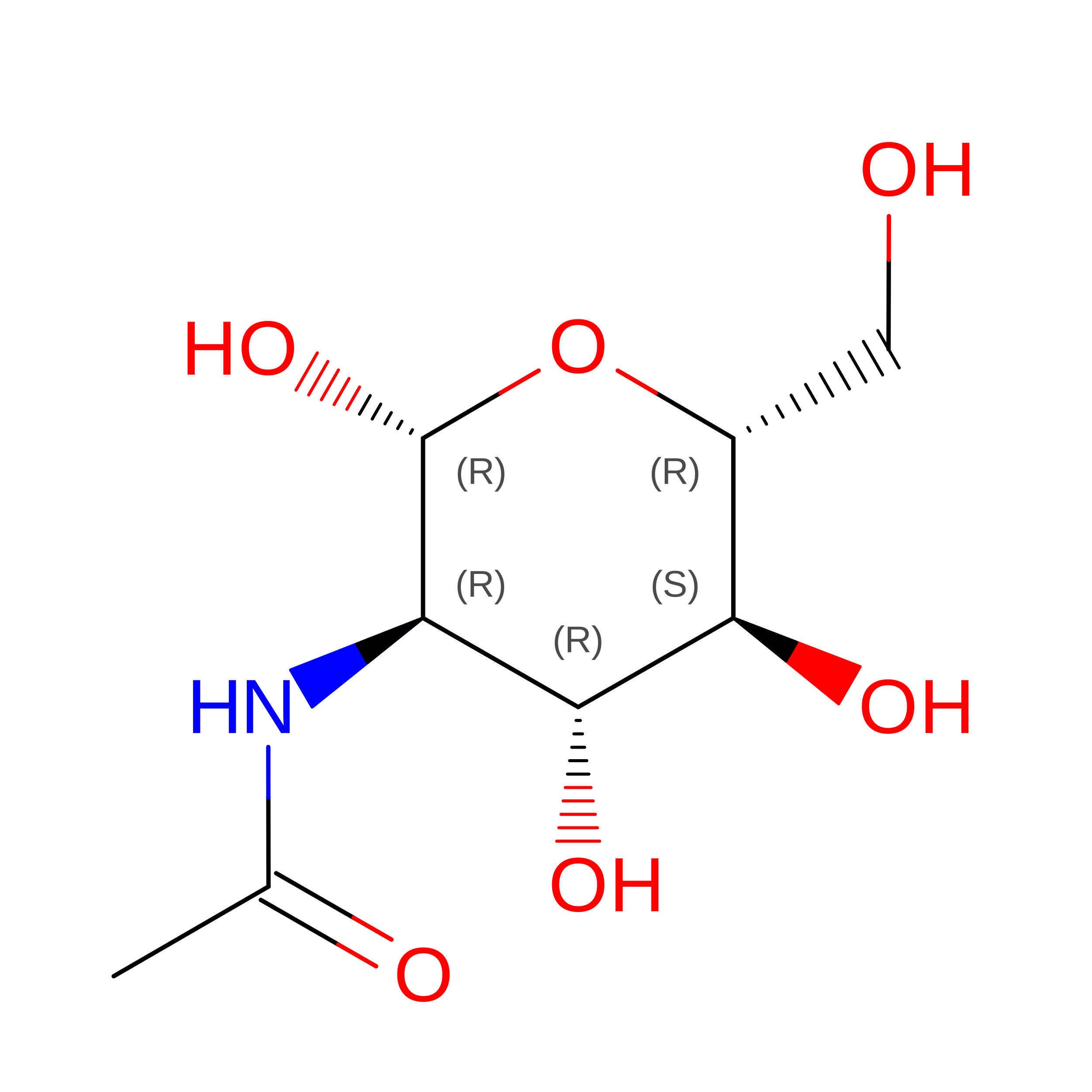
2-acetamido-2-deoxy-beta-D-glucopyranose
C8 H15 N O6
OVRNDRQMDRJTHS-FMDGEEDCSA-N
Experimental Data & Validation

Experimental Data

  • Method: ELECTRON MICROSCOPY
  • Resolution: 3.31 Å
  • Aggregation State: PARTICLE 
  • Reconstruction Method: SINGLE PARTICLE 
EM Software:
TaskSoftware PackageVersion
RECONSTRUCTIONcryoSPARC

Structure Validation

View Full Validation Report


Entry History & Funding Information

Deposition Data


Funding OrganizationLocationGrant Number
Japan Society for the Promotion of Science (JSPS)Japan22K06110
Japan Society for the Promotion of Science (JSPS)Japan25K09523
Japan Science and TechnologyJapanJPMJCR21E4

Revision History  (Full details and data files)

  • Version 1.0: 2025-12-24
    Type: Initial release