Download Mendeley
Dual Hydrophilic-Hydrophobic Core Architecture in Soy Glycinin Amyloid Fibrils Revealed by Cryo-EM.
Li, S., Li, S., Cheng, Y., Fang, Y., Cao, Q., Cao, Y.(2025) Adv Sci (Weinh) 12: e09821-e09821
- PubMed: 40883254 Search on PubMed
- DOI: https://doi.org/10.1002/advs.202509821
- Primary Citation Related Structures:
9V45, 9V4F - PubMed Abstract:
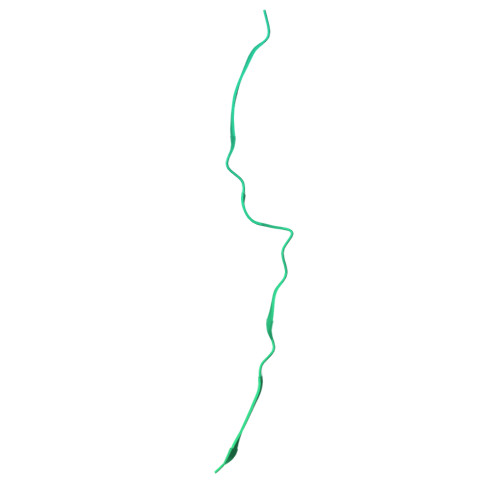
Plant-derived amyloid fibrils represent a promising class of sustainable nanomaterials outperforming their native counterparts in functionalities; however, the atomic-level structural mechanisms behind these enhancements have yet to be elucidated. Using cryo-EM, near-atomic resolution structures (3.4 and 3.5 Å) are determined for two distinct fibril polymorphs assembled in vitro from soy glycinin-A subunit. The dominant Type I fibril exhibits an unprecedented dual-core architecture, characterized by spatially segregated hydrophilic (Asp172-Asn178/Asn178'-Asp172') and hydrophobic (Val166-Ile168/Val186'-Pro184') domains, which contribute to a unique amyloid fold distinct from many known amyloid structures, including pathological and functional amyloids. In contrast, the minor Type II fibril adopts a conventional extended hydrophobic core with Tyr155-Tyr158 π-stacking. These atomic structures establish fundamental structure-property relationships that will inform the rational design of plant protein-based nanomaterials.
- Department of Food Science & Engineering, School of Agriculture & Biology, Shanghai Jiao Tong University, Shanghai, 200240, China.
Organizational Affiliation: