Download Mendeley
Cryo-EM structure of the vaccinia virus entry fusion complex reveals a multicomponent fusion machinery.
Lin, C.S., Li, C.A., Wang, C.H., Kao, C.F., Chiu, H.J., Yeh, M.C., Gao, H.D., Ho, M.C., Lee, H.M., Chang, W.(2026) Sci Adv 12: eaec0254-eaec0254
- PubMed: 41533782 Search on PubMedSearch on PubMed Central
- DOI: https://doi.org/10.1126/sciadv.aec0254
- Primary Citation Related Structures:
9UZO, 9UZP - PubMed Abstract:
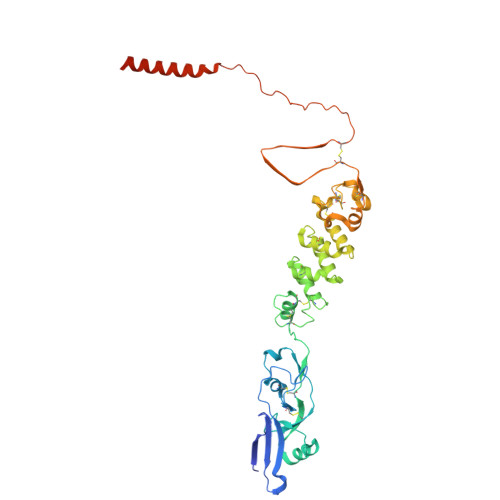
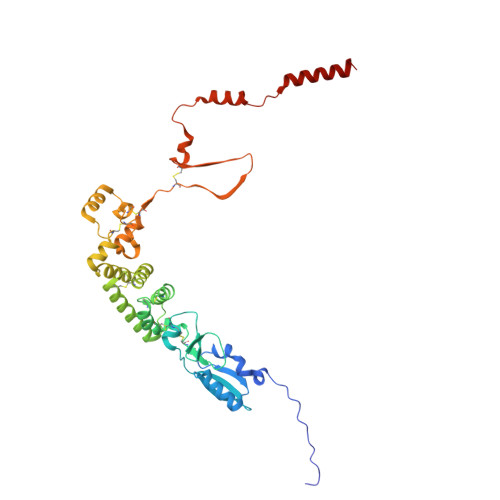
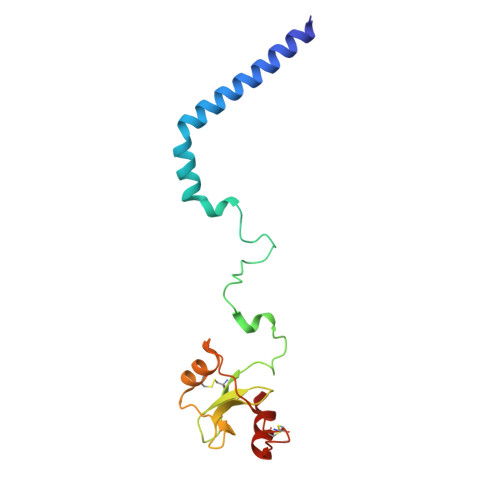
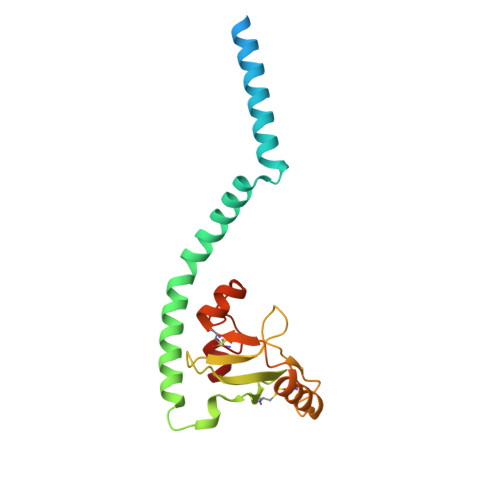
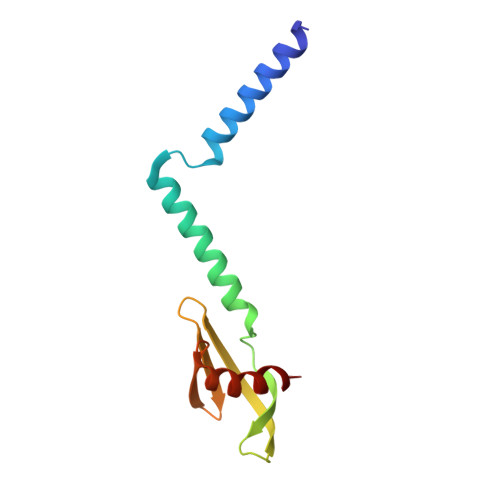
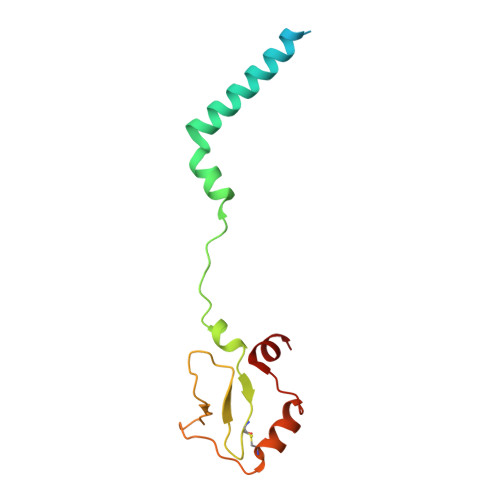
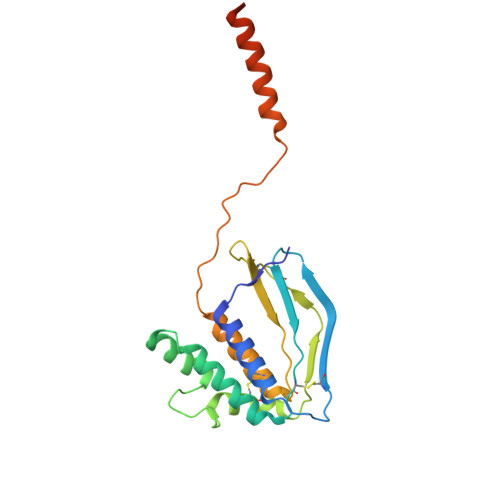
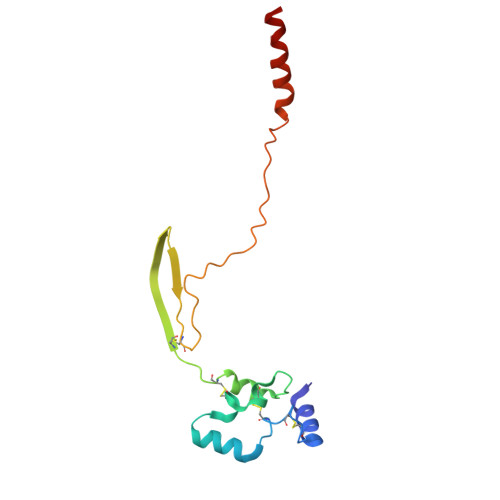
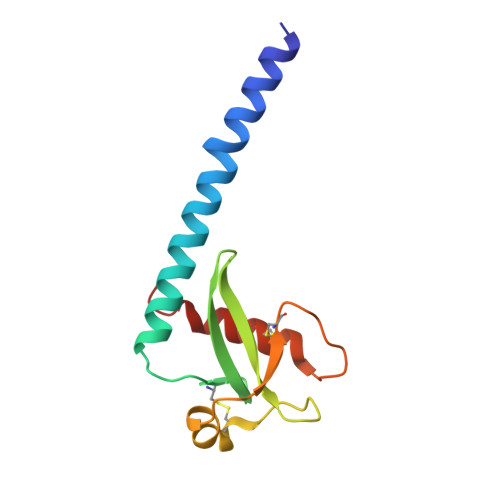
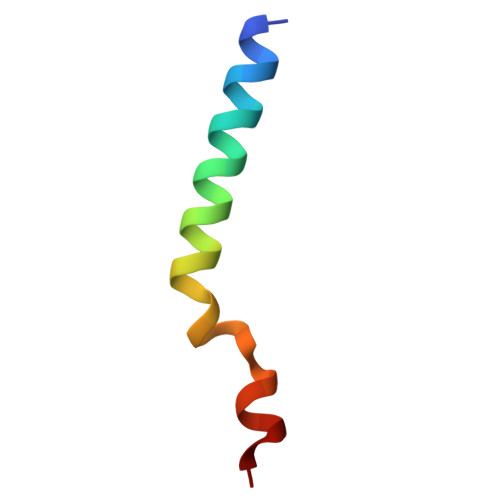
Membrane fusion is essential for viral entry. Unlike class I-III fusion proteins, vaccinia virus (VACV) uses a multicomponent entry fusion complex (EFC). Using cryo-electron microscopy, we determined the full-length structure of the VACV EFC at near-atomic resolution, revealing a 15-protein asymmetric assembly organized into three layers. The central A16/G9/J5 heterotrimer forms the fusion core, stabilized by conserved PXXCW and Delta motifs, and anchors two A28/H2 adaptor dimers linked to peripheral G3/L5/A21/O3 scaffolds. Structural and evolutionary analyses identify a conserved N-terminal domain in A16 containing a myristoyl-binding pocket and a phenylalanine-rich region that stabilizes the trimer and may regulate lipid engagement. An additional component, F9, binds peripherally to J5, A21, and H2 through Delta-like motifs, reinforcing the prefusion architecture. Together, these results define the VACV EFC as a unique multiprotein fusion machinery and provide a structural framework for understanding the mechanism of poxvirus entry and membrane fusion.
- Institute of Molecular Biology, Academia Sinica, Taipei, Taiwan, R.O.C.
Organizational Affiliation: