Download Mendeley
Structural Basis of Substrate Recognition and Nucleotide Specificity in the Class III-b LanKC Enzyme SalKC.
Li, Y., Shao, K., Li, Y., Gan, B.K., Luo, M.(2025) ACS Chem Biol 20: 2255-2265
- PubMed: 40882187 Search on PubMed
- DOI: https://doi.org/10.1021/acschembio.5c00378
- Primary Citation Related Structures:
9UGQ - PubMed Abstract:
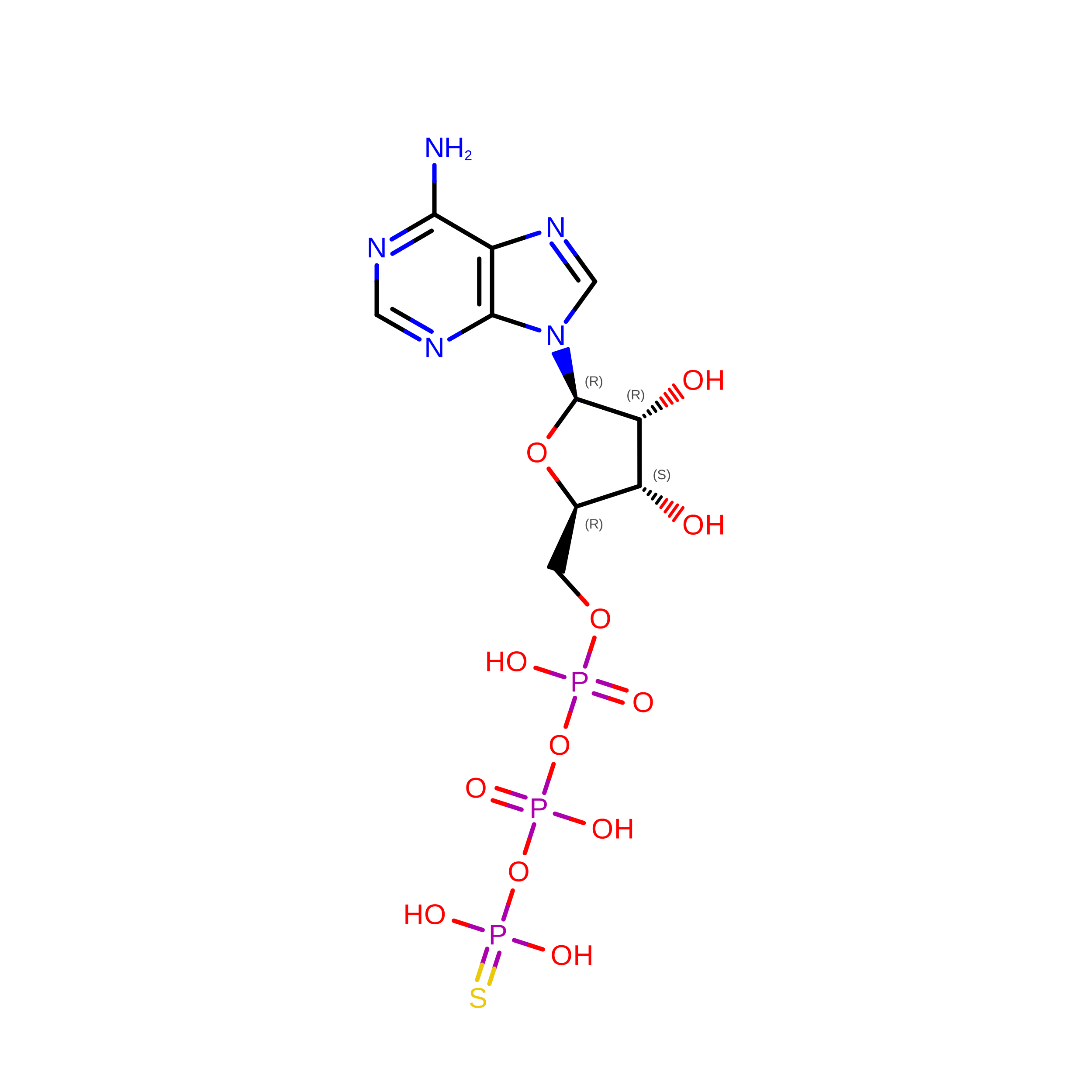
Lanthipeptides are ribosomally synthesized and post-translationally modified peptides (RiPPs) with potent antimicrobial functions. Their biosynthesis is carried out by dedicated biosynthetic enzymes, including the recently described Class III-b LanKC enzymes, which represent a newly defined subclass of trifunctional synthetases. Here, we report the high-resolution cryo-EM structure and biochemical characterization of SalKC from Streptococcus salivarius , which catalyzes the maturation of the antimicrobial peptide salivaricin. SalKC adopts a conserved dimeric architecture stabilized by a His36 hotspot, mirroring that of the previously characterized PneKC. Cryo-EM structure resolved to sub-3.0 Å revealed the side chains of the bound leader peptide in atomic detail, allowing clear visualization of a conserved recognition motif and offering new structural insight into peptide engagement. Biochemical assays showed that SalKC prefers ATP over GTP, contrasting with the GTP-preferring PneKC. Structural comparison identified a single amino acid switch: Lys303 in SalKC versus His300 in PneKC, as the key determinant of this specificity. Mutation of Lys303 to histidine reverses nucleotide preference, confirming its functional role. Together, these findings revealed conserved principles and specialized adaptations within Class III-b LanKC enzymes and provided a molecular framework for understanding their substrate and cofactor selectivity.
- Department of Biological Sciences, Faculty of Science, National University of Singapore, Singapore 117547, Singapore.
Organizational Affiliation: