Download Mendeley
Structure of Acinetobacter baumannii cytochrome bo 3 ubiquinol oxidase.
Li, Q., Hao, R., Zhu, J., Li, J.(2026) J Biol Chem 302: 111324-111324
- PubMed: 41759743 Search on PubMedSearch on PubMed Central
- DOI: https://doi.org/10.1016/j.jbc.2026.111324
- Primary Citation Related Structures:
9UFB, 9UFT, 9UFV, 9UFW, 9UFZ - PubMed Abstract:
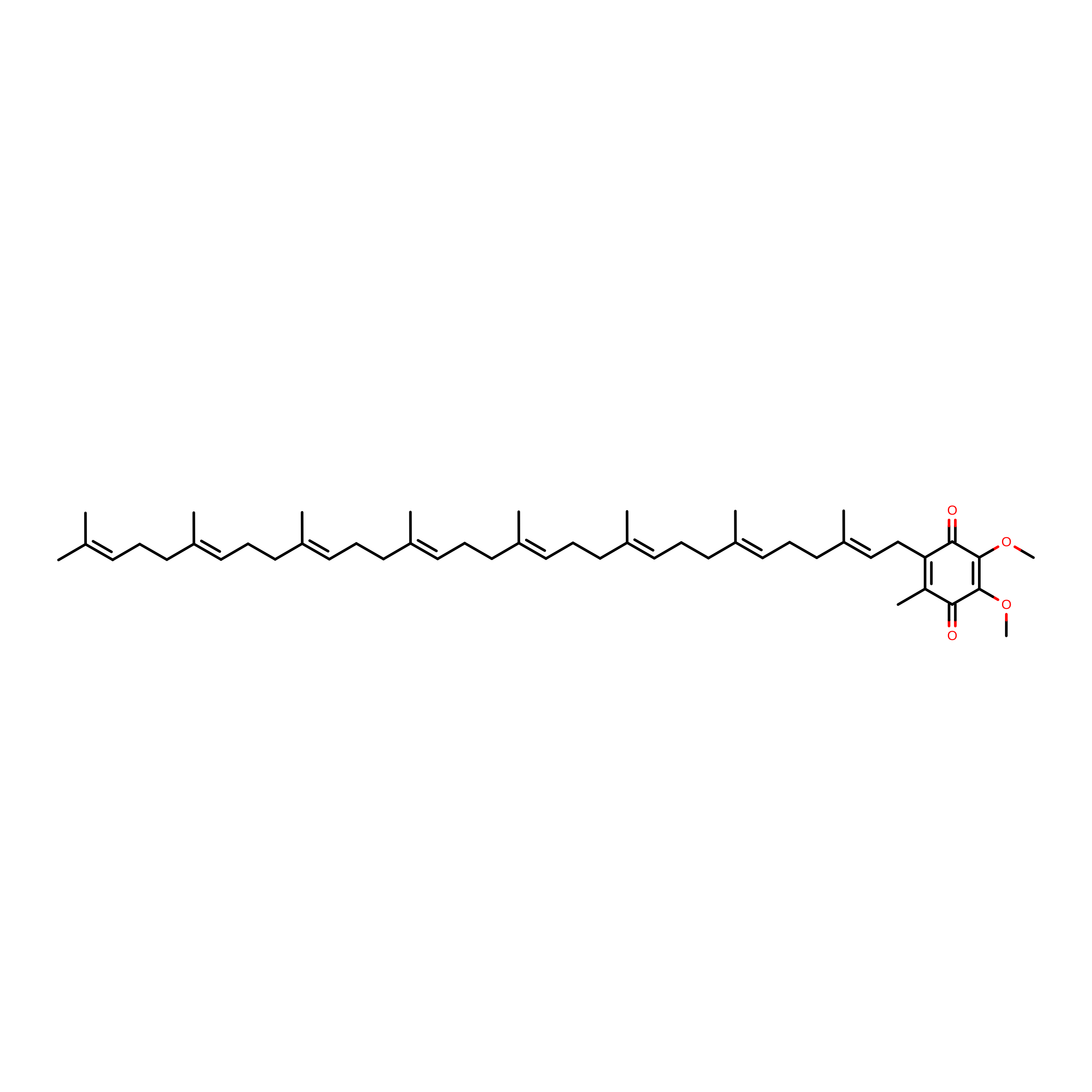
Heme-copper oxidases (heme-copper oxidoreductases) are terminal oxidases that couple oxygen reduction to proton pumping for ATP synthesis. Although our previous work has elucidated the structure and proton transfer mechanism of the Escherichia coli cytochrome bo 3 ubiquinol oxidase, the quinone dynamics and structural diversity across heme-copper oxidoreductases remain unclear. Here, we report the high-resolution cryo-EM structures of cytochrome bo 3 ubiquinol oxidase from the pathogen Acinetobacter baumannii. We captured four distinct conformational states of its native ubiquinone-8 substrate within the binding pocket. Comparative analysis revealed that conformational transitions of the substrate are directly coupled to movements of the transmembrane 0 helix. Notably, in the locked state, the substrate headgroup is stabilized by specific hydrogen bonds and adopts a distinct depth and orientation. In addition, a unique hairpin-like loop was identified in subunit II, a specific feature absent in the homologs. Our observations not only provide structural details of a pathogenic respiratory terminal oxidase but also reveal a dynamic substrate catalytic mechanism, highlighting potential avenues for targeting bacterial energy metabolism.
- School of Medicine, Nanjing University of Chinese Medicine, Nanjing, China.
Organizational Affiliation: