9UCP | pdb_00009ucp

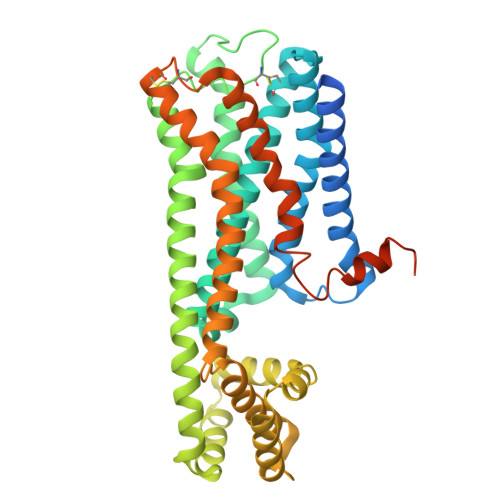
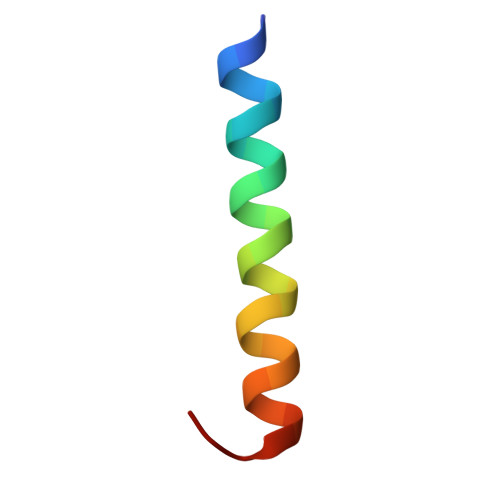
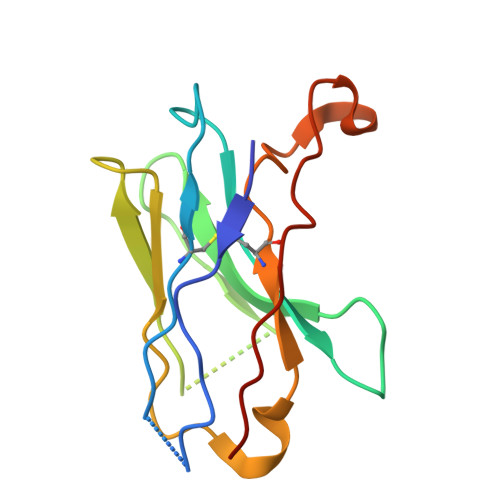
cryo-EM structure of M1 muscarinic acetylcholine receptor-alpha5 helix of G11 protein complex bound to iperoxo and nanobody Nb1B4


Experimental Data Snapshot

  • Method: ELECTRON MICROSCOPY
  • Resolution: 2.88 Å
  • Aggregation State: PARTICLE 
  • Reconstruction Method: SINGLE PARTICLE 

wwPDB Validation 3D Report Full Report

Validation slider image for 9UCP

This is version 1.1 of the entry. See complete history

Literature

Extracellular nanobody screening using conformationally stable GPCR variants.

Zhang, X.Gao, K.Nie, J.Meng, H.Sun, X.Zhao, J.Liu, X.

(2025) Proc Natl Acad Sci U S A 122: e2508879122-e2508879122

  • DOI: https://doi.org/10.1073/pnas.2508879122
  • Primary Citation Related Structures: 
    9UAP, 9UAZ, 9UCP

  • PubMed Abstract: 

    G protein-coupled receptors (GPCRs) are prominent drug targets that have attracted intensive efforts in drug screening. Binding-based screening methods for GPCR ligands often require conformationally stable, purified receptors. However, obtaining large quantities of GPCRs in stable states, particularly with unoccupied extracellular ligand-binding pockets and especially in their active conformations, remains challenging due to the inherent dynamic nature of these receptors. To address this challenge, we propose a universal approach for stabilizing GPCRs in specific conformations. Using the M1 muscarinic acetylcholine receptor (M1R) as a model, we successfully stabilized M1R in its active conformation through de novo design of a fusion protein, and further demonstrated the generalizability of this strategy by applying it to other GPCRs. We screened a synthetic yeast display library of nanobodies against both the stabilized active-state and previously reported inactive-state M1R, identifying several nanobodies that specifically recognize each conformation. This method not only facilitates the stabilization of GPCRs in desired states but also provides valuable tools for developing more selective therapeutic agents, enhancing drug discovery efficiency and specificity.


  • Organizational Affiliation
    • State Key Laboratory of Membrane Biology, Tsinghua-Peking Center for Life Sciences, School of Pharmaceutical Sciences, Tsinghua University, Beijing 100084, China.

Macromolecule Content 

  • Total Structure Weight: 66.43 kDa 
  • Atom Count: 3,529 
  • Modeled Residue Count: 511 
  • Deposited Residue Count: 584 
  • Unique protein chains: 3

Macromolecules

Find similar proteins by:|  3D Structure
Entity ID: 1
MoleculeChains  Sequence LengthOrganismDetailsImage
M1 muscarinic acetylcholine receptor, de novo design protein435Homo sapiensMutation(s): 0 
Find similar proteins by:|  3D Structure
Entity ID: 2
MoleculeChains  Sequence LengthOrganismDetailsImage
Guanine nucleotide-binding protein subunit alpha-1127Homo sapiensMutation(s): 0 
Gene Names: GNA11GA11
EC: 3.6.5
UniProt & NIH Common Fund Data Resources
Find proteins for P29992 (Homo sapiens)
Explore P29992 
Go to UniProtKB:  P29992
PHAROS:  P29992
GTEx:  ENSG00000088256 
Entity Groups
Sequence Clusters30% Identity50% Identity70% Identity90% Identity95% Identity100% Identity
UniProt GroupP29992
Sequence Annotations
Expand
Reference Sequence
Find similar proteins by:|  3D Structure
Entity ID: 3
MoleculeChains  Sequence LengthOrganismDetailsImage
Nanobody Nb1B4122Vicugna pacosMutation(s): 0 

Small Molecules

Ligands 1 Unique
IDChains Name / Formula / InChI Key2D Diagram3D Interactions
IXO
(Subject of Investigation/LOI)

Query on IXO


Download:Ideal Coordinates CCD File
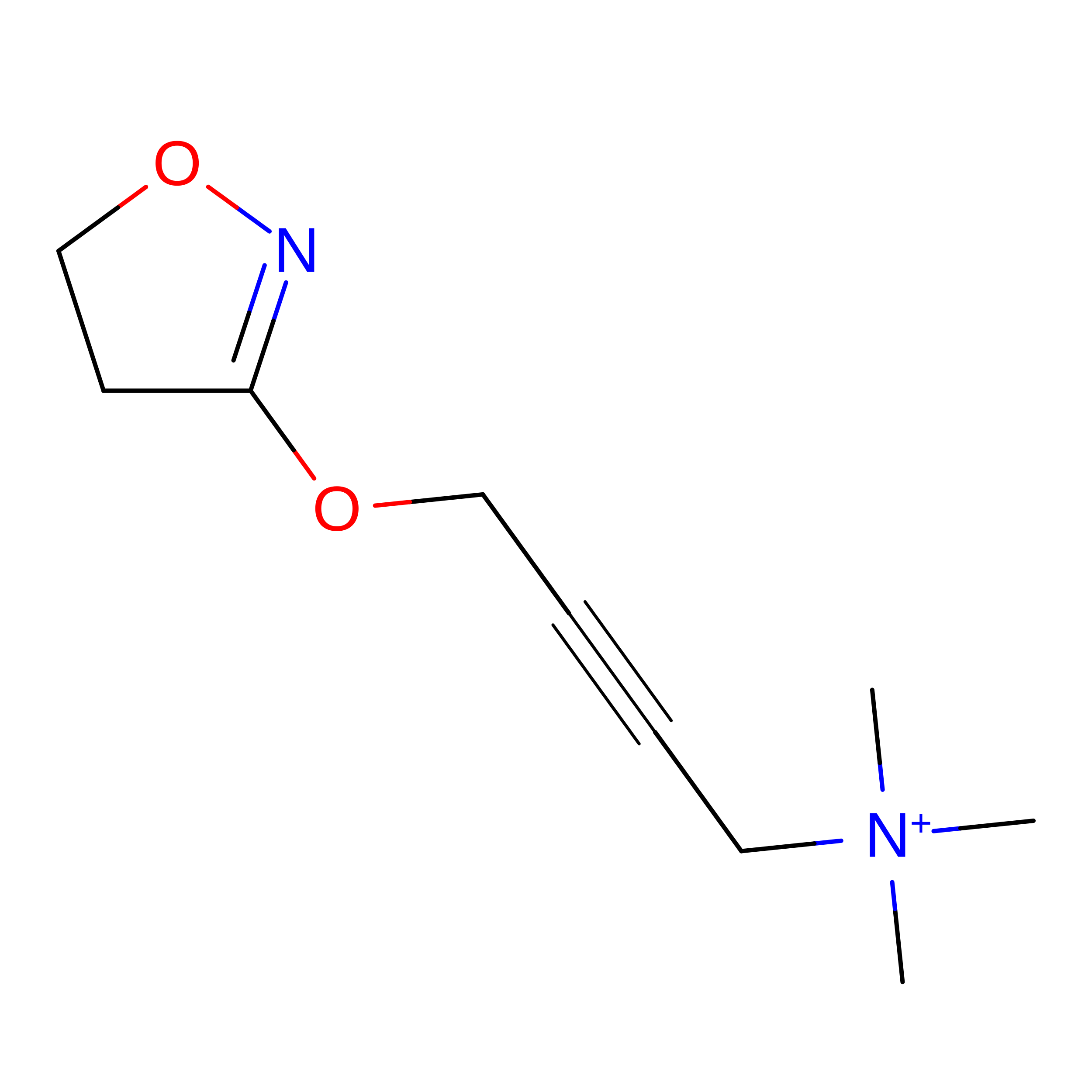
D [auth A]4-(4,5-dihydro-1,2-oxazol-3-yloxy)-N,N,N-trimethylbut-2-yn-1-aminium
C10 H17 N2 O2
WXXOCGISBCTWPW-UHFFFAOYSA-N

Experimental Data & Validation

Experimental Data

  • Method: ELECTRON MICROSCOPY
  • Resolution: 2.88 Å
  • Aggregation State: PARTICLE 
  • Reconstruction Method: SINGLE PARTICLE 
EM Software:
TaskSoftware PackageVersion
RECONSTRUCTIONcryoSPARC

Structure Validation

View Full Validation Report


Entry History 

& Funding Information

Deposition Data


Funding OrganizationLocationGrant Number
National Natural Science Foundation of China (NSFC)China32122041

Revision History  (Full details and data files)

  • Version 1.0: 2025-10-29
    Type: Initial release
  • Version 1.1: 2026-05-13
    Changes: Data collection, Database references