Download Mendeley
Structure-function analysis of the lithium-ion selectivity of the voltage-gated sodium channel.
Maeda, Y.K., Kojima, K., Nakamura, T.Y., Nakatsu, T., Irie, K.(2026) J Gen Physiol 158
- PubMed: 41711638 Search on PubMedSearch on PubMed Central
- DOI: https://doi.org/10.1085/jgp.202513855
- Primary Citation Related Structures:
9UC1, 9UC2, 9UC3, 9UC4 - PubMed Abstract:
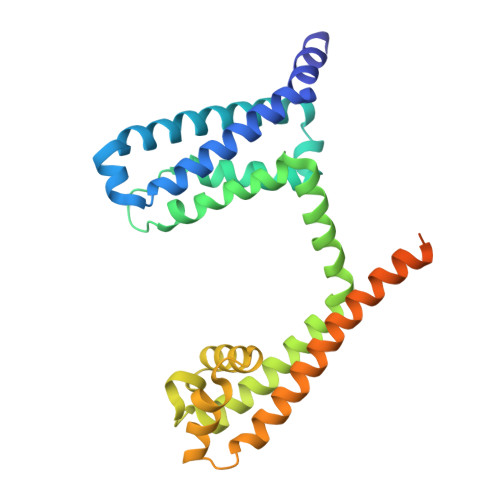
Voltage-gated sodium channels (Navs) selectively conduct Na+ to generate action potentials. Na+ permeates Navs with significantly higher efficiency than many other cations, but Li+ can also permeate Navs to an extent comparable with Na+. Li+ in the blood is known to enter cells via Navs and to have a beneficial effect on various neuropathies. However, the molecular basis of the high Li+ selectivity of Navs was unclear. In this study, using a prokaryotic Nav, we successfully created the first Nav mutant to be more selective for Li+ than for Na+. Electrophysiological and crystallographic analyses suggested the critical determinants of high Li+ selectivity: the strong electrostatic interaction between the ion pathway and hydrated ions, and the smaller number of hydration water exchanges within the ion pathway. Additionally, the extensive interactions around the ion pathway were shown to support monovalent cation selectivity. New drug directions based on the molecular basis for Li+ permeation may target various neurological disorders and could clarify the broader biological effects of lithium.
- Department of Pharmacology, Faculty of Medicine, Wakayama Medical University, Wakayama, Japan.
Organizational Affiliation: