Download Mendeley
PTPN9 dephosphorylates IGF1R Y1165/1166 and alleviates IGF1R-mediated resistance to tyrosine kinase inhibitor in cholangiocarcinoma.
Hu, J.M., Liu, H.Q., Zhang, M.H., Chen, T.L., Shi, A.D., Gao, Q., Liu, Y.J., Wang, X., Sun, K.Y., Deng, J., Xu, Y.F., Pan, C., Li, K.S., Zhang, Z.L.(2025) J Exp Clin Cancer Res 44: 332-332
- PubMed: 41275311 Search on PubMedSearch on PubMed Central
- DOI: https://doi.org/10.1186/s13046-025-03594-2
- Primary Citation Related Structures:
9UA8 - PubMed Abstract:
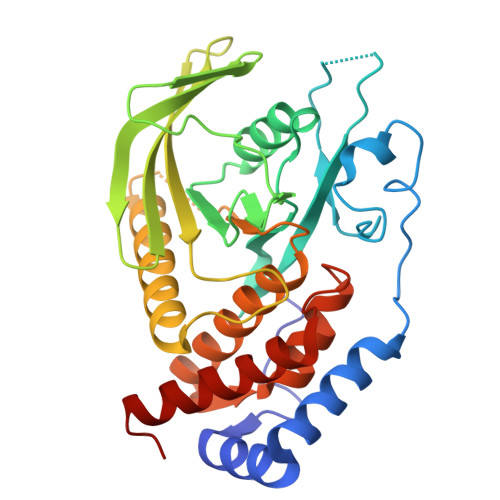
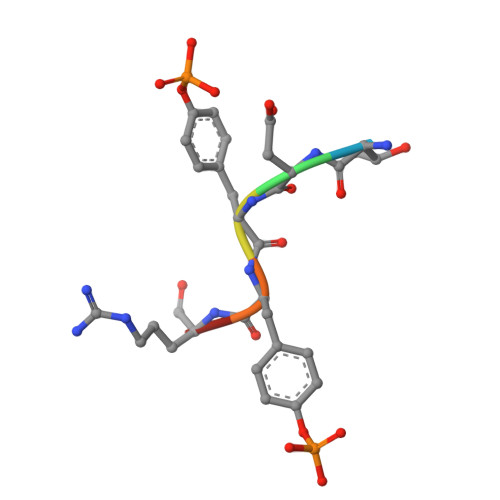
Cholangiocarcinoma (CCA) is an aggressive malignancy with limited therapeutic options. Increasing evidence suggests that a subset of CCA patients can benefit from multiple tyrosine kinase inhibitors (mTKIs) such as surufatinib. Biomarker studies that can identify potential responders to mTKI therapy are crucial for improving treatment outcomes. In this study, we examined the expression of protein tyrosine phosphatase non-receptor type 9 (PTPN9) in CCA patients treated with surufatinib and analyzed its association with treatment response. Immunoprecipitation coupled with mass spectrometry (IP-MS) was performed to identify novel PTPN9 substrates. Orthotopic mouse models, biochemical assays, structural analyses, and functional experiments were conducted to validate these novel findings. Single-cell RNA sequencing, ELISA, and immunohistochemistry were utilized to investigate microenvironmental tumor-promoting factors.CCA patients with surufatinib non-response exhibited significantly decreased PTPN9 expression compared to that response to surufatinib. PTPN9 knockdown in orthotopic models led to reduced sensitivity to surufatinib. IGF1R was identified as a new substrate of PTPN9, which preferably to dephosphorylate IGF1R at Y1166. In clinical tissues, PTPN9 expression was inversely correlated with IGF1R Y1165/1166 phosphorylation. Establishment of a surufatinib-resistant CCA cell line further confirmed decreased PTPN9 expression and elevated IGF1R signaling. In vivo blockade of IGF1R signaling significantly enhanced surufatinib sensitivity. Mechanistically, crystal structure analysis revealed Tyr333 and Asp335 as key PTPN9 residues interacting with IGF1R; mutation of these residues restored IGF1R signaling and abolished the tumor-suppressive effect of PTPN9. Furthermore, cancer-associated fibroblasts (CAFs) were identified as the major source of IGF1 in CCA microenvironment, essential for IGF1R-driven tumor progression.In summary, the PTPN9-IGF1R axis plays a pivotal role in modulating mTKI sensitivity and tumor progression in CCA. This axis serves as a promising biomarker for identifying potential mTKI beneficiaries and represents a potential therapeutic target to enhance mTKI efficacy and overcome resistance.
- Department of General Surgery, Qilu Hospital, Cheeloo College of Medicine, Shandong University, 107 Wenhua Xi Road, Jinan, Shandong, 250012, P.R. China.
Organizational Affiliation: