Download Mendeley
Secondary structure transitions and dual PIP2 binding define cardiac KCNQ1-KCNE1 channel gating.
Zhong, L., Lin, X., Cheng, X., Wan, S., Hua, Y., Nan, W., Hu, B., Peng, X., Zhou, Z., Zhang, Q., Yang, H., Noe, F., Yan, Z., Jiang, D., Zhang, H., Liu, F., Xiao, C., Zhou, Z., Mou, Y., Yu, H., Ma, L., Huang, C., Wong, V.K.W., Chung, S.K., Shen, B., Jiang, Z.H., Neher, E., Zhu, W., Zhang, J., Hou, P.(2025) Cell Res 35: 887-899
- PubMed: 41034624 Search on PubMedSearch on PubMed Central
- DOI: https://doi.org/10.1038/s41422-025-01182-9
- Primary Citation Related Structures:
9U7F, 9UC8 - PubMed Abstract:
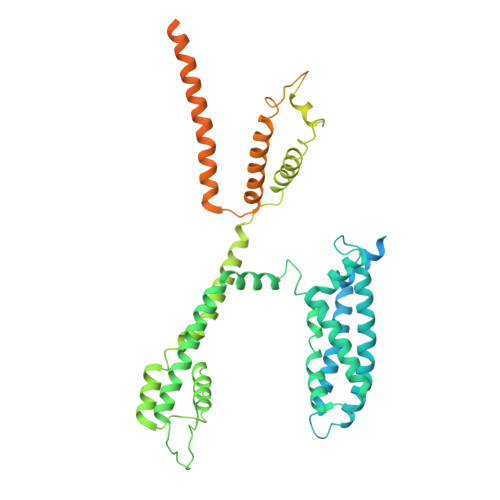
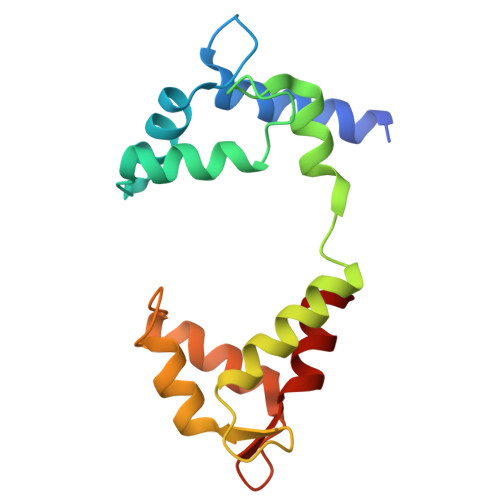
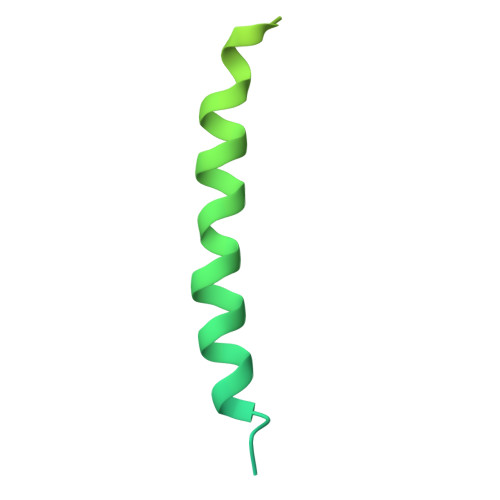
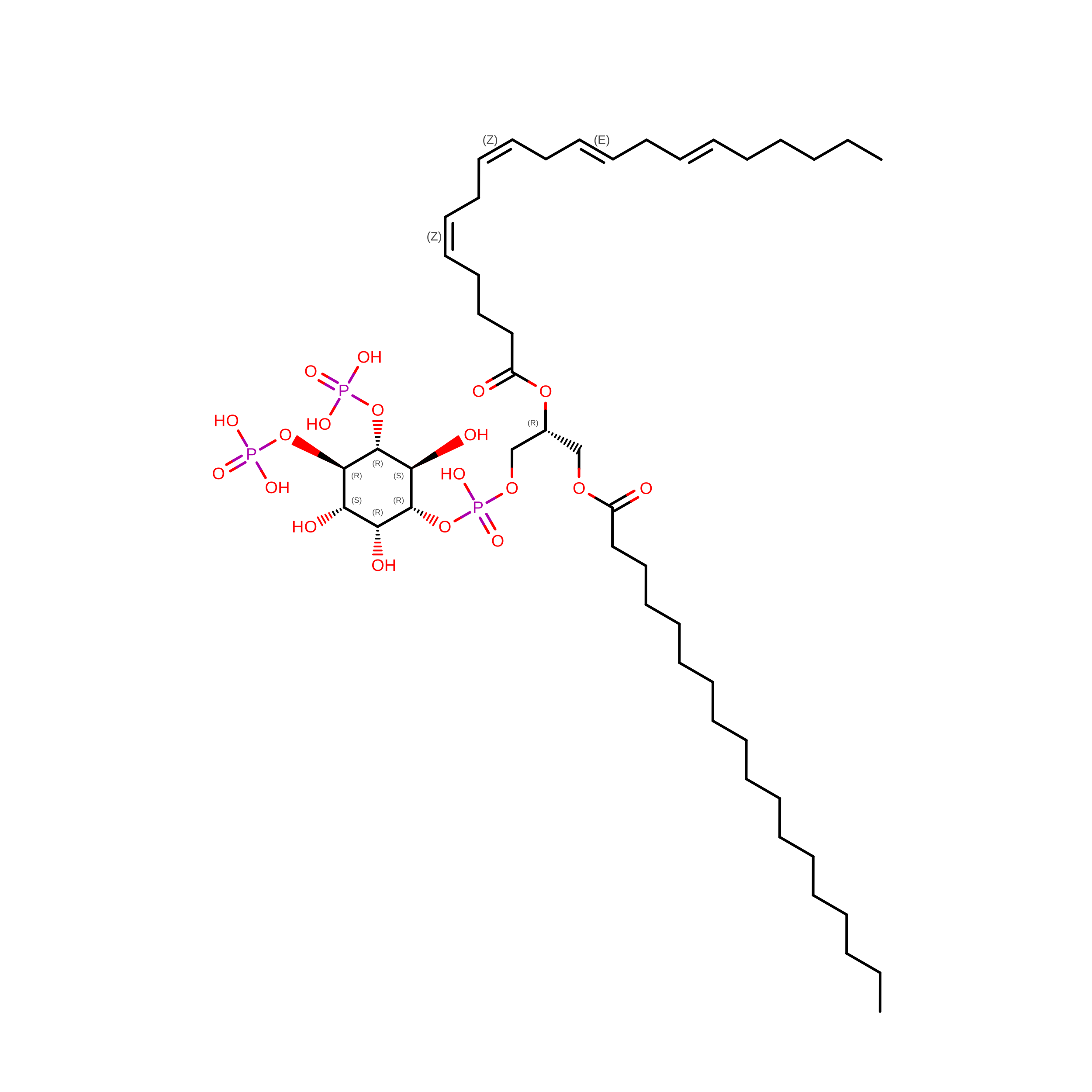
The KCNQ1 + KCNE1 potassium channel complex produces the slow delayed rectifier current (I Ks ) critical for cardiac repolarization. Loss-of-function mutations in KCNQ1 and KCNE1 cause long QT syndrome (LQTS) types 1 and 5 (LQT1/LQT5), accounting for over one-third of clinical LQTS cases. Despite prior structural work on KCNQ1 and KCNQ1 + KCNE3, the structural basis of KCNQ1 + KCNE1 remains unresolved. Using cryo-electron microscopy and electrophysiology, we determined high-resolution (2.5-3.4 Å) structures of human KCNQ1 APO , and KCNQ1 + KCNE1 in both closed and open states. KCNE1 occupies a pivotal position at the interface of three KCNQ1 subunits, inducing six helix-to-loop transitions in KCNQ1 transmembrane segments. Three of them occur at both ends of the S4-S5 linker, maintaining a loop conformation during I Ks gating, while the other three, in S6 and helix A, undergo dynamic helix-loop transitions during I Ks gating. These structural rearrangements: (1) stabilize the closed pore and the conformation of the intermediate state voltage-sensing domain, thereby determining channel gating, ion permeation, and single-channel conductance; (2) enable a dual-PIP2 modulation mechanism, where one PIP2 occupies the canonical site, while the second PIP2 bridges the S4-S5 linker, KCNE1, and the adjacent S6', stabilizing channel opening; (3) create a fenestration capable of binding compounds specific for KCNQ1 + KCNE1 (e.g., AC-1). Together, these findings reveal a previously unrecognized large-scale secondary structural transition during ion channel gating that fine-tunes I Ks function and provides a foundation for developing targeted LQTS therapy.
- Dr. Neher's Biophysics Laboratory for Innovative Drug Discovery; State Key Laboratory of Mechanism and Quality of Chinese Medicine & School of Pharmacy, Faculty of Medicine; Faculty of Chinese Medicine, Macau University of Science and Technology, Macau SAR, China.
Organizational Affiliation: