Download Mendeley
COQ8 chaperones coenzyme Q lipid intermediates through ATP-driven structural gating.
Gottinger, A., Malatesta, M., Nicoll, C.R., Ansari, G., Quinodoz, M., Kaminska, K., Tang, R.W.C., Tan, T.E., Fenner, B.J., Barberan-Martinez, P., Garcia-Garcia, G., Millan, J.M., Pfau, M., Burbach, N.E., Cecchini, D., Rivolta, C., Mattevi, A.(2026) Sci Adv 12: eaeg1124-eaeg1124
- PubMed: 42525751 Search on PubMedSearch on PubMed Central
- DOI: https://doi.org/10.1126/sciadv.aeg1124
- Primary Citation Related Structures:
9TVK, 9TVN - PubMed Abstract:
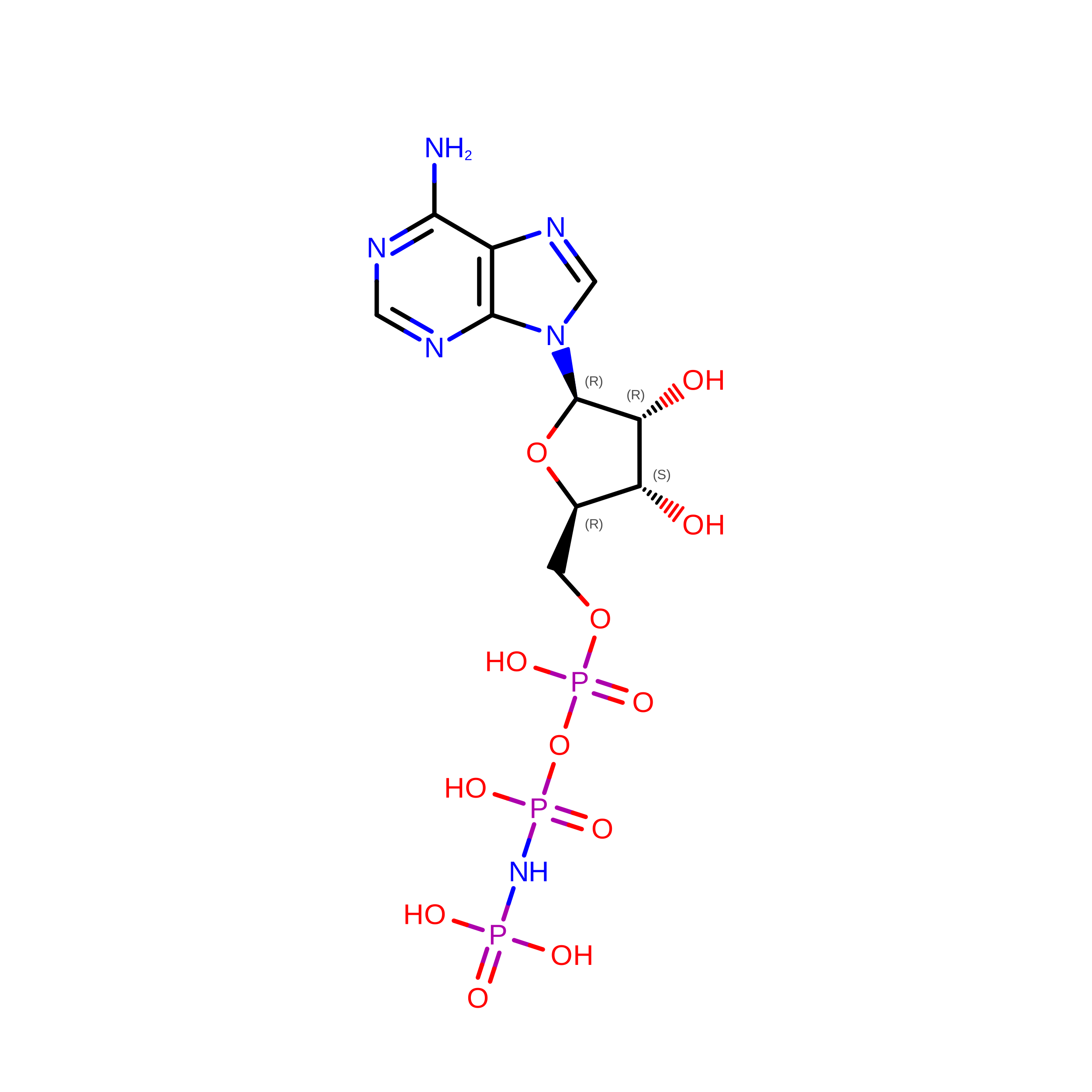
Coenzyme Q biosynthesis requires two atypical kinase-like proteins (COQ8A and COQ8B), whose detailed molecular mechanism remains unclear. Here, we show that both paralogs function as adenosine triphosphatases (ATPases) that promote coenzyme Q biosynthetic metabolon activity by engaging in loose protein-protein interactions and delivering insoluble biosynthetic intermediates. Structural bioinformatics and pathological variant-driven mutagenesis identify a previously uncharacterized pocket that selectively recognizes coenzyme Q biosynthetic intermediates via their head groups. X-ray crystallography reveals that access to this pocket is gated by long-range conformational changes controlled by adenosine 5'-triphosphate hydrolysis. Last, excess coenzyme Q suppresses binding of early-stage intermediates and thereby abolishes the promoting effect of COQ8 on the metabolon. Together, these findings support a model in which COQ8 tunes coenzyme Q biosynthesis by coupling ATPase-driven intermediate chaperoning to feedback inhibition by the final product.
- Department of Biology and Biotechnology 'Lazzaro Spallanzani', University of Pavia, Via Ferrata 9, 27100 Pavia, Italy.
Organizational Affiliation: