Download Mendeley
An AI-based approach accelerates the discovery of protein-protein interaction modulators targeting NCS-1.
Gonzalez-Garcia, E., Miro-Rodriguez, C., Ulzurrun, E., Toledano, O., Perez-Suarez, S., Aguado, L., Sanchez-Barrena, M.J., Mansilla, A., Naveiro, R., Campillo, N.E.(2026) Eur J Med Chem 309: 118739-118739
- PubMed: 41785832 Search on PubMed
- DOI: https://doi.org/10.1016/j.ejmech.2026.118739
- Primary Citation Related Structures:
9T0H - PubMed Abstract:
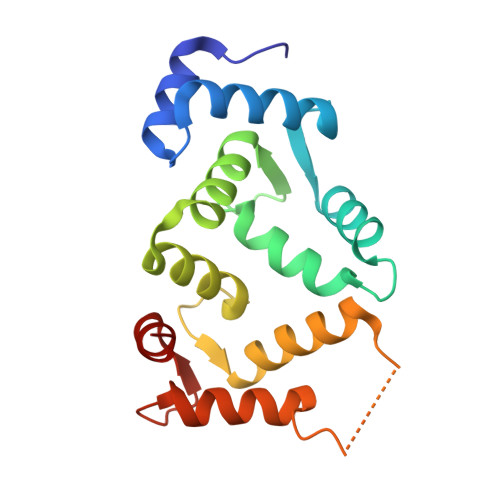
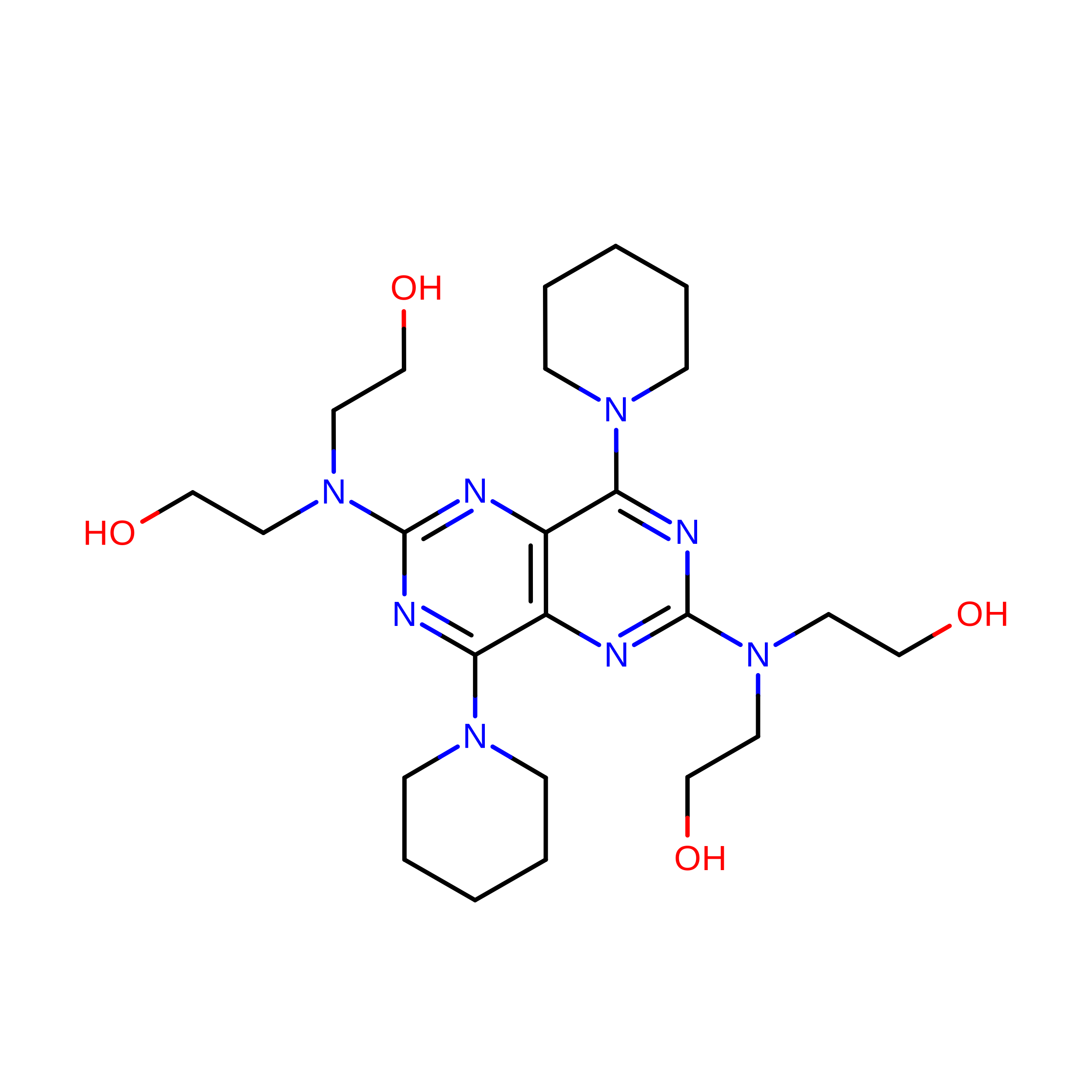
Drug repurposing is an efficient strategy to accelerate the identification of therapeutic compounds by finding new uses for existing drugs. Here, we leveraged artificial intelligence (AI) to optimize this process and discover protein-protein interaction (PPI) modulators targeting the Neuronal Calcium Sensor 1. AI models were trained on large datasets of known PPIs, protein structures, and small molecular graphs to predict binding score. Using virtual screening of an FDA-approved drug library, the models generated a prioritized list of candidates. The most promising compounds were selected for experimental validation. This integrated approach efficiently reduced experimental workload, time, and cost, leading to the identification of dipyridamole as a selective modulator of the interaction between NCS-1 and the dopamine D 2 receptor. The crystal structure of NCS-1 in complex with dipyridamole elucidates its mechanism of modulation. Our findings highlight the potential of AI to streamline and accelerate the discovery of novel therapeutic PPI modulators.
- Institute for Complex Molecular Systems, Eindhoven University of Technology, Eindhoven, North Brabant, The Netherlands.
Organizational Affiliation: