Download Mendeley
Diversity of electron-bifurcating CO 2 -fixing supercomplexes in methanogens.
Segundo-Acosta, P.S., Nomura, S., Fernandes-Queiroz, J.P., Protasov, E., Kahnt, J., Kaneko, M., Hochberg, G., Shima, S., Murphy, B.J.(2026) Sci Adv 12: eaed3711-eaed3711
- PubMed: 42748252 Search on PubMedSearch on PubMed Central
- DOI: https://doi.org/10.1126/sciadv.aed3711
- Primary Citation Related Structures:
9SW2, 9SW3, 9SW4, 9SW5, 9SW6 - PubMed Abstract:
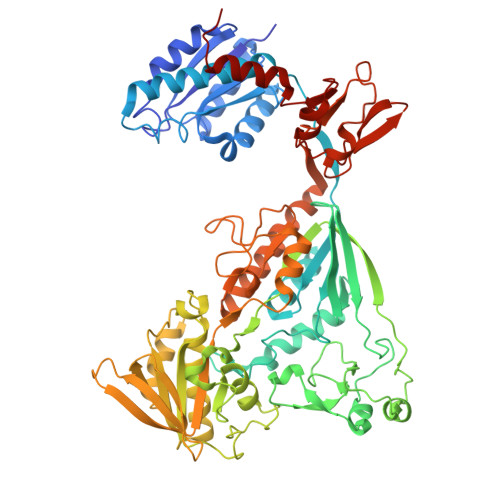
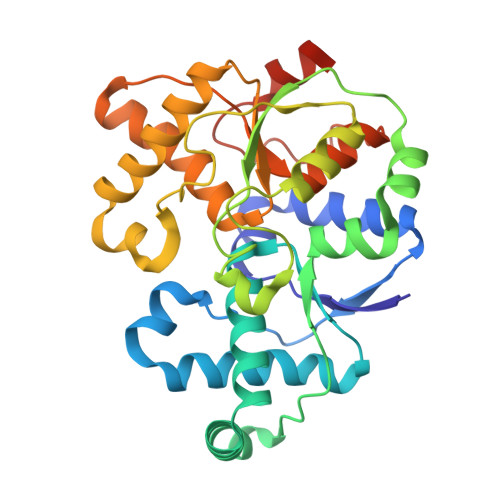
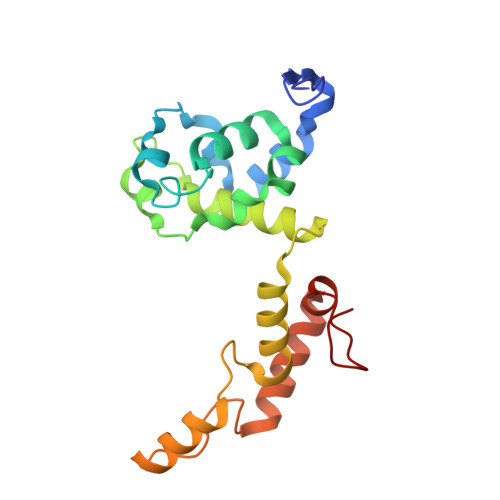
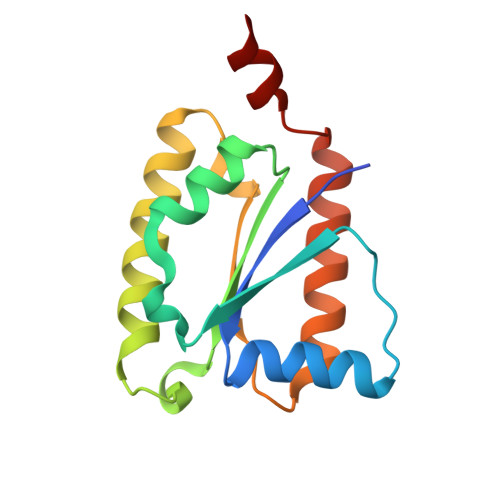
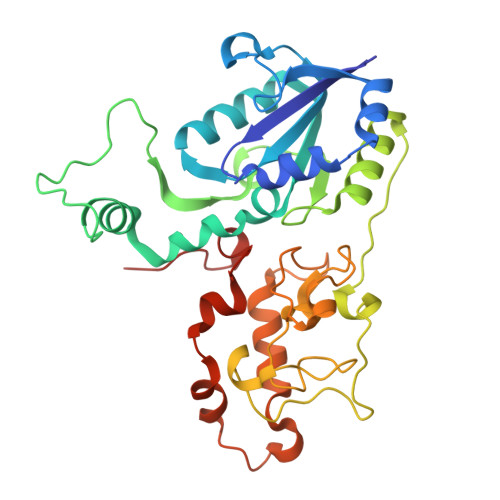
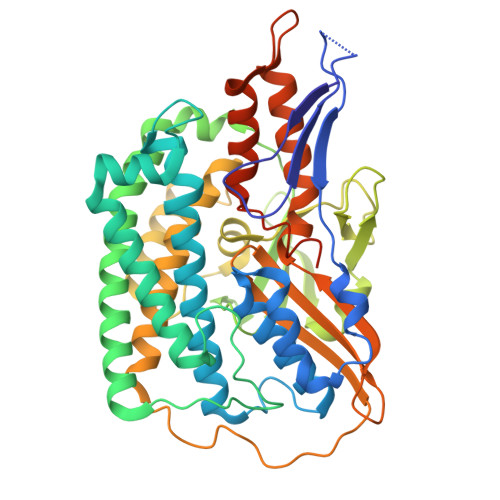
In the hydrogenotrophic methanogenic pathway, formylmethanofuran dehydrogenase (Fmd) reduces and fixes CO 2 , driven by low-potential electrons provided by electron-bifurcating heterodisulfide reductase (Hdr) complexed with electron-donating proteins such as Mvh hydrogenase. Here, we report the structure of a C2-symmetric (Mvh-Hdr) 2 -Fmd 4 supercomplex from a Class I methanogen, Methanothermobacter marburgensis , which is architecturally different from the previously reported ring-shaped D3-symmetric supercomplex of a methanogen belonging to phylogenetically distinct Class II methanogens. In this C2-symmetric form, the redox active sites of Hdr and Fmd are connected by two MvhB polyferredoxins, whose branching electron paths appear to be available for electron transfer to/from other partners. The ancestral form was likely C2 symmetric, whereas D3-symmetric supercomplexes were acquired by horizontal gene transfer, a transition probably helpful for growth in substrate-poor environments.
- Redox and Metalloprotein Research Group, Max Planck Institute of Biophysics, Frankfurt am Main, Germany.
Organizational Affiliation: