9SHO | pdb_00009sho

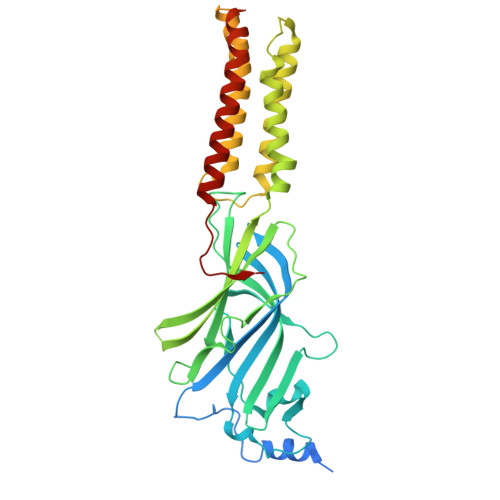
Structure of the honeybee GABAA RDL receptor with GABA


Experimental Data Snapshot

  • Method: ELECTRON MICROSCOPY
  • Resolution: 2.56 Å
  • Aggregation State: PARTICLE 
  • Reconstruction Method: SINGLE PARTICLE 

Starting Model: in silico
View more details

wwPDB Validation 3D Report Full Report

Validation slider image for 9SHO

This is version 1.2 of the entry. See complete history

Literature

Structures of the honeybee GABA A RDL receptor illuminate allosteric modulation.

Laboure, T.Pandey, M.P.Zarkadas, E.Juillan-Binard, C.Baud, D.Neyton, J.Cens, T.Rousset, M.Dehez, F.Charnet, P.Nury, H.

(2026) Neuron 114: 1234

  • DOI: https://doi.org/10.1016/j.neuron.2025.12.013
  • Primary Citation Related Structures: 
    9SHE, 9SHO, 9SIO, 9SIQ

  • PubMed Abstract: 

    A large share of insecticides targets insect ion channels. In particular, the GABA A RDL (resistant to dieldrin) receptor is targeted by old pore blockers or more recent allosteric modulators binding to a cavity of its transmembrane domain. Here, we describe three ligand-binding sites and the associated receptor conformations, using a combination of cryoelectron microscopy (cryo-EM), electrophysiology, and molecular dynamics. The GABA site geometry is well conserved with that of mammalian receptors, in line with the absence of orthosteric insecticide. The transmembrane modulation site, occupied here by abamectin, exists in a closed-pore conformation. We identify a second allosteric transmembrane site using a compound named chrodrimanin B. Structures also reveal the existence of a conformation-dependent PIP 2 lipid site. We anticipate our results to be the starting point for investigations on the physiological modulation of insect GABA A receptors. The honeybee receptor structures may also foster the search for species-specific, environmentally benign insecticides.


  • Organizational Affiliation
    • Université Grenoble Alpes, CNRS, CEA, IBS, 38000 Grenoble, France.

Macromolecule Content 

  • Total Structure Weight: 270.31 kDa 
  • Atom Count: 13,675 
  • Modeled Residue Count: 1,680 
  • Deposited Residue Count: 2,380 
  • Unique protein chains: 1

Macromolecules

Find similar proteins by:|  3D Structure
Entity ID: 1
MoleculeChains  Sequence LengthOrganismDetailsImage
Gamma-aminobutyric acid receptor subunit betaA,
B [auth E],
C [auth D],
D [auth B],
E [auth C]
476Apis melliferaMutation(s): 0 
Gene Names: RDL406124LOC406124
UniProt
Find proteins for A0A8U0Y4W2 (Apis mellifera)
Explore A0A8U0Y4W2 
Go to UniProtKB:  A0A8U0Y4W2
Entity Groups
Sequence Clusters30% Identity50% Identity70% Identity90% Identity95% Identity100% Identity
UniProt GroupA0A8U0Y4W2
Glycosylation
Glycosylation Sites: 2
Sequence Annotations
Expand
Reference Sequence

Small Molecules

Ligands 2 Unique
IDChains Name / Formula / InChI Key2D Diagram3D Interactions
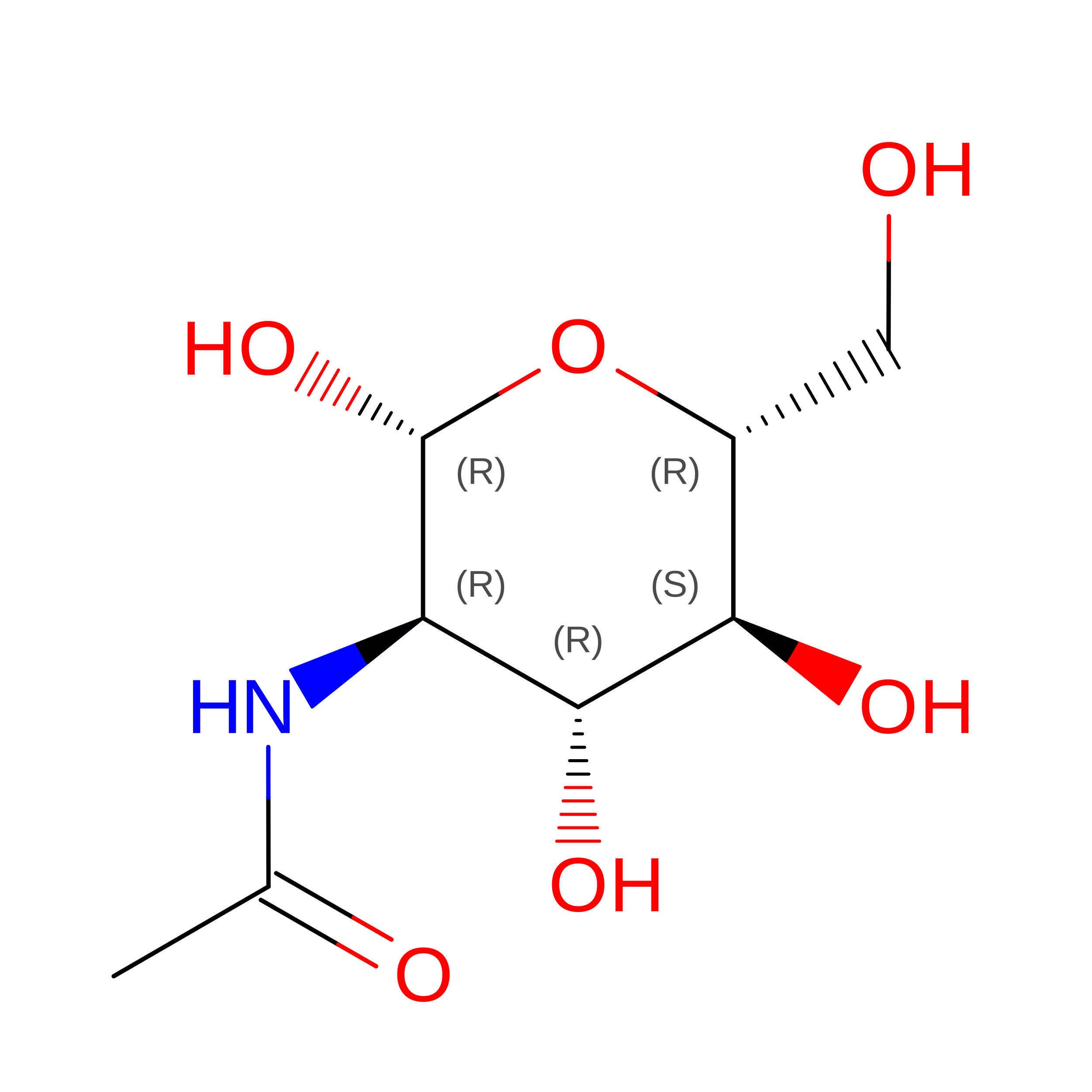
NAG

Query on NAG


Download:Ideal Coordinates CCD File
F [auth A]
G [auth A]
I [auth E]
J [auth E]
L [auth D]
F [auth A],
G [auth A],
I [auth E],
J [auth E],
L [auth D],
M [auth D],
O [auth B],
P [auth B],
R [auth C],
S [auth C]
2-acetamido-2-deoxy-beta-D-glucopyranose
C8 H15 N O6
OVRNDRQMDRJTHS-FMDGEEDCSA-N
ABU
(Subject of Investigation/LOI)

Query on ABU


Download:Ideal Coordinates CCD File
H [auth A],
K [auth E],
N [auth D],
Q [auth B],
T [auth C]
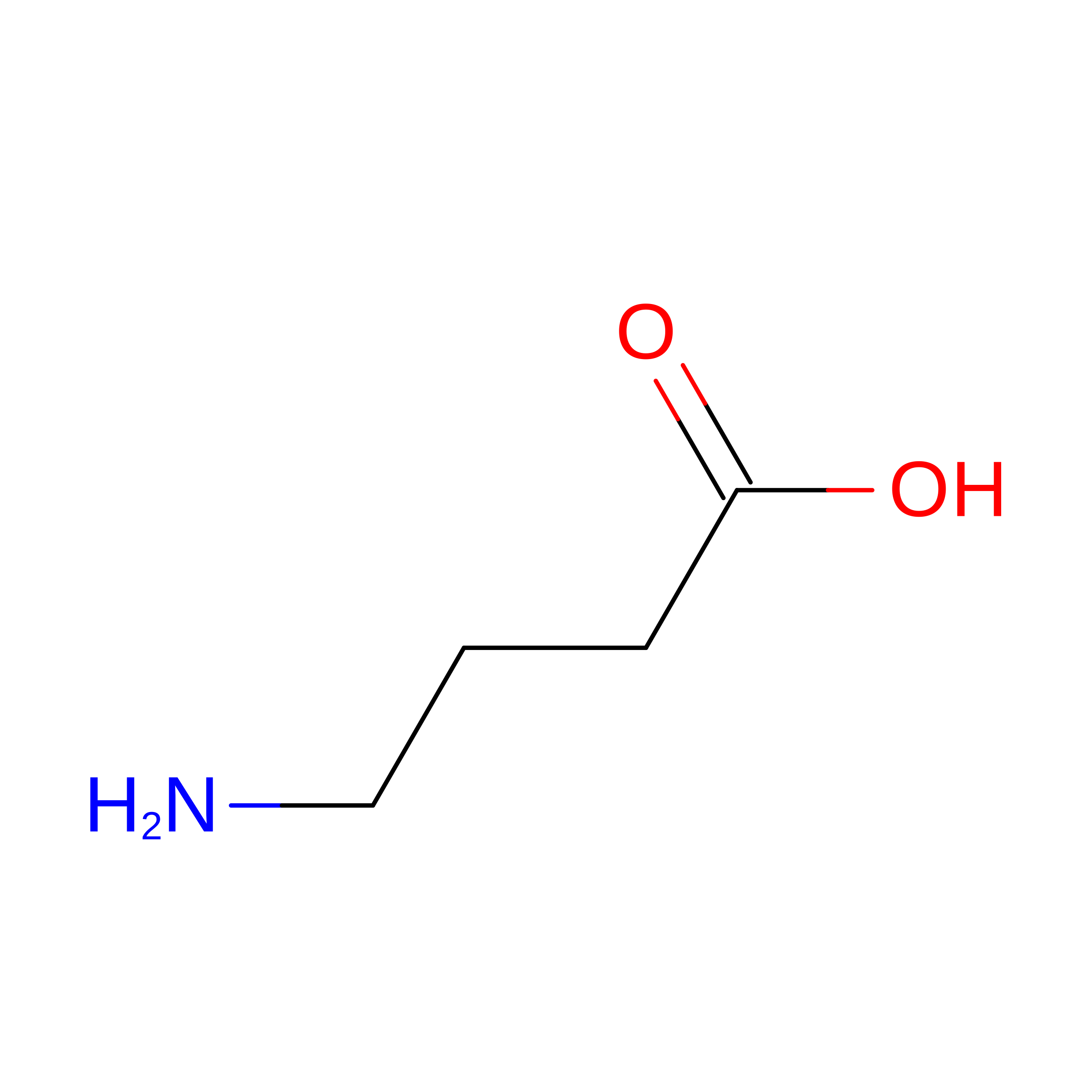
GAMMA-AMINO-BUTANOIC ACID
C4 H9 N O2
BTCSSZJGUNDROE-UHFFFAOYSA-N

Experimental Data & Validation

Experimental Data

  • Method: ELECTRON MICROSCOPY
  • Resolution: 2.56 Å
  • Aggregation State: PARTICLE 
  • Reconstruction Method: SINGLE PARTICLE 
EM Software:
TaskSoftware PackageVersion
RECONSTRUCTIONcryoSPARC
MODEL REFINEMENTPHENIXdev_5480:

Structure Validation

View Full Validation Report


Entry History 

& Funding Information

Deposition Data


Funding OrganizationLocationGrant Number
Centre National de la Recherche Scientifique (CNRS)FrancePESTIPENTA-ANR

Revision History  (Full details and data files)

  • Version 1.0: 2026-02-11
    Type: Initial release
  • Version 1.1: 2026-02-18
    Changes: Data collection, Database references
  • Version 1.2: 2026-04-15
    Changes: Data collection, Database references