Download Mendeley
Visualizing the mechanism of quinol oxidation and inhibition of a bd -type oxidase using cryo-EM.
van der Velden, T.T., Kayastha, K., Pelser, F., Brunle, S., Jeuken, L.J.C.(2026) Sci Adv 12: eaec9946-eaec9946
- PubMed: 42160434 Search on PubMedSearch on PubMed Central
- DOI: https://doi.org/10.1126/sciadv.aec9946
- Primary Citation Related Structures:
9RZV, 9SE4, 9SEJ, 9SFF, 9SFH, 9SFJ, 9SFV - PubMed Abstract:
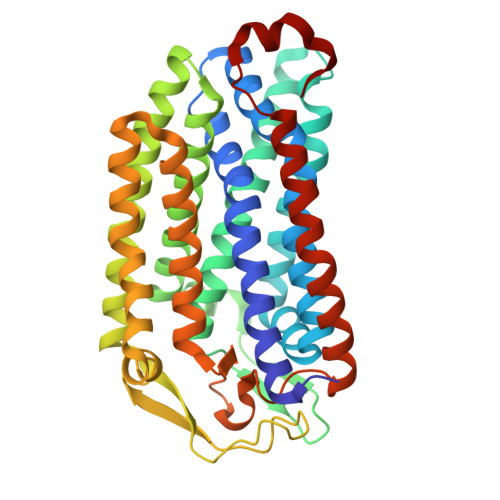
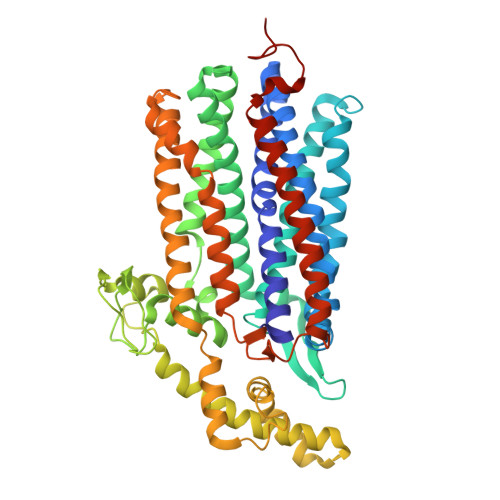
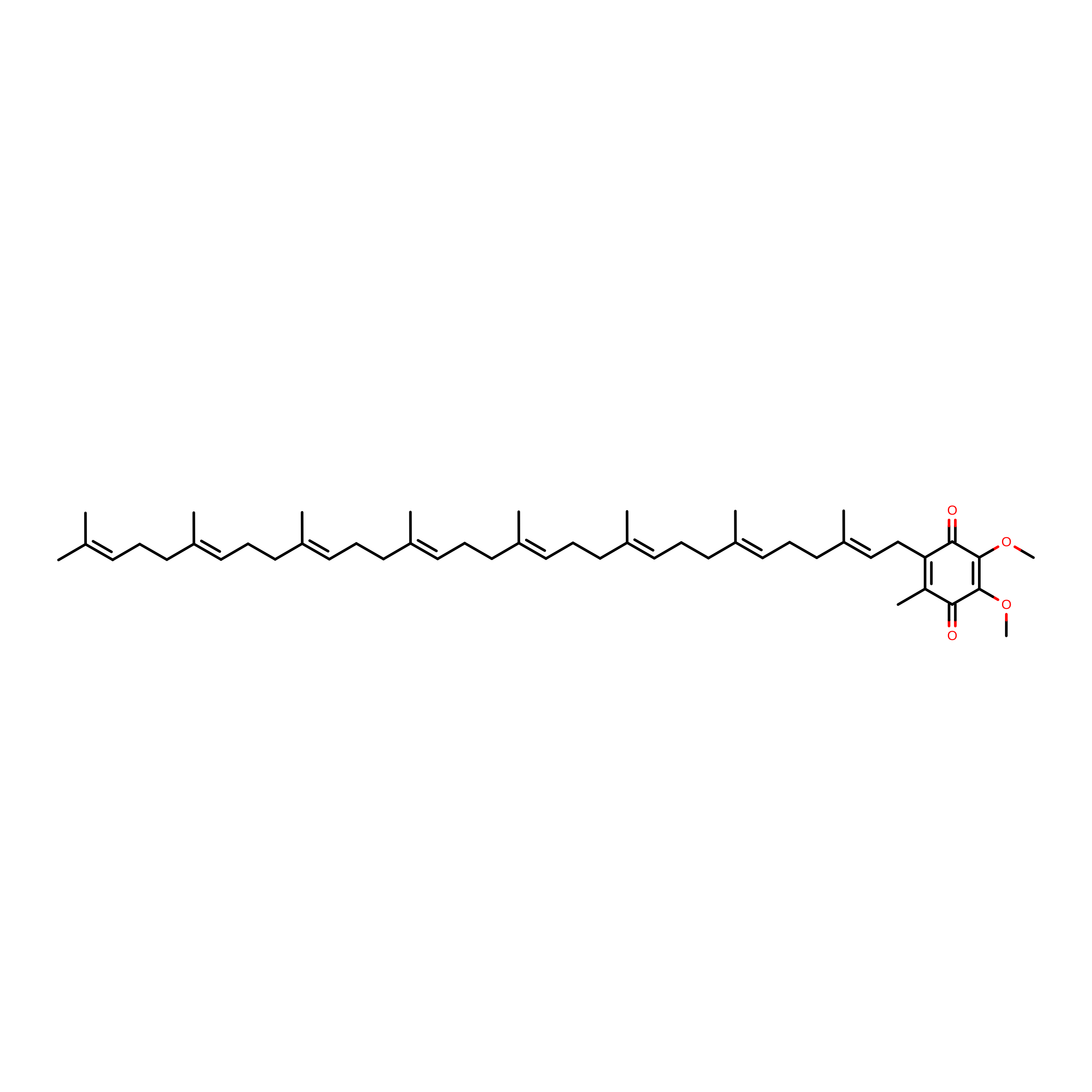
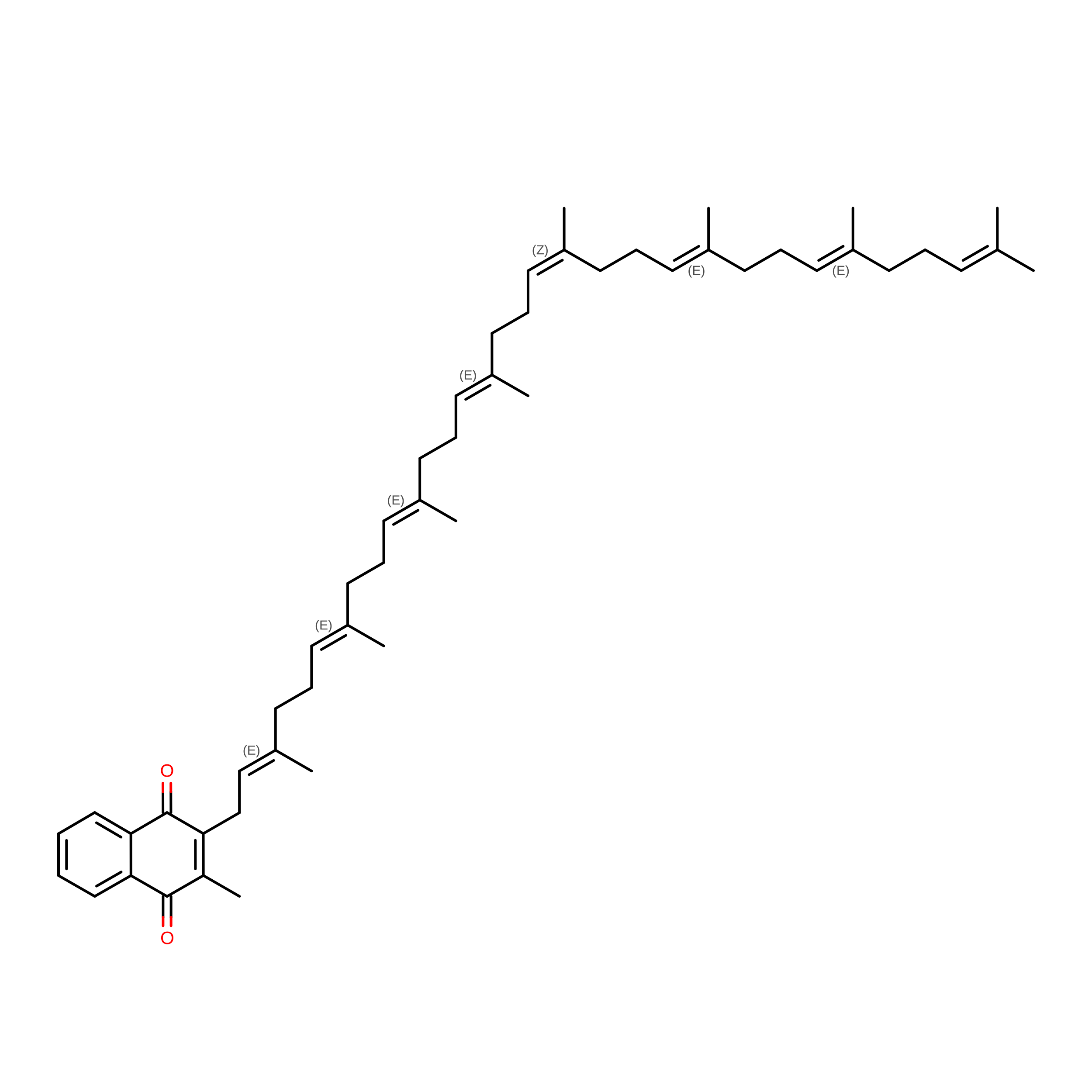
Cytochrome bd is a prokaryotic terminal oxidase recognized as an antibiotic target against various pathogens. Despite its critical role in respiration, failure to capture the mechanism of quinol oxidation and inhibition prohibits structure guided drug discovery. Here, we present cryo-electron microscopy structures of Escherichia coli cytochrome bd -I in monomeric and dimeric forms, in several quinone and inhibitor-bound states. We identify a dynamic Q-loop lid that undergoes a disorder-to-order transition upon substrate binding to the dimer, completing the active site and enabling catalysis. Structure-guided mutagenesis confirms Tyr243 CydA and Arg298 CydA as conserved catalytic residues only found in long Q-loop oxidases, highlighting evolutionary divergence from other subfamilies. Inhibition by Aurachin D triggers refolding of the active site, occluding substrate access via an Asp239 CydA -mediated mechanism. The structural and mechanistic insights presented here establish a comprehensive framework, opening paths for drug discovery against bd oxidases.
- Leiden Institute of Chemistry, Leiden University, P.O. Box 9502, 2300 RA Leiden, Netherlands.
Organizational Affiliation: