Download Mendeley
Phenotypic Hit Identification and Optimization of Novel Pan-TEAD and Subtype-Selective Inhibitors.
Heinrich, T., Gambardella, A., Schwarz, D., Petersson, C., Gunera, J., Garg, S., Schneider, R., Keil, M., Grimmeisen, L., Unzue Lopez, A., Schilke, H., Weitzel, T., Kolb, C., Diehl, P., Doerfel, B., Anlauf, U., Reither, V., Rettig, C., Opelt, B., Delp, A., Wildner, N., Musil, D., Friedrich, E., Burgdorf, L., Fuchss, T., Albers, L., Sousa, P.M.F., Freire, F., M Bandeiras, T., Wienke, D.(2025) J Med Chem 68: 24603-24623
- PubMed: 41212049 Search on PubMed
- DOI: https://doi.org/10.1021/acs.jmedchem.5c02602
- Primary Citation Related Structures:
9S64 - PubMed Abstract:
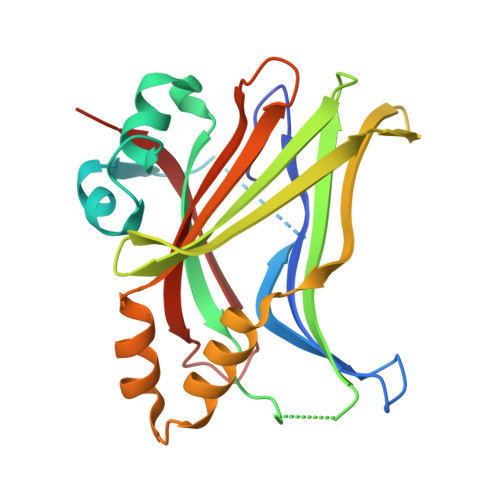
Aiming to identify novel inhibitors of YAP-TEAD-dependent transcription, we conducted a TEAD-reporter-based cellular screen, which yielded a 5-azaindole hit that significantly stabilized TEAD subtypes 2 and 4 in a thermal shift assay. During optimization, derivatives with diverse TEAD selectivity profiles were obtained, including pan-TEAD and TEAD3-sparing inhibitors. Atropisomers with stabilized binding conformations surprisingly resulted in TEAD2 selective inhibitors. Cellular potency in reporter and viability assays was enhanced through targeted structural modifications. The physicochemical and pharmacokinetic properties were improved by the introduction of heteroatoms and the reduction of aromaticity. Structure-based considerations inspired the generation of a pyrrolo-pyridinone scaffold with further optimized properties. In lung cancer xenograft studies, representatives from both substance classes demonstrated monotherapeutic antitumor activity. For one selected example, the combination effect with the KRAS G12C inhibitor sotorasib was demonstrated in vivo.
- Merck Healthcare KGaA, Frankfurter Str. 250, 64293 Darmstadt, Germany.
Organizational Affiliation: