9RWZ | pdb_00009rwz

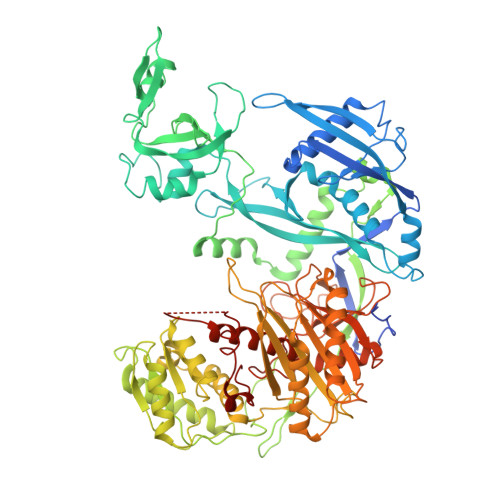
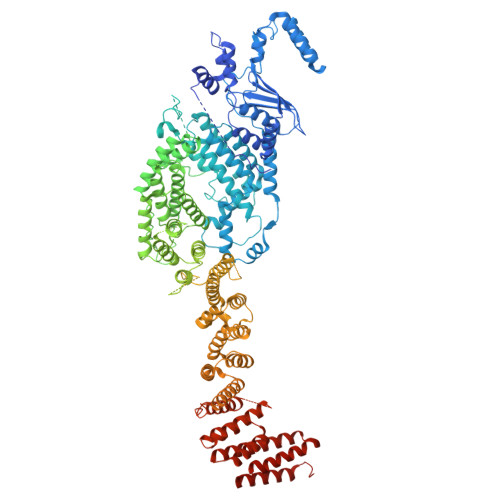
ZSWIM8-CUL3 complex bound to AGO2-miR-7-CYRANO


Experimental Data Snapshot

  • Method: ELECTRON MICROSCOPY
  • Resolution: 3.10 Å
  • Aggregation State: PARTICLE 
  • Reconstruction Method: SINGLE PARTICLE 

wwPDB Validation   3D Report Full Report


This is version 1.1 of the entry. See complete history


Literature

The E3 ubiquitin ligase mechanism specifying targeted microRNA degradation.

Farnung, J.Slobodyanyuk, E.Wang, P.Y.Blodgett, L.W.Lin, D.H.von Gronau, S.Schulman, B.A.Bartel, D.P.

(2026) Nature 

  • DOI: https://doi.org/10.1038/s41586-026-10232-0
  • Primary Citation Related Structures: 
    9RWZ

  • PubMed Abstract: 

    MicroRNAs (miRNAs) associate with Argonaute (AGO) proteins to form complexes that down-regulate target RNAs, including messenger RNAs from most human genes 1-3 . Within each complex, the miRNA pairs to target RNAs, and AGO provides effector function while also protecting the miRNA from cellular nucleases 2-5 . Although much is known about miRNA-directed gene regulation, less is known about how miRNAs themselves are regulated. One pathway that regulates miRNAs involves unusual targets called 'trigger' RNAs, which reverse the canonical regulatory logic and instead down-regulate miRNAs 6-9 . This target-directed miRNA degradation (TDMD) is thought to require a cullin-RING E3 ligase because it depends on the cullin protein CUL3 and other ubiquitylation components, including the BC-box protein ZSWIM8 (refs.  10,11 ). ZSWIM8 is required for murine perinatal viability and for destabilization of most short-lived miRNAs, which suggests biological importance of TDMD 11-13 . Here, biochemical and cellular assays establish AGO binding and polyubiquitylation by the ZSWIM8-CUL3 E3 ligase as the key regulatory steps of TDMD, and thereby define a unique cullin-RING E3 ligase class. Cryogenic electron microscopy analyses show ZSWIM8 recognizing distinct AGO and RNA conformations shaped by pairing of the miRNA to the trigger. Specificity of AGO ubiquitylation is established through generalizable RNA-RNA, RNA-protein and protein-protein interactions. The substrate features recognized by the E3 ligase do not conform to a conventional degron 14,15 but instead establish a two-RNA-factor authentication mechanism for specifying a protein ubiquitylation substrate.


  • Organizational Affiliation
    • Department of Molecular Machines and Signaling, Max Planck Institute of Biochemistry, Martinsried, Germany.

Macromolecules

Find similar proteins by:  (by identity cutoff)  |  3D Structure
Entity ID: 1
MoleculeChains Sequence LengthOrganismDetailsImage
Protein argonaute-2870Homo sapiensMutation(s): 0 
Gene Names: AGO2EIF2C2
EC: 3.1.26
UniProt & NIH Common Fund Data Resources
Find proteins for Q9UKV8 (Homo sapiens)
Explore Q9UKV8 
Go to UniProtKB:  Q9UKV8
PHAROS:  Q9UKV8
GTEx:  ENSG00000123908 
Entity Groups  
Sequence Clusters30% Identity50% Identity70% Identity90% Identity95% Identity100% Identity
UniProt GroupQ9UKV8
Sequence Annotations
Expand
  • Reference Sequence
Find similar proteins by:  (by identity cutoff)  |  3D Structure
Entity ID: 2
MoleculeChains Sequence LengthOrganismDetailsImage
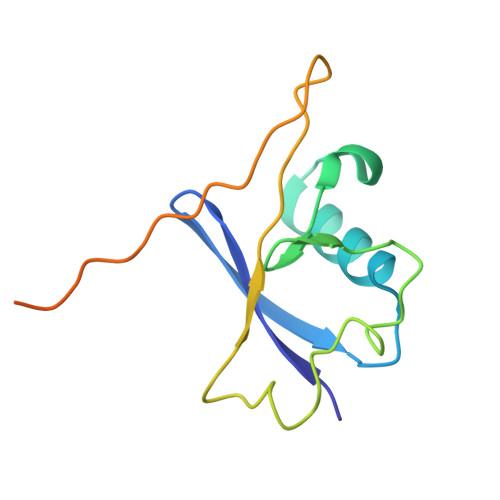
Elongin-B
B, C
118Homo sapiensMutation(s): 0 
Gene Names: ELOBTCEB2
UniProt & NIH Common Fund Data Resources
Find proteins for Q15370 (Homo sapiens)
Explore Q15370 
Go to UniProtKB:  Q15370
PHAROS:  Q15370
GTEx:  ENSG00000103363 
Entity Groups  
Sequence Clusters30% Identity50% Identity70% Identity90% Identity95% Identity100% Identity
UniProt GroupQ15370
Sequence Annotations
Expand
  • Reference Sequence
Find similar proteins by:  (by identity cutoff)  |  3D Structure
Entity ID: 3
MoleculeChains Sequence LengthOrganismDetailsImage
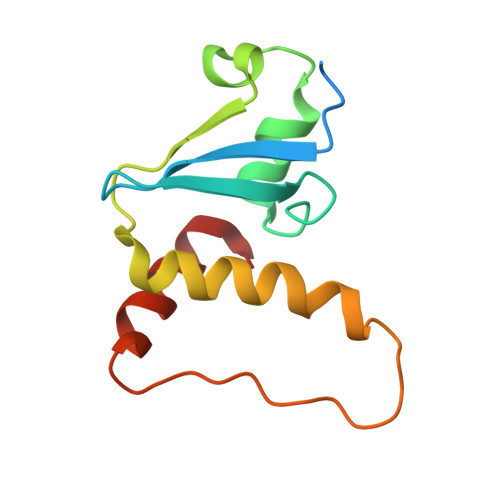
Elongin-C
D, E
112Homo sapiensMutation(s): 0 
Gene Names: ELOCTCEB1
UniProt & NIH Common Fund Data Resources
Find proteins for Q15369 (Homo sapiens)
Explore Q15369 
Go to UniProtKB:  Q15369
PHAROS:  Q15369
GTEx:  ENSG00000154582 
Entity Groups  
Sequence Clusters30% Identity50% Identity70% Identity90% Identity95% Identity100% Identity
UniProt GroupQ15369
Sequence Annotations
Expand
  • Reference Sequence
Find similar proteins by:  (by identity cutoff)  |  3D Structure
Entity ID: 5
MoleculeChains Sequence LengthOrganismDetailsImage
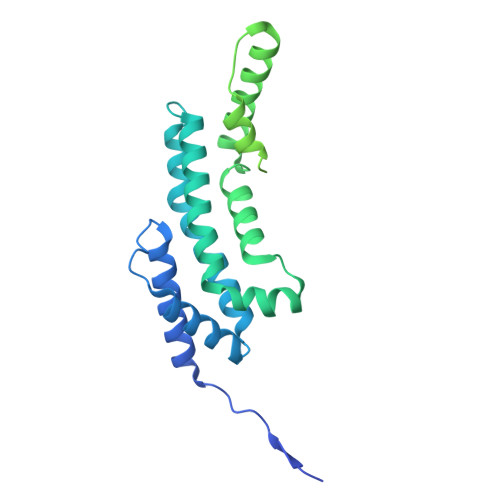
Cullin-3G [auth H],
H [auth I]
396Homo sapiensMutation(s): 2 
Gene Names: CUL3KIAA0617
UniProt & NIH Common Fund Data Resources
Find proteins for Q13618 (Homo sapiens)
Explore Q13618 
Go to UniProtKB:  Q13618
PHAROS:  Q13618
GTEx:  ENSG00000036257 
Entity Groups  
Sequence Clusters30% Identity50% Identity70% Identity90% Identity95% Identity100% Identity
UniProt GroupQ13618
Sequence Annotations
Expand
  • Reference Sequence
Find similar proteins by:  (by identity cutoff)  |  3D Structure
Entity ID: 7
MoleculeChains Sequence LengthOrganismDetailsImage
Zinc finger SWIM domain-containing protein 8J [auth N],
K [auth M]
1,866Homo sapiensMutation(s): 0 
Gene Names: ZSWIM8KIAA0913
UniProt & NIH Common Fund Data Resources
Find proteins for A7E2V4 (Homo sapiens)
Explore A7E2V4 
Go to UniProtKB:  A7E2V4
PHAROS:  A7E2V4
GTEx:  ENSG00000214655 
Entity Groups  
Sequence Clusters30% Identity50% Identity70% Identity90% Identity95% Identity100% Identity
UniProt GroupA7E2V4
Sequence Annotations
Expand
  • Reference Sequence

Find similar nucleic acids by:  Sequence  

Entity ID: 4
MoleculeChains LengthOrganismImage
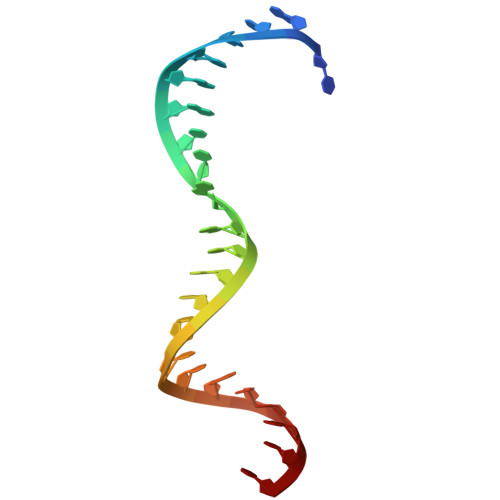
miR-7F [auth G]24Homo sapiens
Sequence Annotations
Expand
  • Reference Sequence
Find similar nucleic acids by:  (by identity cutoff) 
Entity ID: 6
MoleculeChains LengthOrganismImage
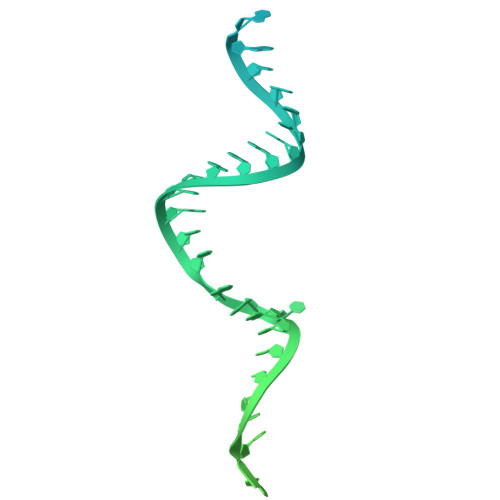
CYRANO trigger RNAI [auth T]120Homo sapiens
Sequence Annotations
Expand
  • Reference Sequence
Experimental Data & Validation

Experimental Data

  • Method: ELECTRON MICROSCOPY
  • Resolution: 3.10 Å
  • Aggregation State: PARTICLE 
  • Reconstruction Method: SINGLE PARTICLE 
EM Software:
TaskSoftware PackageVersion
MODEL REFINEMENTPHENIX1.21.1_5286
RECONSTRUCTIONcryoSPARC

Structure Validation

View Full Validation Report


Entry History & Funding Information

Deposition Data


Funding OrganizationLocationGrant Number
European Research Council (ERC)European Union101098161
German Research Foundation (DFG)Germany--

Revision History  (Full details and data files)

  • Version 1.0: 2026-03-18
    Type: Initial release
  • Version 1.1: 2026-04-01
    Changes: Data collection, Database references