Download Mendeley
(-)-Englerin A binding to human TRPC5 exposes an aromatic interaction network in channel activation.
Porav, S.A., Ptakova, A., Bauer, C.C., Hammond, K.L.R., Beech, D.J., Vlachova, V., Muench, S.P., Bon, R.S.(2026) Nat Commun 17
- PubMed: 42056091 Search on PubMedSearch on PubMed Central
- DOI: https://doi.org/10.1038/s41467-026-71840-y
- Primary Citation Related Structures:
9RRF, 9RRM, 9RRN, 9RRO, 9RRQ, 9RRU, 9RSG, 9RSH, 9RVV - PubMed Abstract:
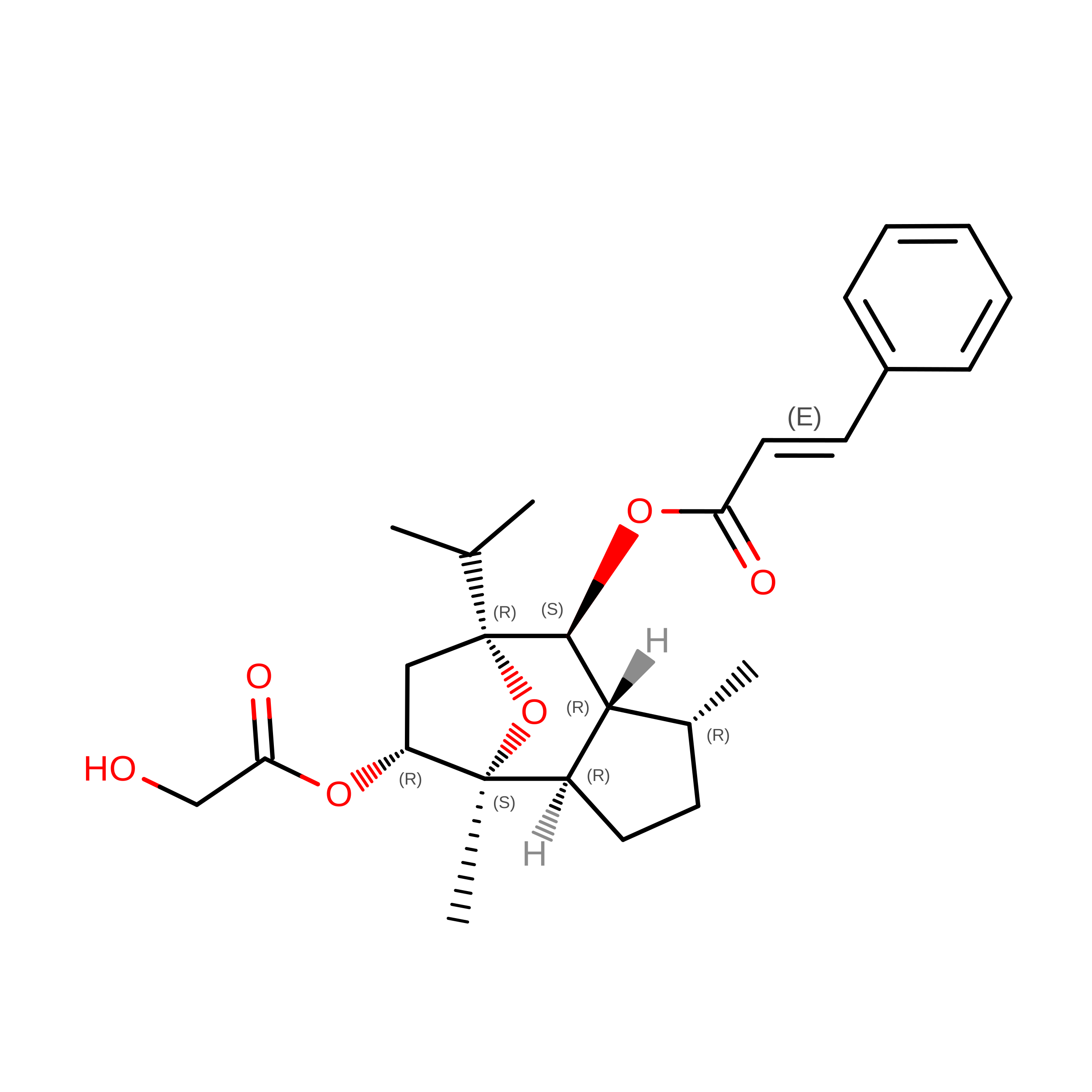
TRPC4/5 cation channels are polymodal cellular sensors and emerging drug targets in various human pathologies. The plant natural product (-)-englerin A (EA) is a potent, selective TRPC4/5 agonist that has transformed TRPC4/5 research. However, the structural basis of EA-mediated TRPC4/5 activation has remained elusive, limiting our ability to understand and exploit EA's pharmacology. Here, we present nine high-resolution cryo-EM structures of human TRPC5, representing different states and ligand occupancies, which show that EA occupies a conserved lipid binding site between channel subunits. Conformational changes of residues surrounding this binding site - most notably in the aromatic interaction network around Phe520 - result in rearrangement of the pore helices into a pre-open state. Our structural models are consistent with the effects of mutagenesis on EA's potency, efficacy and activation kinetics, and allow us to rationalise competitive inhibition by other TRPC4/5 modulators as well as EA's selectivity profile within the TRPC family. Our structural insights into the mode-of-action of a widely used TRPC4/5 agonist will underpin fundamental TRPC4/5 research and ongoing drug discovery programmes.
- Leeds Institute of Cardiovascular and Metabolic Medicine, LIGHT Laboratories, University of Leeds, Leeds, UK. s.porav@leeds.ac.uk.
Organizational Affiliation: