Download Mendeley
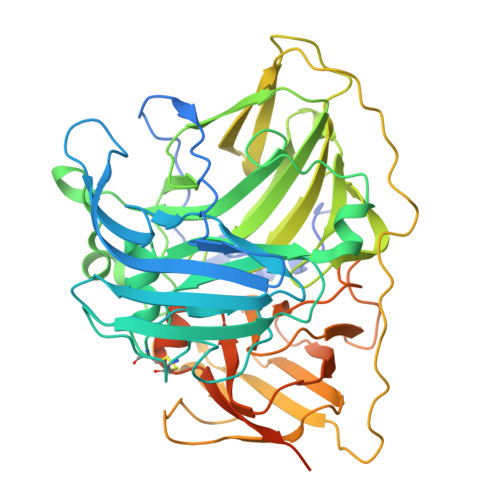
Laccases from lactic acid bacteria show cuprous oxidase activity and capture Cu(II) and Ag(I) ions.
Gasco, R., Sendra, R., Olmeda, I., Paredes-Martinez, F., Ferrer, S., Pardo, I., Casino, P.(2026) Protein Sci 35: e70385-e70385
- PubMed: 41432273 Search on PubMedSearch on PubMed Central
- DOI: https://doi.org/10.1002/pro.70385
- Primary Citation Related Structures:
9RC3, 9RC5, 9RC6, 9RC8, 9RCJ, 9RCK, 9RCL, 9RCM, 9RCN - PubMed Abstract:
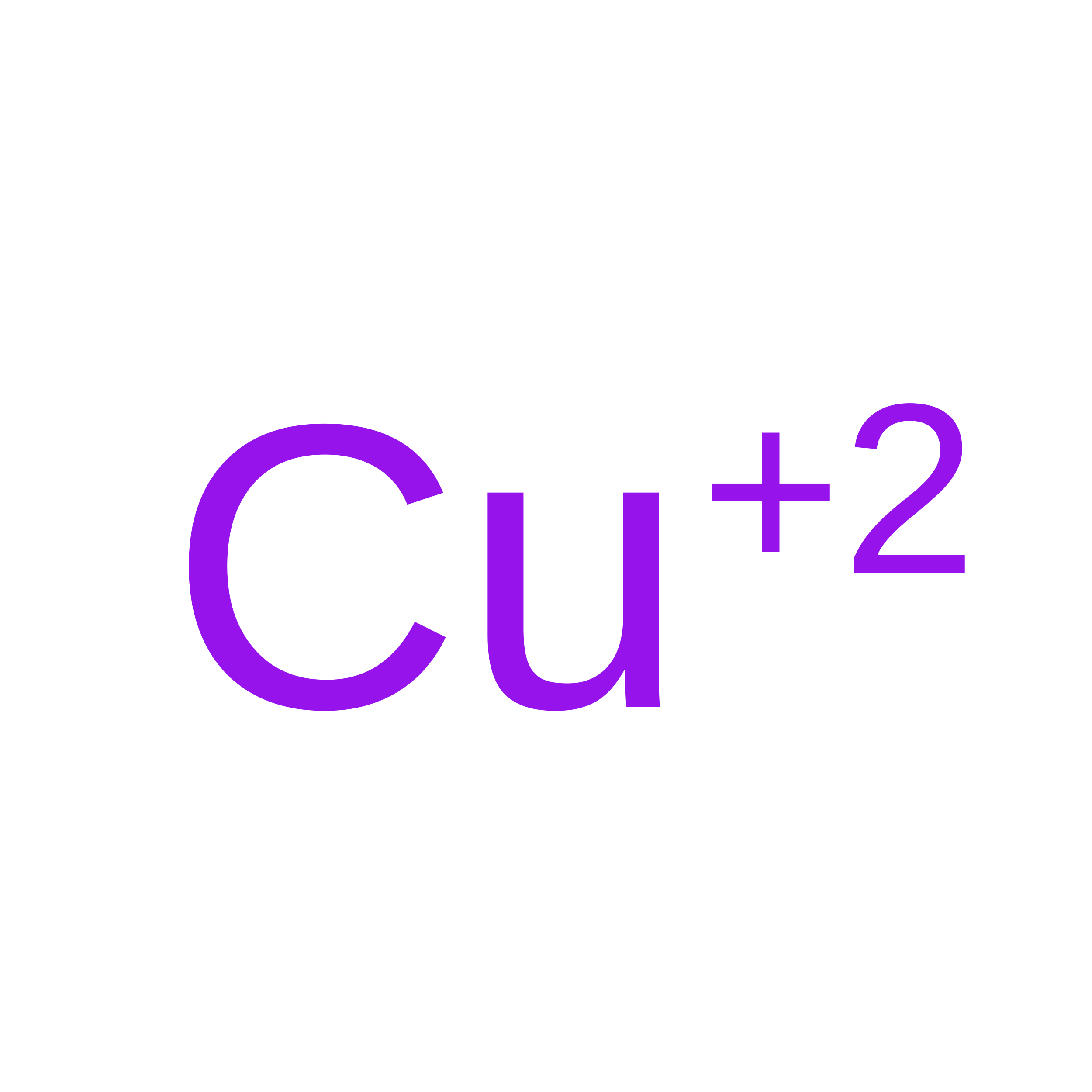
Several laccases derived from lactic acid bacteria (LAB) display specific structural features, such as two methionine residues at the entrance of the T1Cu center, and an extended C-terminal end enriched in methionine and histidine. To investigate their functional roles, we engineered mutant variants of the laccase Pp4816 from Pediococcus pentosaceus and analyzed them using both functional and structural approaches. We identified a cuprous oxidase activity that is essential for the oxidation of 2,6-dimethoxyphenol (2,6-DMP) and other substrates, but dispensable for ABTS. The two Met residues at the entrance of the T1Cu center are crucial for this activity while the C-terminus has a minor impact and shows conformational flexibility. Through anomalous diffraction studies, we located Cu(II) bound at the entrance of the T1Cu center and additional surface sites, and demonstrated that Ag(I) acts as an inhibitor of the cuprous oxidase activity, which binds to overlapping positions, including the C-terminus. This cuprous oxidase activity was found to be conserved in other laccases from LAB, suggesting that these enzymes function as copper and silver chelators with potential biotechnological applications, such as environmental copper detoxification.
- Institut de Biotecnologia i Biomedicina (BIOTECMED), Universitat de València, Valencia, Spain.
Organizational Affiliation: