Download Mendeley
Mechanistic basis of LolDF-mediated lipoprotein transport in Acinetobacter.
Pang, J., Chen, Y., Qiao, W., Ju, Z., Zhu, X., Chang, S., Wang, L., Zhang, Z., Zerang, Z., Xu, S., Chen, Y., Li, C., Ying, B., Ding, B.S., Chen, H., Zhang, S., Wei, X., Tang, X., Dong, H.(2026) Nat Commun 17
- PubMed: 42736309 Search on PubMedSearch on PubMed Central
- DOI: https://doi.org/10.1038/s41467-026-76802-y
- Primary Citation Related Structures:
28MF, 29EB, 9R29 - PubMed Abstract:
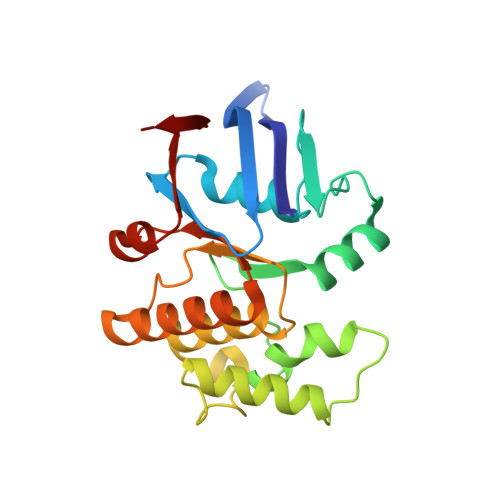
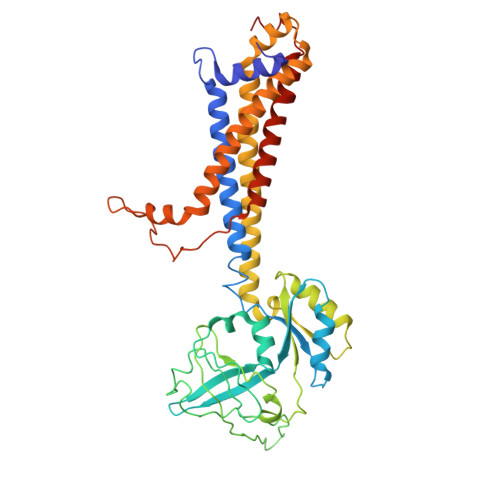
Lipoprotein trafficking is essential for Gram-negative bacteria to maintain the outer membrane, a permeability barrier critical for survival and antibiotic resistance. While most bacteria employ the canonical LolCDE transporter, Acinetobacter utilizes a noncanonical LolDF system whose mechanism has remained unclear. Here we determine cryo-EM structures of Acinetobacter baylyi LolDF in substrate-bound, AMP-PNP-bound, and LolA-bound states. LolDF forms a symmetric homodimer with a central cavity that accommodates three acyl chains at the membrane level, suggesting lateral extraction of lipoproteins directly from the inner membrane. AMP-PNP-driven conformational changes induce a coordinated symmetric constriction of the cavity that promotes substrate expulsion, distinct from the asymmetric mechanism observed in LolCDE. Functional studies further identify key door-bar residues required for transport and reveal that charged residues at the +3 position function as an inner membrane retention signal. Together, these findings reveal a mechanistically distinct lipoprotein trafficking system and provide a framework for targeting multidrug-resistant Gram-negative pathogens.
- Department of Laboratory Medicine, State Key Laboratory of Biotherapy, National Clinical Research Center for Geriatrics, West China Hospital, Sichuan University, Chengdu, China.
Organizational Affiliation: