Download Mendeley
NMR insights on multidomain proteins: the case of the SARS-CoV-2 nucleoprotein.
Bolognesi, T., Schiavina, M., Felli, I.C., Pierattelli, R.(2025) Prog Nucl Magn Reson Spectrosc 148-149: 101577-101577
- PubMed: 40912879 Search on PubMed
- DOI: https://doi.org/10.1016/j.pnmrs.2025.101577
- Primary Citation Related Structures:
9QWI - PubMed Abstract:
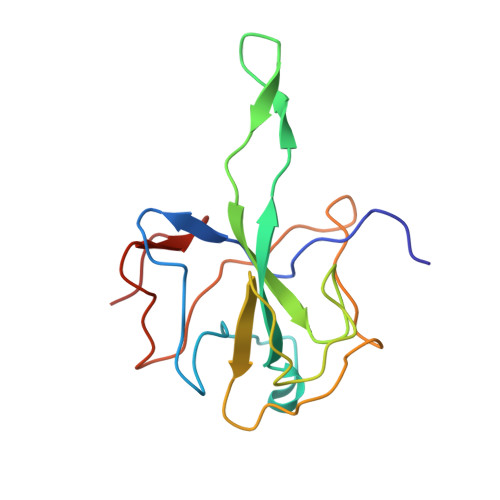
Studying multidomain proteins, especially those combining well-folded domains with intrinsically disordered regions (IDRs), requires specific Nuclear Magnetic Resonance (NMR) techniques to address their structural complexity. To illustrate this, we focus here on the nucleocapsid protein from SARS-CoV-2, which includes both structured and disordered regions. We applied a suite of NMR methods, combining ARTINA software for automatic assignment and structure modelling with multi-receiver experiments that simultaneously capture signals from different nuclear spins, increasing both data quality and acquisition efficiency. Studies of signal temperature-dependence, heteronuclear relaxation and secondary structure propensity (SSP) analysis, as well as experiments employing either 1 H or 13 C detection to achieve simultaneous snapshots of globular and disordered regions, were used to analyse both the isolated N-terminal domain (NTD) and a construct (NTR) comprising the NTD and two flanking highly disordered regions (IDR1, IDR2). This comprehensive approach allowed us to characterize the NTD's structure and to evaluate how the IDRs affect the overall conformation and dynamics, as well as the interaction with RNA. The findings underscore the importance of applying such a combination of tailored NMR techniques for effectively studying multidomain proteins with heterogeneous structural and dynamic properties.
- Magnetic Resonance Center (CERM) and Department of Chemistry "Ugo Schiff", University of Florence, Via L. Sacconi 6, 50019 Sesto Fiorentino, Italy.
Organizational Affiliation: