Download Mendeley
Impact of remdesivir modifications on human HINT1 binding - A structural and functional study in the remdesivir activation pathway.
Chazot, A., Zimberger, C., Fotopoulos, I., Canard, B., Alvarez, K., Ferron, F.(2026) Structure 34: 1072
- PubMed: 42184828 Search on PubMed
- DOI: https://doi.org/10.1016/j.str.2026.04.015
- Primary Citation Related Structures:
9QRO, 9QTC - PubMed Abstract:
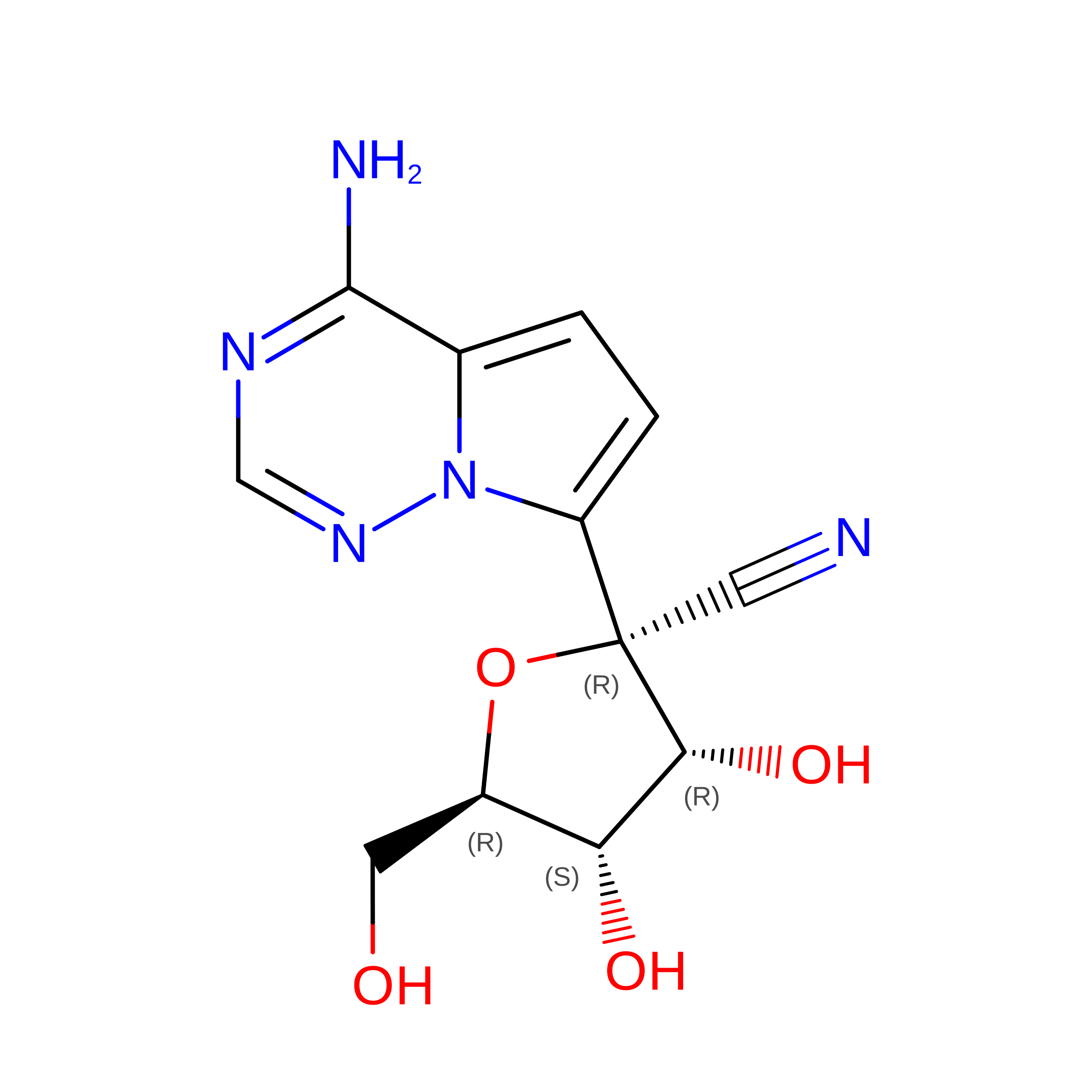
Remdesivir is an antiviral ProTide-type nucleotide analog, which is activated into its 5'-triphosphate form by several cellular enzymes. The human histidine triad nucleotide-binding protein 1 (hHINT1) hydrolyzes the P-N bond to release the 5'-monophosphate. The nucleotide chemical structure consequently impacts the activation pathway efficacy. We report crystal structures of human HINT1 in complex with either the nucleoside GS-441524 or the monophosphate nucleoside GS-441524-MP-both metabolites of remdesivir at 1.30 Å and 1.58 Å resolution, respectively. Together with enzymatic data, these results disclose the main structural determinants governing activity, namely the steric hindrance of the phosphoramidate moiety as well as ribose modifications altering interactions with Asp43.
- Aix Marseille Université, CNRS, AFMB, UMR 7257 Marseille, France.
Organizational Affiliation: