Download Mendeley
A multi-dentate, cooperative interaction between endo- and exo-ribonucleases within the bacterial RNA degradosome.
Paris, G., Katsuya-Gaviria, K., Clarke, H., Johncock, M., Dendooven, T., Lulla, A., Luisi, B.F.(2025) Nucleic Acids Res 53
- PubMed: 41036625 Search on PubMedSearch on PubMed Central
- DOI: https://doi.org/10.1093/nar/gkaf960
- Primary Citation Related Structures:
9IBH, 9QH0, 9QH3 - PubMed Abstract:
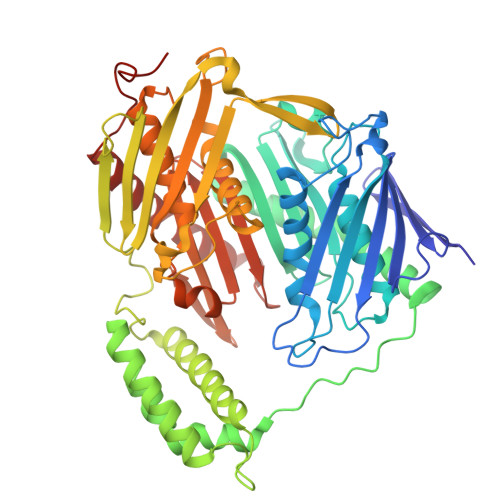
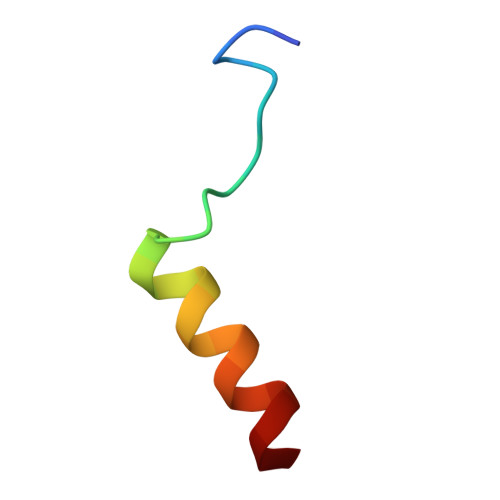
In Escherichia coli and numerous other bacteria, two of the principal enzymes mediating messenger RNA decay and RNA processing-RNase E, an endoribonuclease, and polynucleotide phosphorylase (PNPase), an exoribonuclease-assemble into a multi-enzyme complex known as the RNA degradosome. While RNase E forms a homotetramer and PNPase a homotrimer, it remains unclear how these two enzymes interact within the RNA degradosome to potentially satisfy all mutual recognition sites. In this study, we used cryo-EM, biochemistry, and biophysical studies to discover and characterize a new binding mode for PNPase encompassing two or more motifs that are necessary and sufficient for strong interaction with RNase E. While a similar interaction is seen in Salmonella enterica, a different recognition mode arose for Pseudomonas aeruginosa, illustrating the evolutionary drive to maintain physical association of the two ribonucleases. The data presented here suggest a model for the quaternary organization of the RNA degradosome of E. coli, where one PNPase trimer interacts with one RNase E protomer. Conformational transitions are predicted to facilitate substrate capture and transfer to catalytic centres. The model suggests how the endo- and exo-ribonucleases might cooperate in cellular RNA turnover and recruitment of regulatory RNA by the degradosome assembly.
- Department of Biochemistry, University of Cambridge, Tennis Court Road, Cambridge CB2 1GA, United Kingdom.
Organizational Affiliation: