Download Mendeley
Quinone-transporting filaments expand bioenergetic capacity in Gram-positive Bacillota.
Kropp, A., Asadollahi, K., Stapleton, J.A., Simsive, L., Leung, P.M., Darnell, R.L., Barlow, C.K., Hartmann, B.G., Yates, N.D.J., Lumbantobing, T., Fox, D.R., Greening, C., Zdorevskyi, O., Sharma, V., Blaza, J.N., Parkin, A., Grinter, R.(2026) Nat Microbiol 11: 2543-2561
- PubMed: 42608535 Search on PubMedSearch on PubMed Central
- DOI: https://doi.org/10.1038/s41564-026-02450-z
- Primary Citation Related Structures:
9PXK, 9PXL, 9PXM - PubMed Abstract:
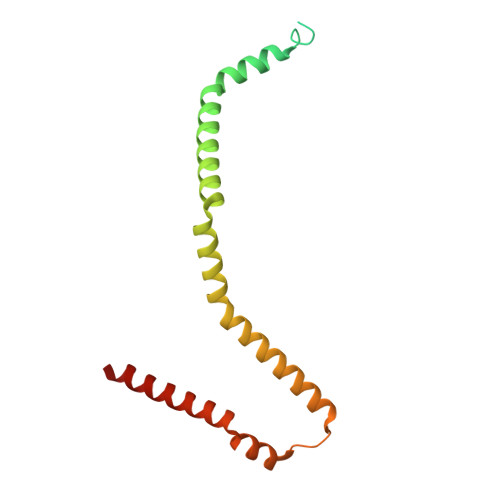
Cellular respiration depends on transferring electrons to hydrophobic quinones in membrane bilayers, meaning bioenergetic capacity is constrained by available membrane surface area. While Gram-negative bacteria expand this capacity through internal membrane invaginations and eukaryotes use membrane-bound organelles, whether Gram-positive bacteria have alternative capacity-generating mechanisms is unknown. Here we show that Bacillus subtilis forms a quinone-transporting pseudomembrane composed of filaments of the NADH dehydrogenase Ndh and the quinone-transporting protein Ncp. Cryo-EM, lipidomics and molecular dynamics reveal that Ndh and Ncp co-assemble with lipids into a 4:4 stoichiometric complex with a solvent-excluded hydrophobic lumen containing phospholipids, which sequesters quinones. These complexes further assemble into filaments, linking chambers into a continuous conduit that amplifies quinone reduction. Phylogenetic analysis suggests that this capacity is widespread in Bacillota. Quinone-transporting filaments thus reveal a strategy to expand the quinone pool and bioenergetic capacity while occupying minimal membrane space.
- Department of Biochemistry and Pharmacology, Bio21 Molecular Science and Biotechnology Institute, The University of Melbourne, Parkville, Victoria, Australia.
Organizational Affiliation: