Find PDB structures and Computed Structure Models (CSM) by combining queries from tools in this suite: Attribute Search, Sequence Similarity, Sequence Motif, 3D Similarity, and 3D Motif with 'AND' logic.
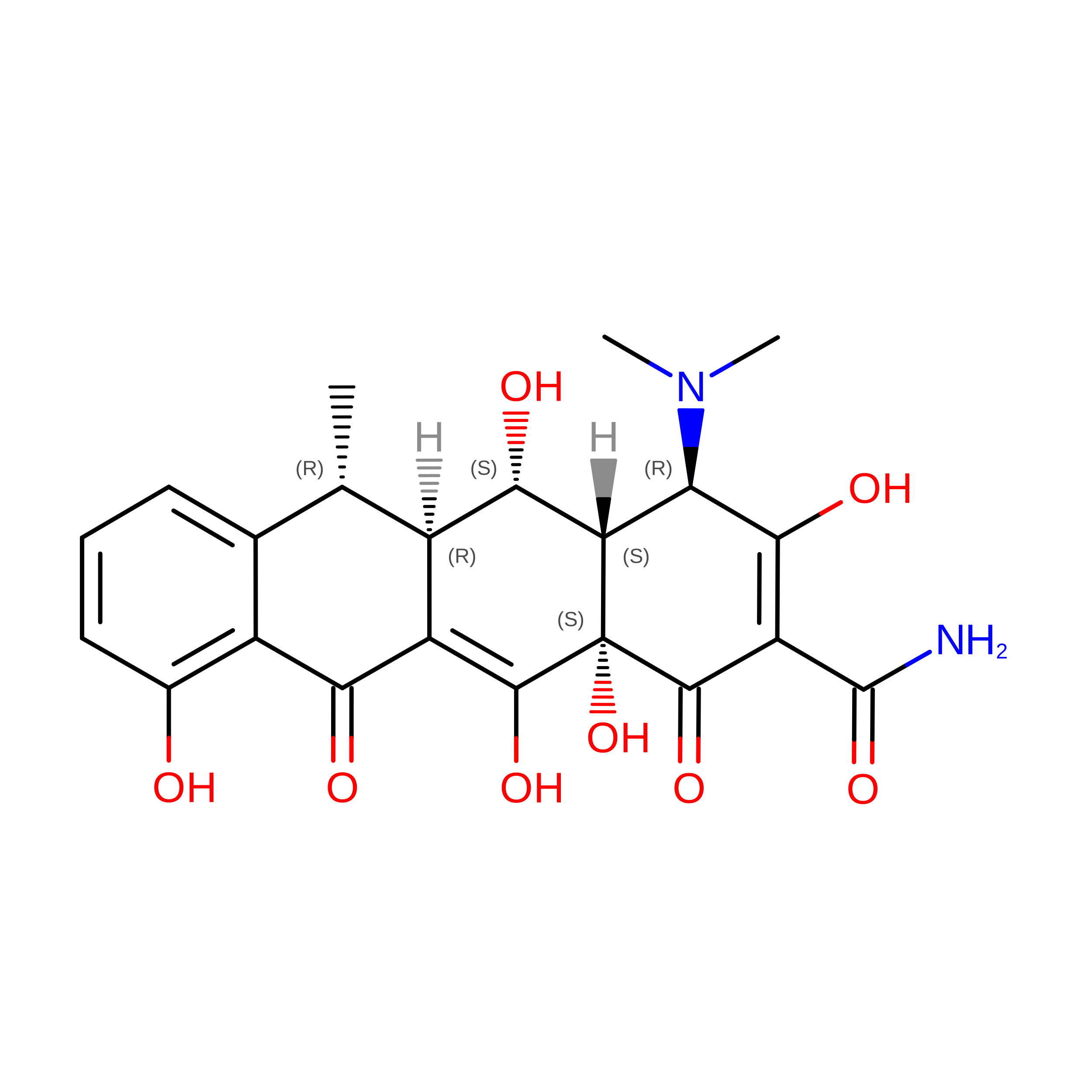
The tetracycline class of antibiotics is widely used for treating bacterial diseases including Lyme disease, anthrax, acne vulgaris, and pneumonia. Using a series of high-resolution cryo-electron microscopy (cryo-EM) structures, we show that tetracyclines can simultaneously target the mRNA decoding center in the 30S subunit and the nascent peptide exit tunnel (NPET) in the 50S subunit of the bacterial ribosome. Among the tested tetracyclines, Doxycycline was distinct in its ability to dimerize and bind the NPET at multiple locations. Structural comparison of Doxycycline, Minocycline, and Sarecycline bound to the Escherichia coli and Cutibacterium acnes 70S ribosome revealed species-specific differences affecting drug interaction and occupancy. Our results reveal a dual site mechanism of action for tetracyclines and provide a structural basis for rational design of narrow spectrum tetracyclines to overcome the rising threat of antibiotic resistance.
Organizational Affiliation:
Department of Molecular Biophysics and Biochemistry, Yale University, New Haven, CT, USA.
Department of Dermatology, Yale University School of Medicine, New Haven, CT, USA. ivan.lomakin@yale.edu.
Yale Institute for Global Health, Yale University, New Haven, CT, USA. ivan.lomakin@yale.edu.
Department of Dermatology, Case Western Reserve University School of Medicine, Cleveland, OH, USA.
Department of Molecular Biophysics and Biochemistry, Yale University, New Haven, CT, USA. christopher.bunick@yale.edu.
Department of Dermatology, Yale University School of Medicine, New Haven, CT, USA. christopher.bunick@yale.edu.
Yale Institute for Global Health, Yale University, New Haven, CT, USA. christopher.bunick@yale.edu.
Program in Translational Biomedicine, Yale University School of Medicine, New Haven, CT, USA. christopher.bunick@yale.edu.

 Download Mendeley