Download Mendeley
Molecular mechanisms of thiazide-like diuretics-mediated inhibition of the human Na-Cl cotransporter.
Lee, C.L., Zhang, J., Feng, L.(2025) Nat Commun 16: 7740-7740
- PubMed: 40830368 Search on PubMedSearch on PubMed Central
- DOI: https://doi.org/10.1038/s41467-025-62714-w
- Primary Citation Related Structures:
9PIE, 9PIF, 9PIG - PubMed Abstract:
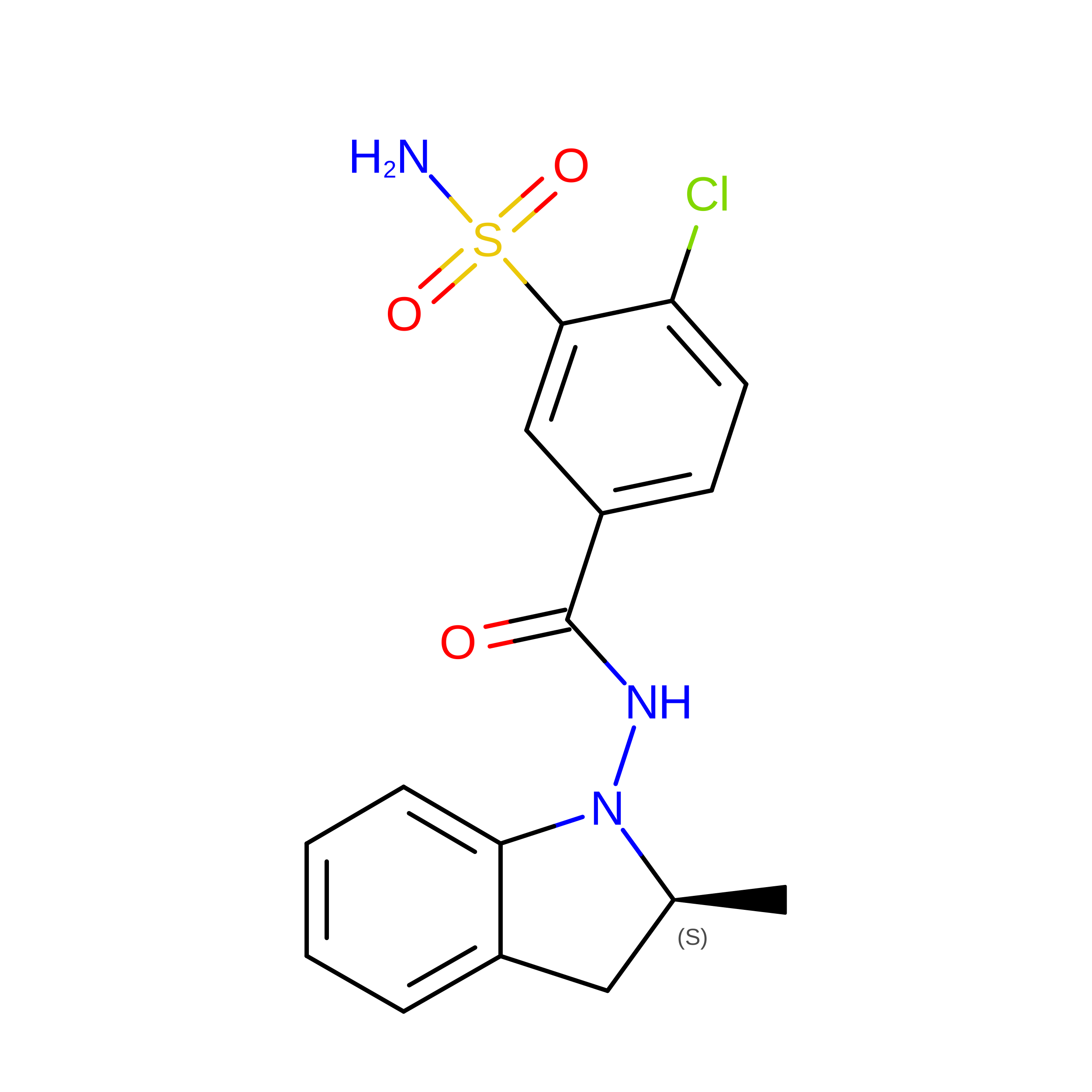
Thiazide-type and thiazide-like diuretics are structurally distinct first-line antihypertensive drugs that target the sodium-chloride cotransporter (NCC) in the kidney. Thiazide-like diuretics are reported to have better cardioprotective effects than thiazide-type diuretics, but whether this is due to differences in NCC-inhibition mechanisms, if there is any, remains unclear. To understand the molecular mechanisms of NCC inhibition by thiazide-like diuretics, we determine the structures of human NCC (hNCC) bound to two of the most widely used thiazide-like diuretics, chlorthalidone and indapamide, using cryogenic electron microscopy (cryo-EM). Structural analyses reveal shared features and distinctions between NCC-inhibition by thiazide-like and thiazide-type diuretics. Furthermore, structural comparisons allow us to identify polymorphisms in hNCC that have substantial differential effects on the potencies of specific thiazide-like and thiazide-type diuretics. Our work provides important insights into the molecular pharmacology of NCC and a blueprint for developing precision medicine to manage hypertension with thiazide-like and thiazide-type diuretics.
- Department of Molecular and Cellular Physiology, Stanford University School of Medicine, Stanford, CA, USA.
Organizational Affiliation: