Download Mendeley
Cooperativity and communication between the active sites of the dimeric SARS-CoV-2 main protease.
Zvornicanin, S.N., Shaqra, A.M., Flynn, J., Intravaia, L.E., Martinez, H.C., Jia, W., Gupta, D.K., Moquin, S., Dovala, D., Bolon, D.N., Kelch, B.A., Schiffer, C.A., Yilmaz, N.K.(2026) Sci Adv 12: eaeb0769-eaeb0769
- PubMed: 41544157 Search on PubMedSearch on PubMed Central
- DOI: https://doi.org/10.1126/sciadv.aeb0769
- Primary Citation Related Structures:
9O6D, 9O6E, 9O6F, 9O6P, 9O6Q, 9O74, 9OPM, 9OPN - PubMed Abstract:
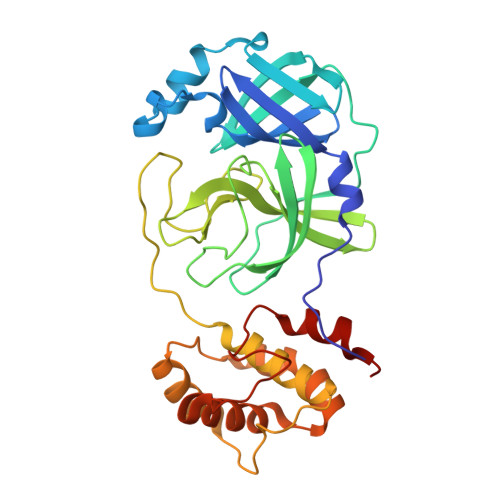
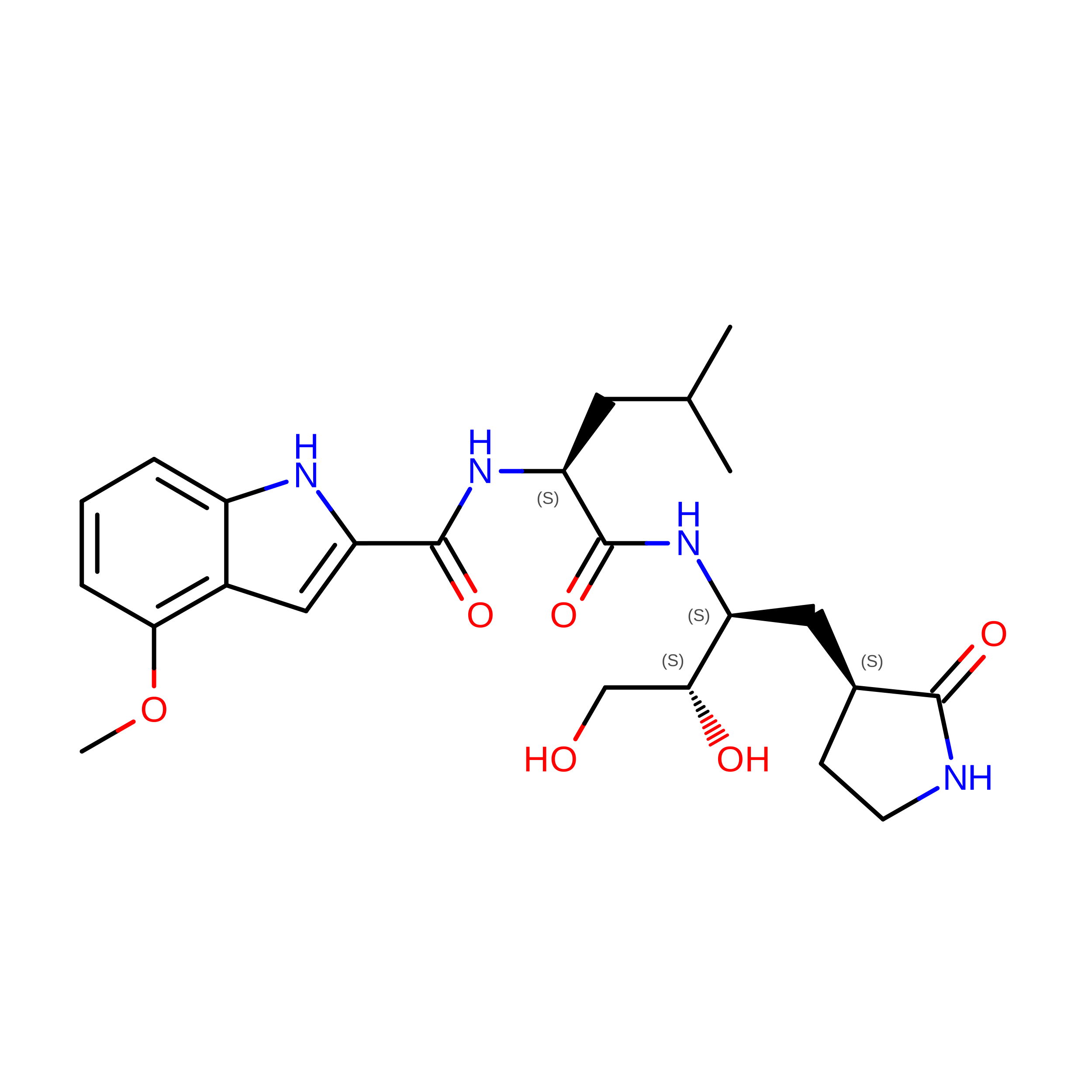
The coronaviral main protease (M pro ) has been the subject of various biochemical and structural studies and a drug target against severe acute respiratory syndrome coronavirus 2 (SARS-CoV-2) infections. SARS-CoV-2 M pro is active as a dimer, but despite apparent cooperativity in catalytic activity, how the two distal active sites communicate and modulate binding and/or catalysis is unclear. Here, we have investigated the interplay between cooperativity, dimerization, and substrate cleavage in SARS-CoV-2 M pro through a combination of enzymatic assays, crystal structures, and protein characterization. To disentangle the contribution of each active site to the observed enzymatic activity, we developed a cleavage assay involving heterodimers of active and inactive (catalytic residue mutated or inhibitor-bound) monomers. Notably, we found that heterodimerization increased cleavage efficiency per active monomer. In addition, we mapped a network of critical residues bridging the two active sites and probed this network through engineered mutations. By dissecting the cooperativity and communication between the active sites, we provide insights into the M pro reaction cycle and functional significance of its dimeric architecture.
- Department of Biochemistry and Molecular Biotechnology, University of Massachusetts Chan Medical School, Worcester, MA 01605, USA.
Organizational Affiliation: