Download Mendeley
Biological Activity and Structural Biology of Current KAT6A Inhibitor Chemotypes.
Suwandi, A., Jin, J., Zhao, Y., Mudududdla, R., Gee, Y.S., Deora, G.S., Sun, Y., Wei, H., Huang, F., He, J.S., George, A.J., Hermans, S.J., Leaver, D.J., Parker, M.W., Baell, J.B.(2026) J Med Chem 69: 2082-2114
- PubMed: 41611522 Search on PubMedSearch on PubMed Central
- DOI: https://doi.org/10.1021/acs.jmedchem.5c01426
- Primary Citation Related Structures:
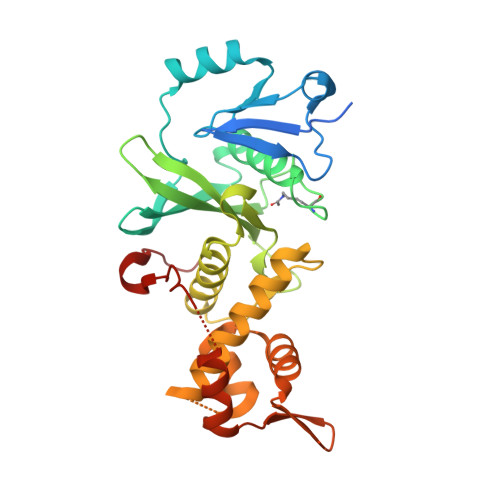
9OO9, 9OOA, 9OOB, 9OOC, 9OOD, 9OOE, 9OOF, 9OOH, 9OOJ - PubMed Abstract:
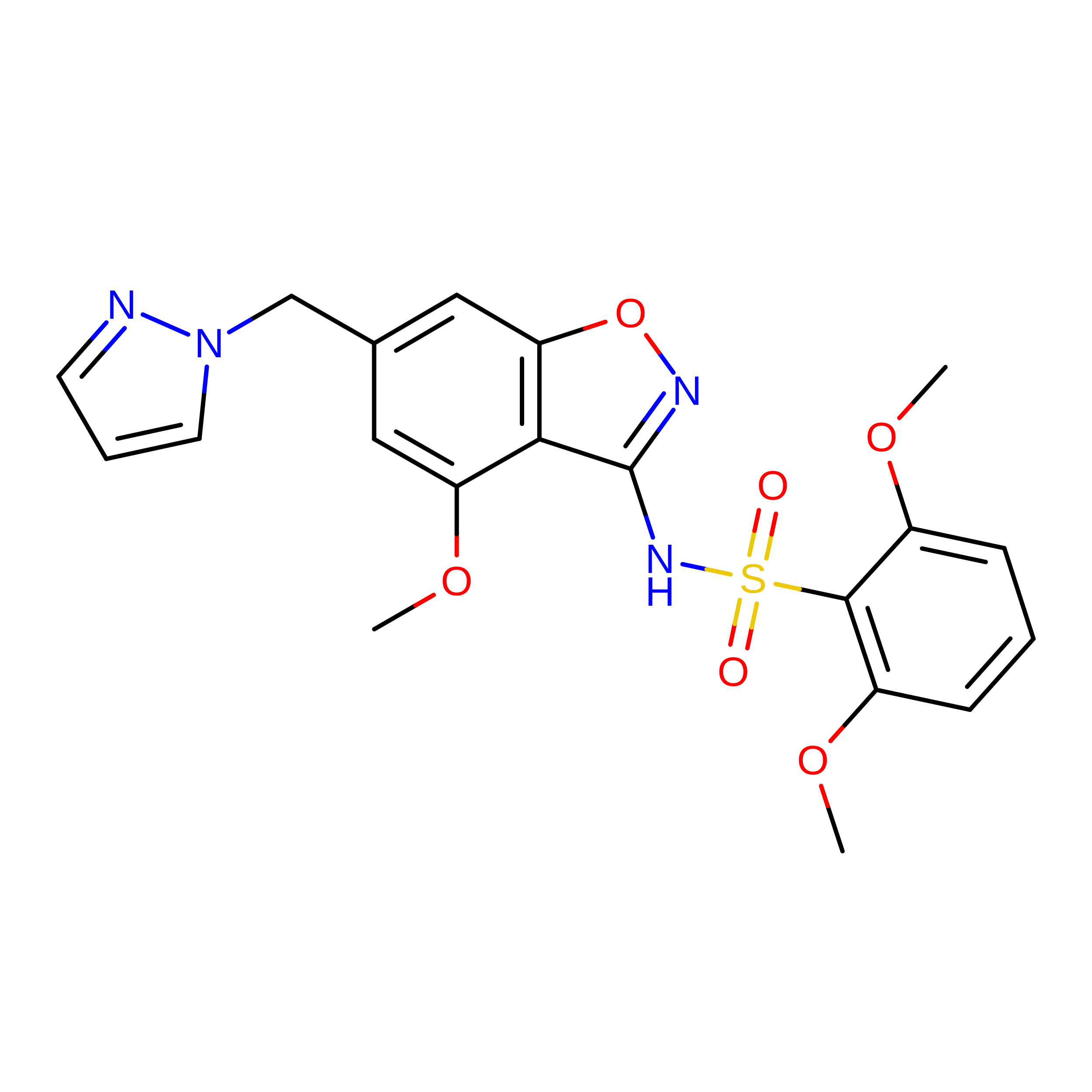
All lysine acetyltransferases (KATs) modulate biological outcomes through the acetylation of lysine side-chain amino groups facilitated by acetyl coenzyme A (AcCoA). KAT6A belongs to the class of MYST domain histone acetyltransferases (HATs), which had been regarded as undruggable. The first on-target KAT6A inhibitors with in vivo activity were reported in 2018, catalyzing intense industry interest in this enzyme as an oncology target. In this study, we experimentally evaluated representative KAT6A inhibitor chemotypes through resynthesis and comparative biochemical assays, cellular assays, and structural biology. We outline the recent history of each KAT6A inhibitor chemotype discovery, including SAR for potency, selectivity, and cellular activity. We extensively benchmark key compounds from each chemotype, augmented by new acylsulfonohydrazide analogues and a novel fused [1,2,4]thiadiazine KAT6A inhibitor subclass, which we report here for the first time, along with co-crystal structures. Additionally, we report on the in vivo activity, pharmacokinetics, and toxicology profiles of these inhibitors.
- Medicinal Chemistry, Monash Institute of Pharmaceutical Sciences, Monash University (Parkville Campus), Parkville, VIC 3052, Australia.
Organizational Affiliation: