Download Mendeley
Mechanisms of ligand recognition and channel opening for P2X2 receptors in lipid nanodiscs.
Dhingra, S., Moog, M., Swartz, K.J.(2026) Sci Adv 12: eaee4242-eaee4242
- PubMed: 42202011 Search on PubMedSearch on PubMed Central
- DOI: https://doi.org/10.1126/sciadv.aee4242
- Primary Citation Related Structures:
9OGH, 9OHK, 9OIR, 9OJK, 9OM0, 9OMR, 9ON5, 9ON6, 9Z32 - PubMed Abstract:
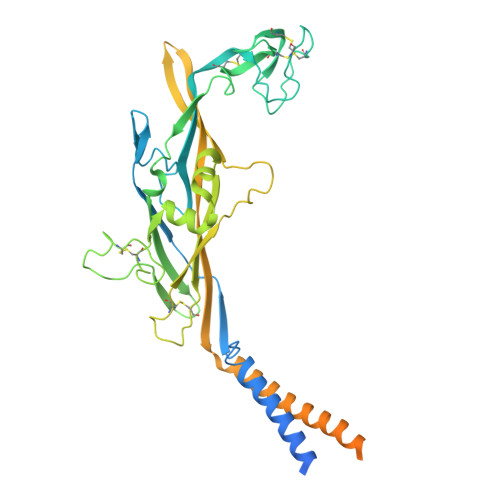
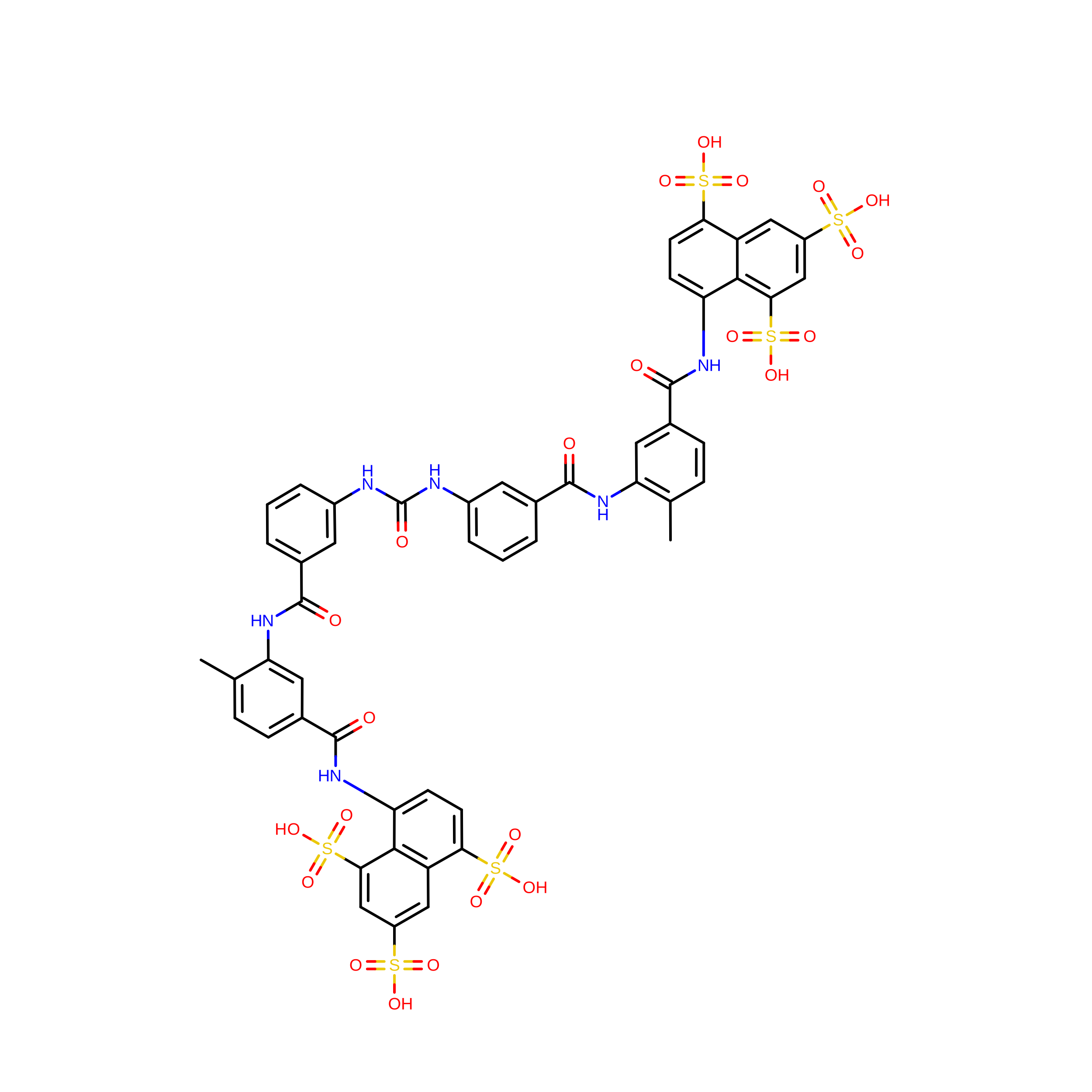
Extracellular adenosine 5'-triphosphate (ATP) activates P2X receptor channels (P2XRs) that serve important roles in the immune and nervous systems. Available structures of P2XRs in detergents reveal that ATP binding to the extracellular domain leads to severing of subunit interfaces within transmembrane regions as the pore opens. Here we report cryo-electron microscopy structures of the human P2X2R in lipid nanodiscs in an apo closed state, with ATP 4- , Mg-ATP 2- , and suramin bound. We find that a unique Arg residue interacts with the γ-PO 4 of ATP 4- in P2X2R and underlies the requirement of this subtype for ATP 4- . Channel opening and desensitization occur when ATP 4- binds, whereas the channel remains closed when Mg-ATP 2- binds. A continuous belt of partially resolved lipids in the outer leaflet stabilizes the closed state, and the presence of lipids prevents the severing of subunit interfaces as the channel opens. These findings establish key mechanistic principles of gating for P2X2R in a membrane-like environment, providing a framework for future mechanistic studies and therapeutic development.
- Molecular Physiology and Biophysics Section, Porter Neuroscience Research Center, National Institute of Neurological Disorders and Stroke, National Institutes of Health, Bethesda, MD 20892, USA.
Organizational Affiliation: