Download Mendeley
Non-equilibrium snapshots of ligand efficacy at the mu-opioid receptor.
Robertson, M.J., Modak, A., Papasergi-Scott, M.M., Hu, M., Peroto, M.C., Varga, B.R., Majumdar, S., Kalathur, R., Blanchard, S.C., Skiniotis, G.(2026) Nature 652: 794-802
- PubMed: 41430437 Search on PubMedSearch on PubMed Central
- DOI: https://doi.org/10.1038/s41586-025-10056-4
- Primary Citation Related Structures:
9ODE, 9ODF, 9ODG, 9ODH, 9ODI, 9ODJ, 9ODK, 9ODL - PubMed Abstract:
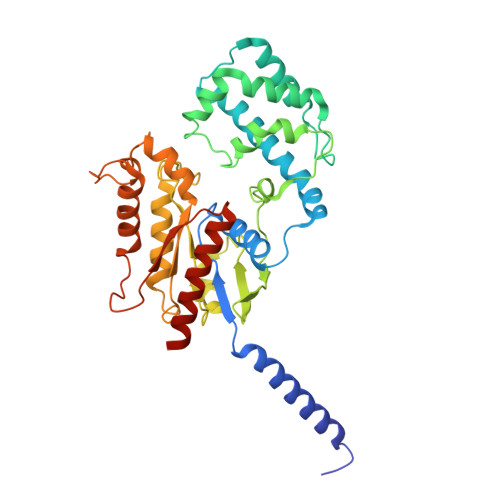
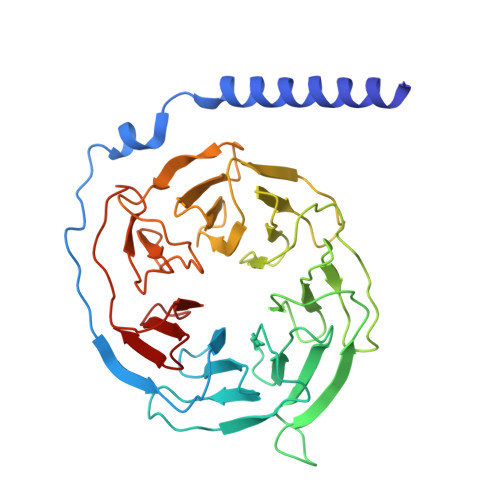
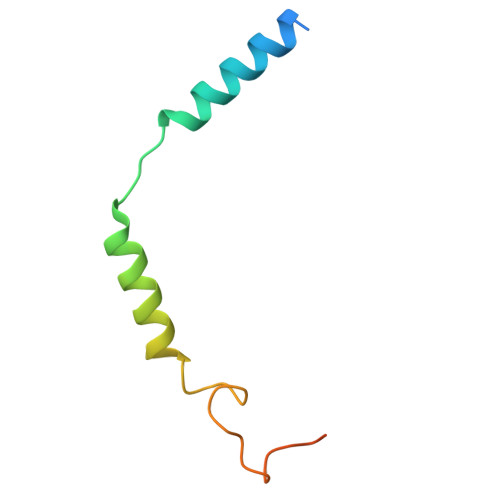
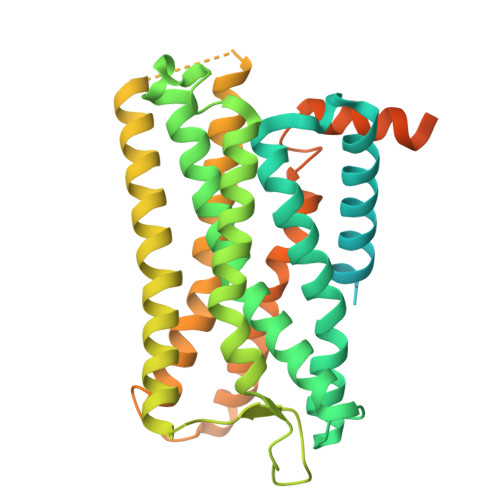
Distinct ligands for the same G-protein-coupled receptor (GPCR) activate intracellular signalling partners to varying extents, but the molecular mechanisms that drive these differences remain elusive. Here, hypothesizing that such differences in signalling efficacy might be captured structurally in intermediate states under non-equilibrium conditions, we use a time-resolved cryo-electron-microscopy approach to visualize the GTP-induced activation of the Gα i βγ heterotrimer by the μ-opioid receptor bound to three ligands that show partial, full or super agonism on the receptor 1 . We resolve ensembles of conformational states along the G-protein activation pathway, including an intermediate state that enables us to visualize receptor dynamics as a function of bound ligand. The results reveal ligand-dependent differences in state occupancy and conformational stability, with higher ligand efficacy correlating with increased dynamics of the receptor's transmembrane helices 5 and 6. Furthermore, we identify key differences between G i and G s in the mechanism of GTP-induced activation, which are likely to underlie the distinct activation kinetics of these G-protein types. Corroborated by molecular-dynamics simulations and single-molecule fluorescence assays, our findings provide a dynamic structural landscape of GPCR-G-protein interactions for ligands of various efficacies, and suggest that partial agonists produce a 'kinetic trap' during G-protein activation.
- Department of Molecular and Cellular Physiology, Stanford University School of Medicine, Stanford, CA, USA.
Organizational Affiliation: