Download Mendeley
Discovery of Selective and Orally Bioavailable Heterobifunctional Degraders of Cyclin-Dependent Kinase 2.
Collier, P.N., Zheng, X., Ford, M., Weiss, M., Chen, D., Li, K., Growney, J.D., Yang, A., Sathappa, M., Breitkopf, S.B., Enerson, B., Liang, T., Paul, A., Sawant, R., Su, L., Aversa, R.J., Howarth, C., Sharma, K., Williams, J., Kwiatkowski, N.P.(2025) J Med Chem 68: 18407-18422
- PubMed: 40833690 Search on PubMedSearch on PubMed Central
- DOI: https://doi.org/10.1021/acs.jmedchem.5c01160
- Primary Citation Related Structures:
9NYQ, 9NYR - PubMed Abstract:
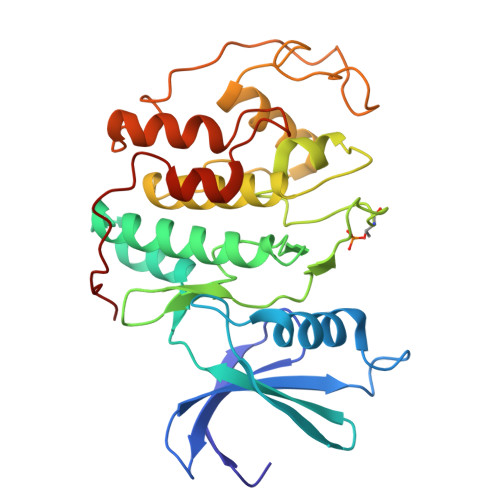
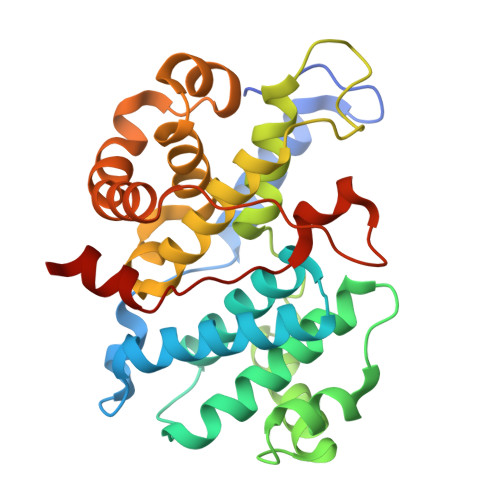
Cyclin-dependent kinase 2 (CDK2) plays an important role in cell cycle regulation and has emerged as a compelling target for the treatment of cancer, largely because of its potential to overcome the resistance associated with CDK4/6 inhibition. Efforts to develop CDK2 inhibitors have historically proven challenging due to undesirable safety profiles associated with inhibiting off-target CDK isoforms. Herein, we describe the structure-guided discovery of a series of orally bioavailable and selective degraders of CDK2. Degrader 37 demonstrated improved phenotypic selectivity compared to a clinical CDK2 inhibitor, with greater specificity for disease-relevant cyclin E1 (CCNE1)-amplified cancer cells vs nonamplified cohort. The antitumor activity of 37 in mice bearing CCNE1-amplified HCC1569 tumors correlated with sustained >90% degradation of CDK2 and sustained 90% inhibition of Rb phosphorylation.
- Kymera Therapeutics Inc., 500 North Beacon Street, Watertown, Massachusetts 02472, United States.
Organizational Affiliation: