Download Mendeley
Archaeal and eukaryotic MCM rings sequentially melt DNA for replication initiation.
Rasouli, S., Myasnikov, A., Enemark, E.J.(2026) Nat Commun 17
- PubMed: 41916983 Search on PubMedSearch on PubMed Central
- DOI: https://doi.org/10.1038/s41467-026-70961-8
- Primary Citation Related Structures:
9NUH, 9NUI, 9NUJ, 9NUK, 9NUL, 9NUM, 9NUN, 9NUO, 9NUP, 9NUQ, 9NUR, 9NUS, 9NUT, 9NUU, 9NUV, 9NUW, 9NUX, 9NUY - PubMed Abstract:
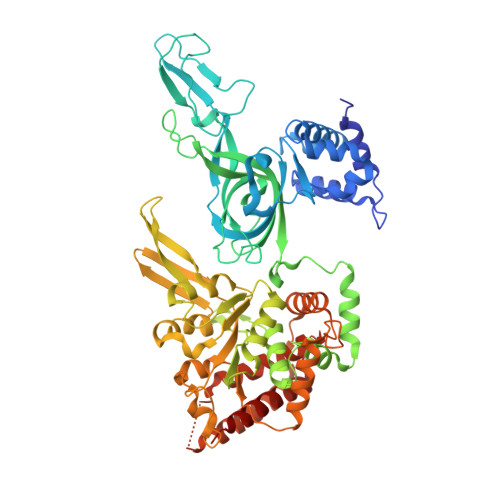
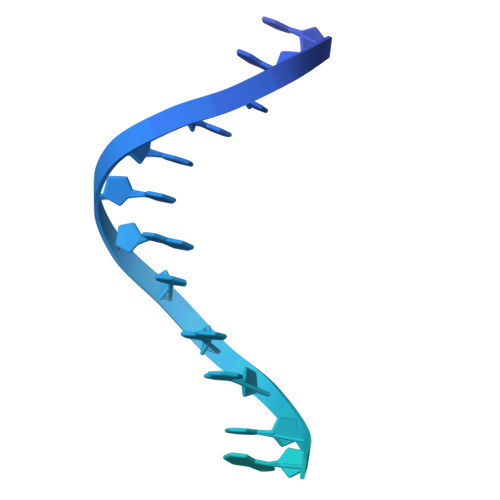
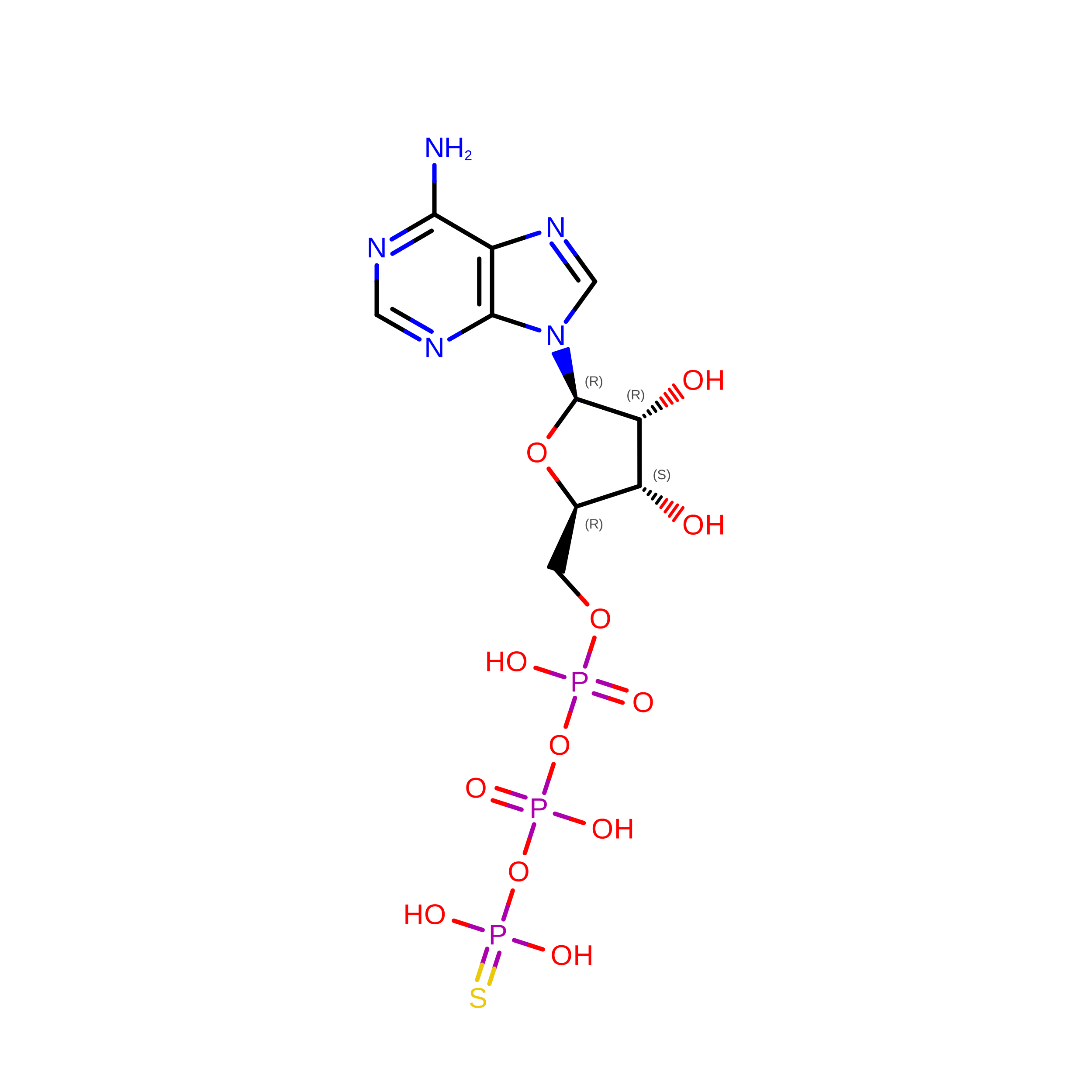
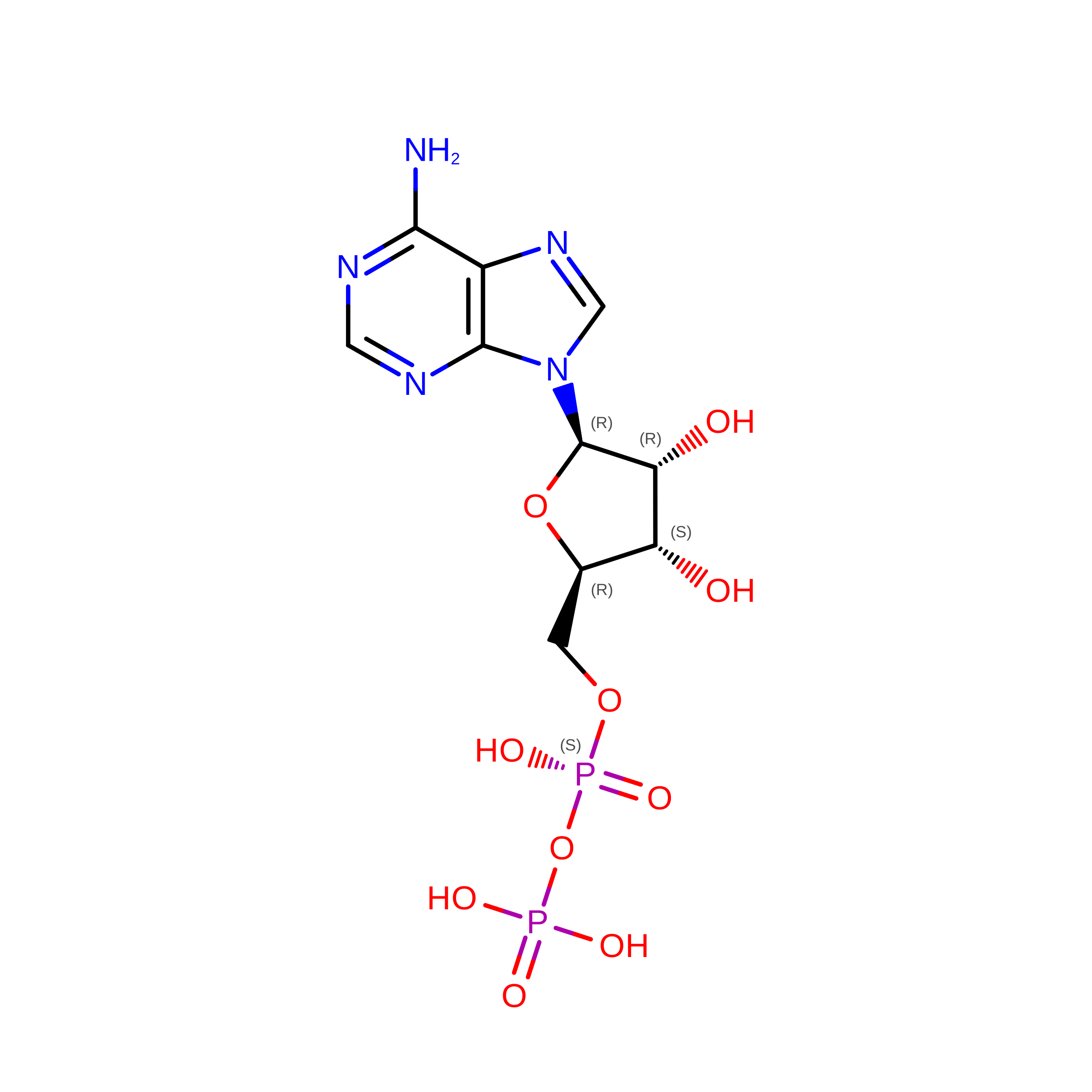
DNA replication initiation requires local melting of fully base-paired DNA for a helicase to gain a foothold and initiate processive DNA unwinding. In eukaryotes and archaea, the helicase engine is the hexameric ring minichromosome maintenance (MCM) complex. In eukaryotes, a defined biochemical sequence assembles two Cdc45-MCM-GINS (CMG) complexes that provide limited DNA unwinding as the species that immediately precedes extensive unwinding. A prior structure revealed how MCM subunits interact with this form of DNA, but the atomic progression from undistorted DNA to this melted DNA species is unknown. Here, we present a sequential DNA melting mechanism determined by snapshots of an archaeal MCM ring with DNA in varying degrees of melting. In this mechanism, successive ATP-binding at MCM ATPase sites drives sequential discrete DNA melting steps mediated a specific MCM aromatic residue. Analysis of eukaryotic structures shows loaded MCM rings principally adopt only two molecular arrangements at the ATPase: one that does not melt DNA and one tuned to melt DNA with equivalent aromatic residues, indicating a universal sequential mechanism melts DNA in archaea and eukaryotes for replication initiation.
- Department of Structural Biology, St Jude Children's Research Hospital, Memphis, TN, USA.
Organizational Affiliation: