9N4K | pdb_00009n4k

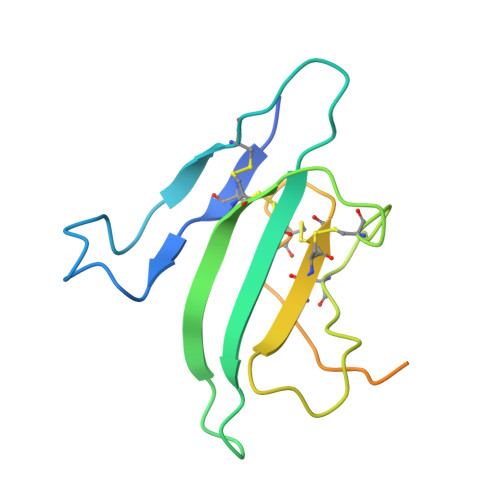
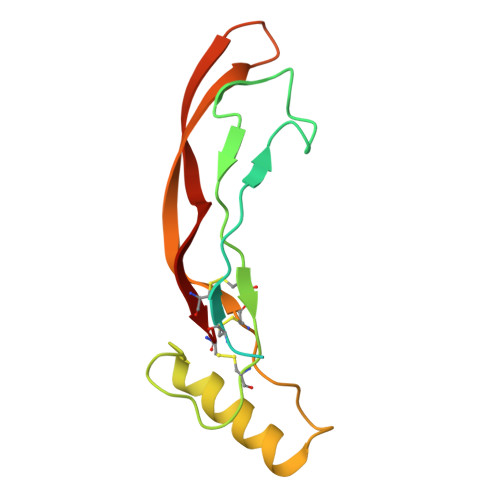
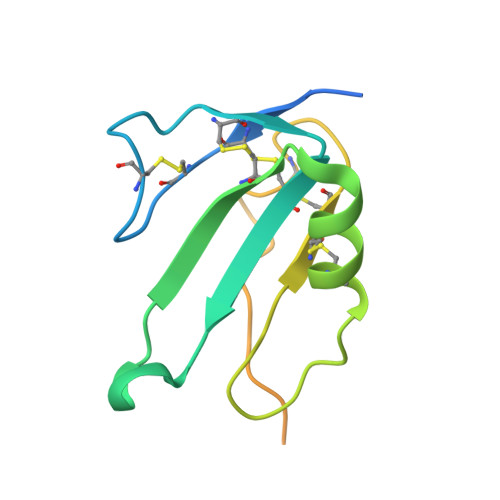
CryoEM structure of ALK2-ActRIIB bound to BMP6


Experimental Data Snapshot

  • Method: ELECTRON MICROSCOPY
  • Resolution: 3.20 Å
  • Aggregation State: PARTICLE 
  • Reconstruction Method: SINGLE PARTICLE 

Starting Models: experimental
View more details

wwPDB Validation   3D Report Full Report


This is version 1.1 of the entry. See complete history


Literature

CryoEM structure of ALK2:BMP6 reveals distinct mechanism that allow ALK2 to interact with both BMP and activin ligands.

Goebel, E.J.Aykul, S.Hom, W.W.Saotome, K.Economides, A.N.Franklin, M.C.Idone, V.J.

(2025) Proc Natl Acad Sci U S A 122: e2502788122-e2502788122

  • DOI: https://doi.org/10.1073/pnas.2502788122
  • Primary Citation of Related Structures:  
    9MIR, 9N4K

  • PubMed Abstract: 

    Ligands in the transforming growth factor β (TGF-β) family [activins, Bone Morphogenetic Proteins (BMPs), and TGF-βs] signal by bringing together two type I and two type II receptors. Activin receptor-like kinase-2 (ALK2) is the only type I receptor among the seven TGF-β type I receptors that interacts with both activin and BMP ligands. With BMPs, ALK2 acts as a signaling receptor to activate small mothers against decapentaplegic 1 (SMAD1)/5/8 signaling. Alternatively, with activins, such as Activin A (ActA), ALK2 forms nonsignaling complexes that negatively regulate ALK2 and ActA signaling. To gain insight into how ALK2 interacts with two distinct classes of ligands, we resolved the cryoelectron microscopy structure of ALK2 in complex with the type II receptor, ActRIIB, and the ligand, BMP6, in parallel with the corresponding structure with ALK3 for direct comparison. These structures demonstrate that ALK2 and ALK3 utilize different mechanisms to interact with BMP6 at the wrist interface, with ALK2 relying on BMP6 glycosylation and ALK3 relying on a salt bridge. Modeling of ALK2:ActA reveals that binding relies on ActA's fingertip region, mirroring the interaction of ActA with its other receptor, ALK4. Our results demonstrate that ALK2 is a "hybrid" receptor that incorporates features of BMP type I receptors such as ALK3 at the wrist interface and an activin type I receptor such as ALK4 at the fingertip.


  • Organizational Affiliation
    • Connective Tissue Diseases Therapeutic Focus Area, Regeneron Pharmaceuticals, Tarrytown, NY 10591.

Macromolecules
Find similar proteins by:  (by identity cutoff)  |  3D Structure
Entity ID: 1
MoleculeChains Sequence LengthOrganismDetailsImage
Activin receptor type-2BA,
D [auth F]
133Homo sapiensMutation(s): 0 
Gene Names: ACVR2B
EC: 2.7.11.30
UniProt & NIH Common Fund Data Resources
Find proteins for Q13705 (Homo sapiens)
Explore Q13705 
Go to UniProtKB:  Q13705
PHAROS:  Q13705
GTEx:  ENSG00000114739 
Entity Groups  
Sequence Clusters30% Identity50% Identity70% Identity90% Identity95% Identity100% Identity
UniProt GroupQ13705
Glycosylation
Glycosylation Sites: 2Go to GlyGen: Q13705-1
Sequence Annotations
Expand
  • Reference Sequence
Find similar proteins by:  (by identity cutoff)  |  3D Structure
Entity ID: 2
MoleculeChains Sequence LengthOrganismDetailsImage
Bone morphogenetic protein 6B,
C [auth E]
139Homo sapiensMutation(s): 0 
Gene Names: BMP6VGR
UniProt & NIH Common Fund Data Resources
Find proteins for P22004 (Homo sapiens)
Explore P22004 
Go to UniProtKB:  P22004
PHAROS:  P22004
GTEx:  ENSG00000153162 
Entity Groups  
Sequence Clusters30% Identity50% Identity70% Identity90% Identity95% Identity100% Identity
UniProt GroupP22004
Glycosylation
Glycosylation Sites: 1Go to GlyGen: P22004-1
Sequence Annotations
Expand
  • Reference Sequence
Find similar proteins by:  (by identity cutoff)  |  3D Structure
Entity ID: 3
MoleculeChains Sequence LengthOrganismDetailsImage
Activin receptor type-1E [auth C],
F [auth D]
121Homo sapiensMutation(s): 0 
Gene Names: ACVR1ACVRLK2
EC: 2.7.11.30
UniProt & NIH Common Fund Data Resources
Find proteins for Q04771 (Homo sapiens)
Explore Q04771 
Go to UniProtKB:  Q04771
PHAROS:  Q04771
GTEx:  ENSG00000115170 
Entity Groups  
Sequence Clusters30% Identity50% Identity70% Identity90% Identity95% Identity100% Identity
UniProt GroupQ04771
Sequence Annotations
Expand
  • Reference Sequence
Oligosaccharides

Help

Entity ID: 4
MoleculeChains Length2D Diagram Glycosylation3D Interactions
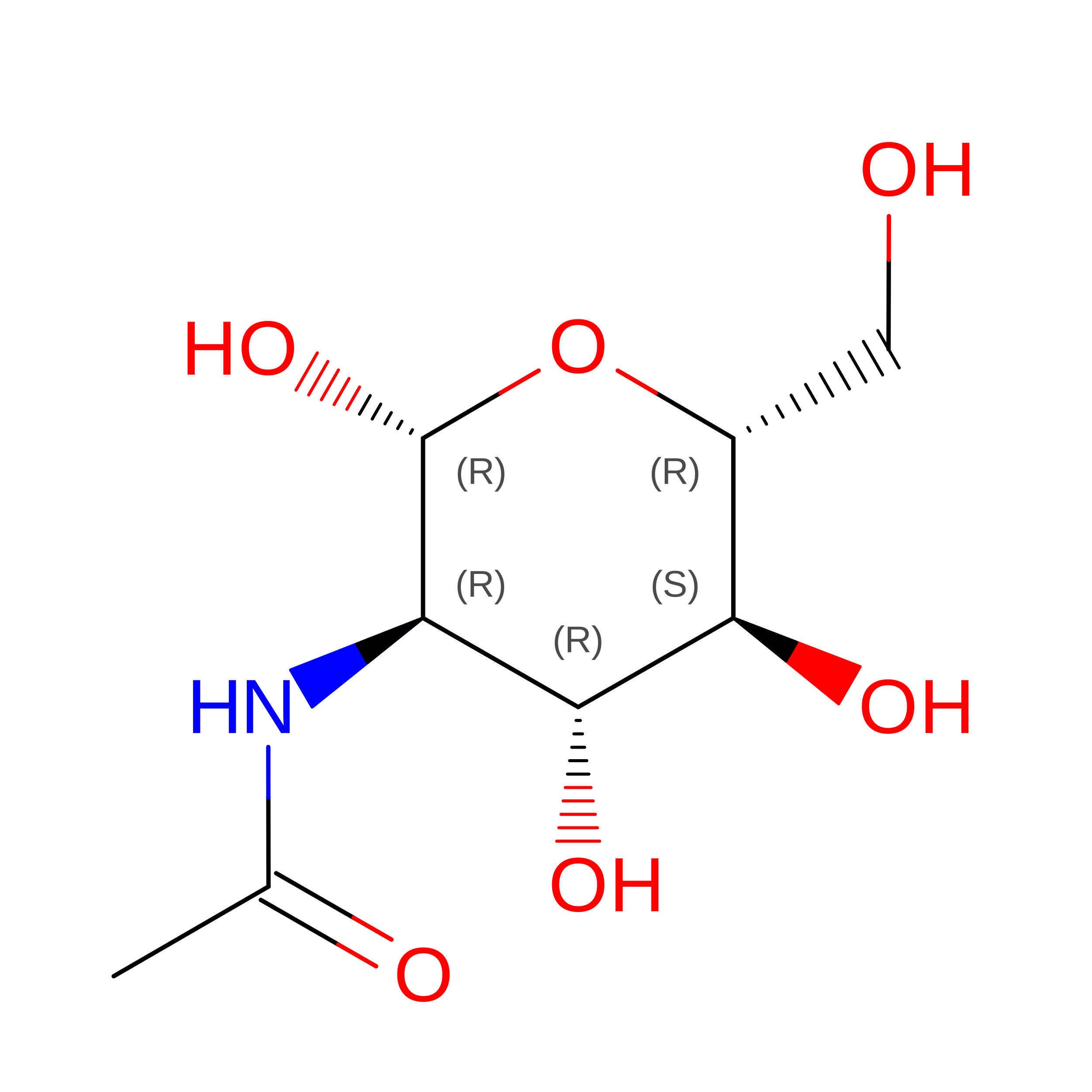
beta-D-mannopyranose-(1-4)-2-acetamido-2-deoxy-beta-D-glucopyranose-(1-4)-2-acetamido-2-deoxy-beta-D-glucopyranose
G, H
3N-Glycosylation
Glycosylation Resources
GlyTouCan:  G15407YE
GlyCosmos:  G15407YE
GlyGen:  G15407YE
Small Molecules
Ligands 2 Unique
IDChains Name / Formula / InChI Key2D Diagram3D Interactions
NAG
Query on NAG

Download Ideal Coordinates CCD File 
I [auth A]
J [auth B]
K [auth B]
M [auth E]
N [auth E]
I [auth A],
J [auth B],
K [auth B],
M [auth E],
N [auth E],
P [auth F]
2-acetamido-2-deoxy-beta-D-glucopyranose
C8 H15 N O6
OVRNDRQMDRJTHS-FMDGEEDCSA-N
BMA
Query on BMA

Download Ideal Coordinates CCD File 
L [auth B],
O [auth E]
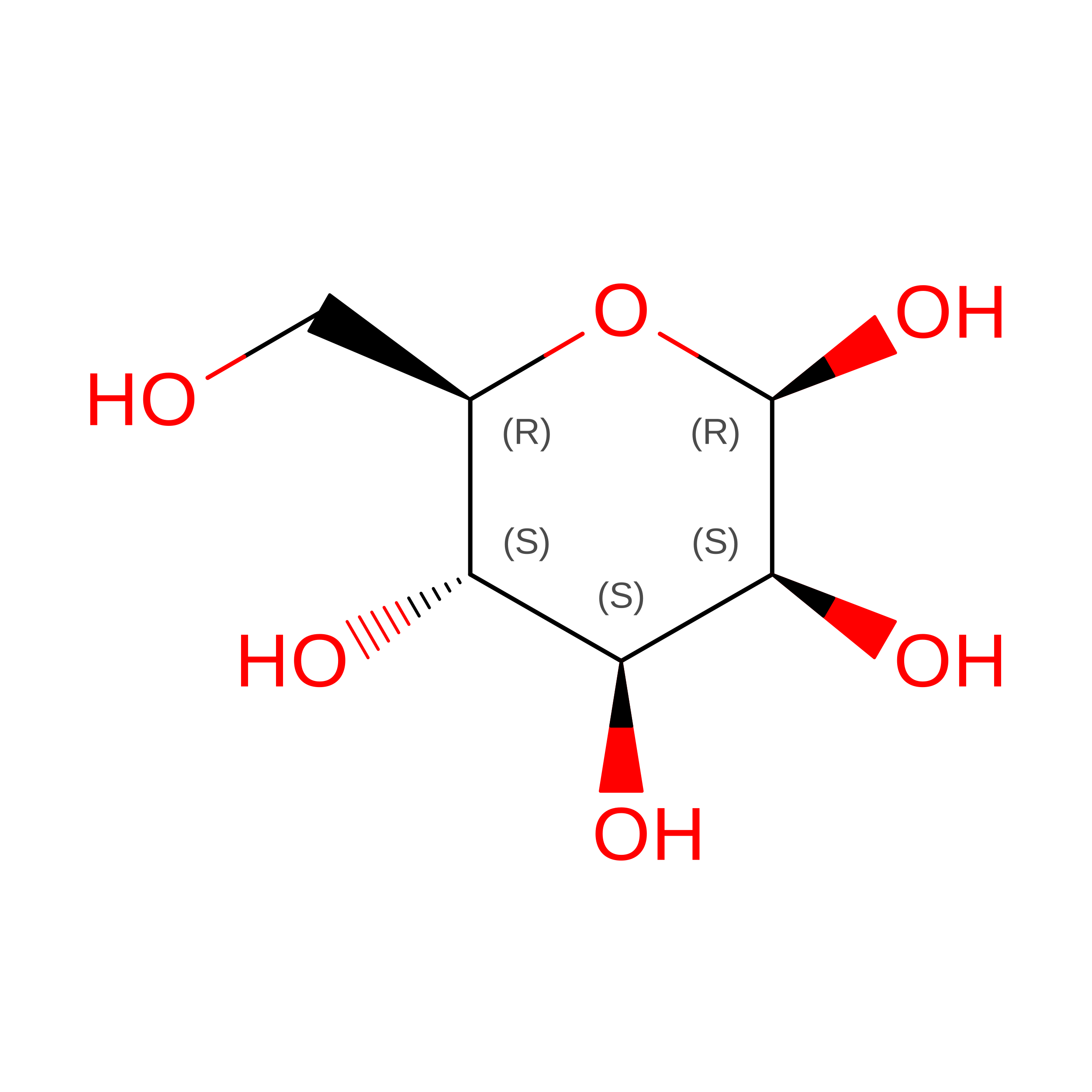
beta-D-mannopyranose
C6 H12 O6
WQZGKKKJIJFFOK-RWOPYEJCSA-N
Experimental Data & Validation

Experimental Data

  • Method: ELECTRON MICROSCOPY
  • Resolution: 3.20 Å
  • Aggregation State: PARTICLE 
  • Reconstruction Method: SINGLE PARTICLE 
EM Software:
TaskSoftware PackageVersion
MODEL REFINEMENTPHENIX1.21.2_5419

Structure Validation

View Full Validation Report


Entry History & Funding Information

Deposition Data


Funding OrganizationLocationGrant Number
Other privateUnited States--

Revision History  (Full details and data files)

  • Version 1.0: 2025-09-03
    Type: Initial release
  • Version 1.1: 2025-09-10
    Changes: Data collection, Database references