Download Mendeley
Biochemical and structural basis of Dicer helicase function unveiled by resurrecting ancient proteins.
Aderounmu, A.M., Maus-Conn, J., Consalvo, C.D., Shen, P.S., Bass, B.L.(2025) Proc Natl Acad Sci U S A 122: e2500825122-e2500825122
- PubMed: 40434637 Search on PubMedSearch on PubMed Central
- DOI: https://doi.org/10.1073/pnas.2500825122
- Primary Citation Related Structures:
9MW6, 9MW7, 9MW8, 9MX3, 9MX5 - PubMed Abstract:
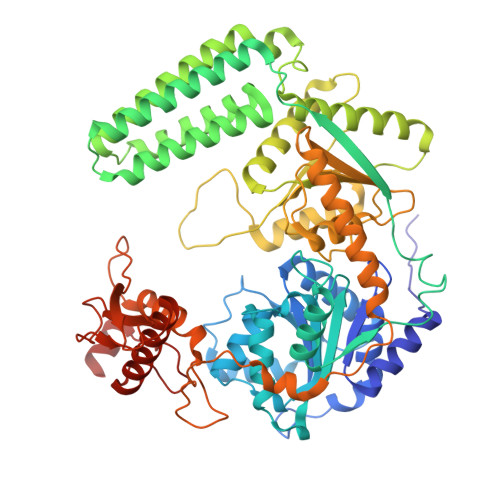
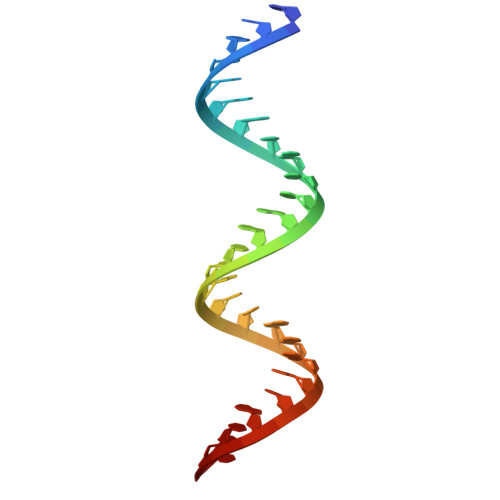
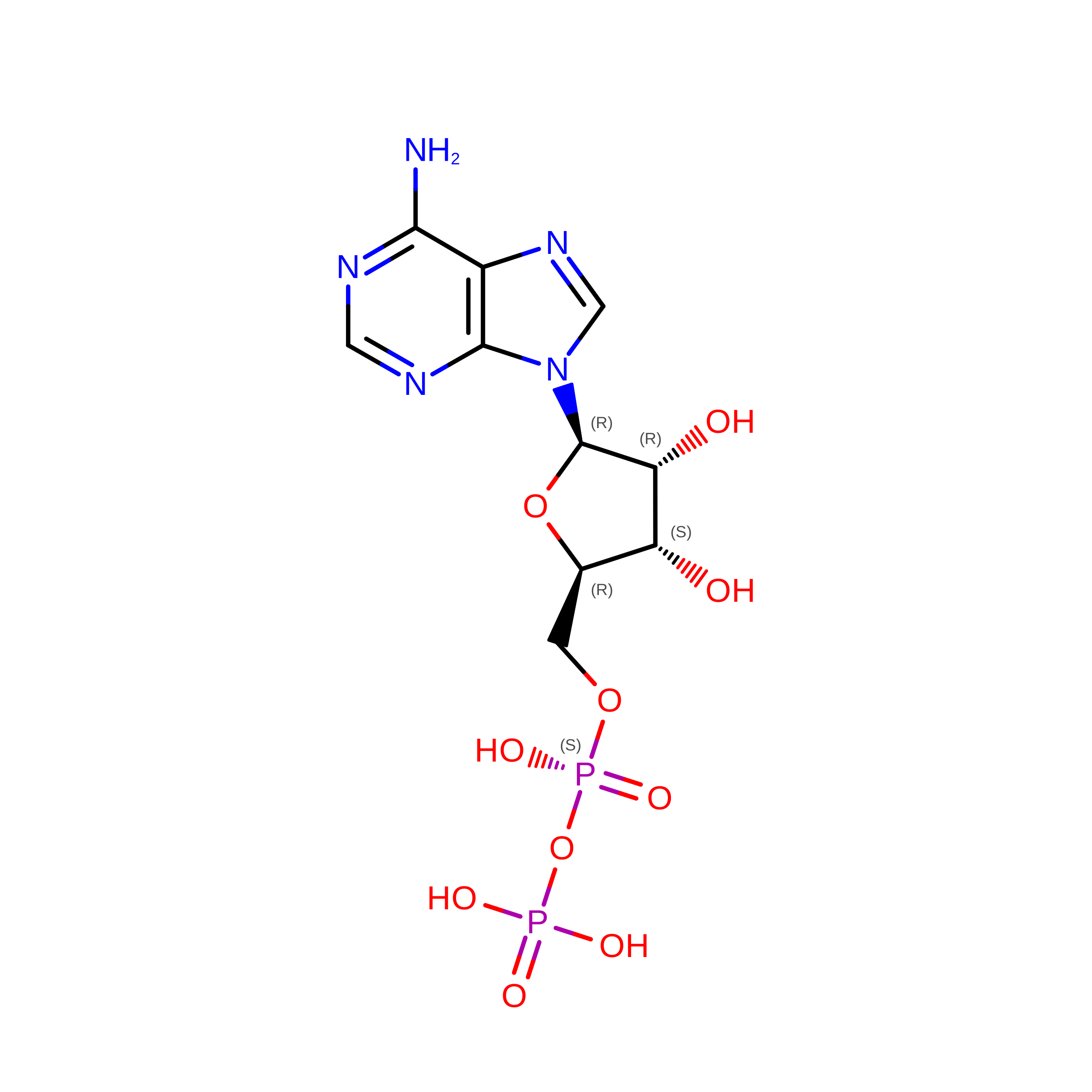
A fully functional Dicer helicase, present in the modern arthropod, uses energy from ATP hydrolysis to power translocation on bound dsRNA, enabling the processive dsRNA cleavage required for efficient antiviral defense. However, modern Dicer orthologs exhibit divergent helicase functions that affect their ability to contribute to antiviral defense. Moreover, mechanisms that couple ATP hydrolysis to Dicer helicase movement on dsRNA remain enigmatic. We used biochemical and structural analyses of ancestrally reconstructed Dicer helicases to map evolution of dsRNA binding affinity, ATP hydrolysis and translocation. Loss of affinity for dsRNA occurred early in Dicer evolution, coinciding with a decline in translocation activity, despite preservation of ATP hydrolysis activity. Ancestral nematode Dicer also exhibited significant decline in ATP hydrolysis and translocation, but studies of antiviral activities in the modern nematode Caenorhabditis elegans indicate Dicer retained a role in antiviral defense by recruiting a second helicase. Cryogenic electron microscopy (cryo-EM) analyses of an ancient metazoan Dicer allowed capture of multiple helicase states revealing the mechanism that connects each step of ATP hydrolysis to unidirectional movement along dsRNA. Our study rationalizes the diversity in modern Dicer helicases by connecting ancestral functions to observations in extant enzymes.
- Department of Biochemistry, University of Utah, Salt Lake City, UT 84112.
Organizational Affiliation: