Download Mendeley
Enteric alpha-defensins contribute to intestinal mucosal immunity against SARS-CoV-2 infection.
Yang, Y., Yang, Q., Huang, X., Liao, C., Chen, Z., Lu, W.(2026) Mucosal Immunol : 100392-100392
- PubMed: 42542248 Search on PubMed
- DOI: https://doi.org/10.1016/j.mucimm.2026.100392
- Primary Citation Related Structures:
9MAO, 9VFX - PubMed Abstract:
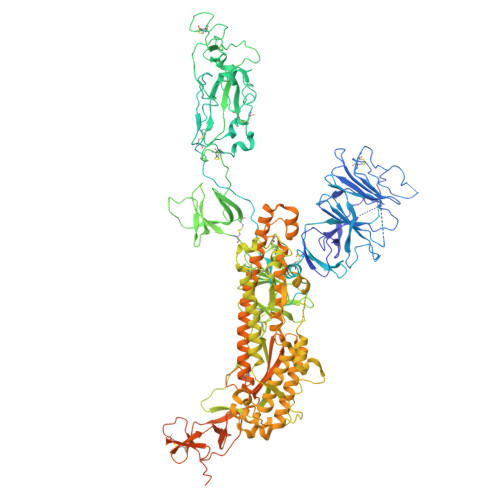
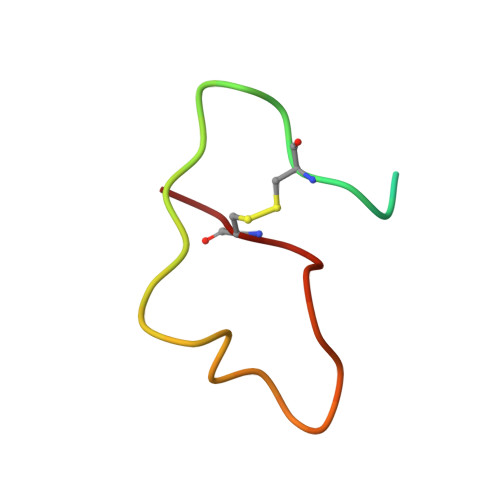
SARS-CoV-2 primarily targets epithelial cells in the respiratory and intestinal tracts where its cognate receptor ACE2 and obligate processing enzymes furin and TMPRSS2 are richly expressed. However, compared with severe inflammation and tissue damage in the lungs of a COVID-19 patient, clinical lesions in the intestine are rare, suggesting an effective intestinal mucosal immunity against SARS-CoV-2 infection. Here, we report that MMP7 -/- /hACE2 hybrid mice lacking mature enteric α-defensins or cryptdins were more susceptible to SARS-CoV-2 infection in the intestine than K18-hACE2 transgenic mice. The mouse α-defensin cryptdin-5 (Crp5) displayed potent and broad antiviral activity in vitro and in vivo by two distinct mechanisms, (1) directly targeting the RBD of the spike (S) protein to antagonize its interactions with ACE2, thus blocking viral attachment, membrane fusion and cell-to-cell transmission, and (2) binding to the 630 loop of the S protein to induce its multimerization, thereby impairing proteolytic processing, membrane fusion and, ultimately, viral infectivity. Our findings imply that enteric α-defensins help alleviate, as host protective factors, Covid-19 symptoms in the intestine despite higher ACE2 expression in the gut than in the lungs, and that Crp5 may be developed as a broad-spectrum antiviral for the treatment of coronavirus infection irrespective of virus type and variant.
- Shanghai Institute of Infectious Disease and Biosecurity, Key Laboratory of Medical Molecular Virology (MOE/NHC/CAMS), School of Basic Medical Science, Fudan University, Shanghai 200032, China.
Organizational Affiliation: