9M9X | pdb_00009m9x

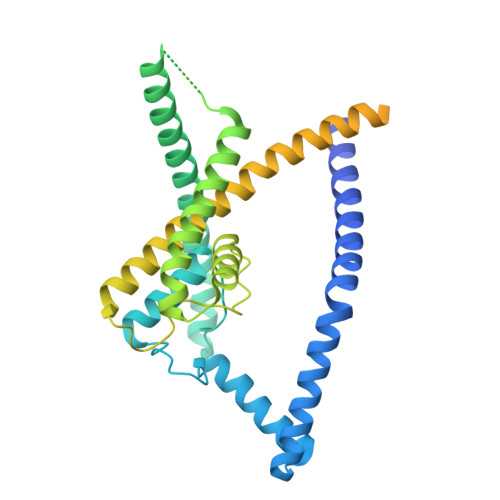
The structure of THIK1 complexed with AA


Experimental Data Snapshot

  • Method: ELECTRON MICROSCOPY
  • Resolution: 2.76 Å
  • Aggregation State: PARTICLE 
  • Reconstruction Method: SINGLE PARTICLE 

wwPDB Validation 3D Report Full Report

Validation slider image for 9M9X

This is version 1.1 of the entry. See complete history. 

Literature

Cholesterol binding stabilizes the activated state of THIK-1 and promotes atherosclerosis.

Dai, Z., Li, Y., Hou, Z., Duan, G., Hu, Z., Yang, A., Wang, Q., Wang, W., Luo, J., Zuo, P., Yin, Y., Yin, Y.

(2026) EMBO Rep 

  • DOI: https://doi.org/10.1038/s44319-026-00921-2
  • Primary Citation Related Structures: 
    9M9M, 9M9Q, 9M9W, 9M9X, 9U8B

  • PubMed Abstract: 

    Atherosclerosis, a chronic inflammatory disorder, remains a leading cause of global morbidity and mortality. While cholesterol is known to activate the NLRP3-IL-1β pathway and promote plaque formation, the underlying mechanisms remain incompletely understood. Here, we identify the tandem pore domain halothane-inhibited potassium channel 1 (THIK-1) as a mediator of IL-1β release during atherosclerosis progression. Using high-resolution cryo-electron microscopy (cryo-EM), we determine the structure of THIK-1 in its apo form and in complex with the activator arachidonic acid, and the inhibitors halothane and C101248 as well as the structure of the disease-related THIK-1 R92S variant. Structural analyses reveal that cholesterol unexpectedly stabilizes the arachidonic acid-binding pocket within THIK-1. Complementary cellular assays confirm that cholesterol amplifies the arachidonic acid-induced inflammatory response in macrophages, which can be effectively suppressed by the THIK-1 inhibitors halothane and C101248. Moreover, treatment with C101248 markedly reduces atherosclerotic plaque development in Apoe-deficient mice fed a high-cholesterol diet. Collectively, these findings elucidate a cholesterol-dependent mechanism of THIK-1 regulation and highlight THIK-1 as a regulator of atherosclerosis.


  • Organizational Affiliation: 
    • Institute of Precision Medicine, Peking University Shenzhen Hospital, Shenzhen, China.

Macromolecule Content 

  • Total Structure Weight: 95.82 kDa 
  • Atom Count: 4,215 
  • Modeled Residue Count: 513 
  • Deposited Residue Count: 848 
  • Unique protein chains: 1

Macromolecules

Find similar proteins by:|  3D Structure
Entity ID: 1
MoleculeChains  Sequence LengthOrganismDetailsImage
Potassium channel subfamily K member 13
A, B
424Homo sapiensMutation(s): 0 
Gene Names: KCNK13
UniProt & NIH Common Fund Data Resources
Find proteins for Q9HB14 (Homo sapiens)
Explore Q9HB14 
Go to UniProtKB:  Q9HB14
GTEx:  ENSG00000152315 
Entity Groups
Sequence Clusters30% Identity50% Identity70% Identity90% Identity95% Identity100% Identity
UniProt GroupQ9HB14
Sequence Annotations
Expand
Reference Sequence

Small Molecules

Ligands 3 Unique
IDChains Name / Formula / InChI Key2D Diagram3D Interactions
CLR
(Subject of Investigation/LOI)

Query on CLR


Download:Ideal Coordinates CCD File
D [auth A],
I [auth B]
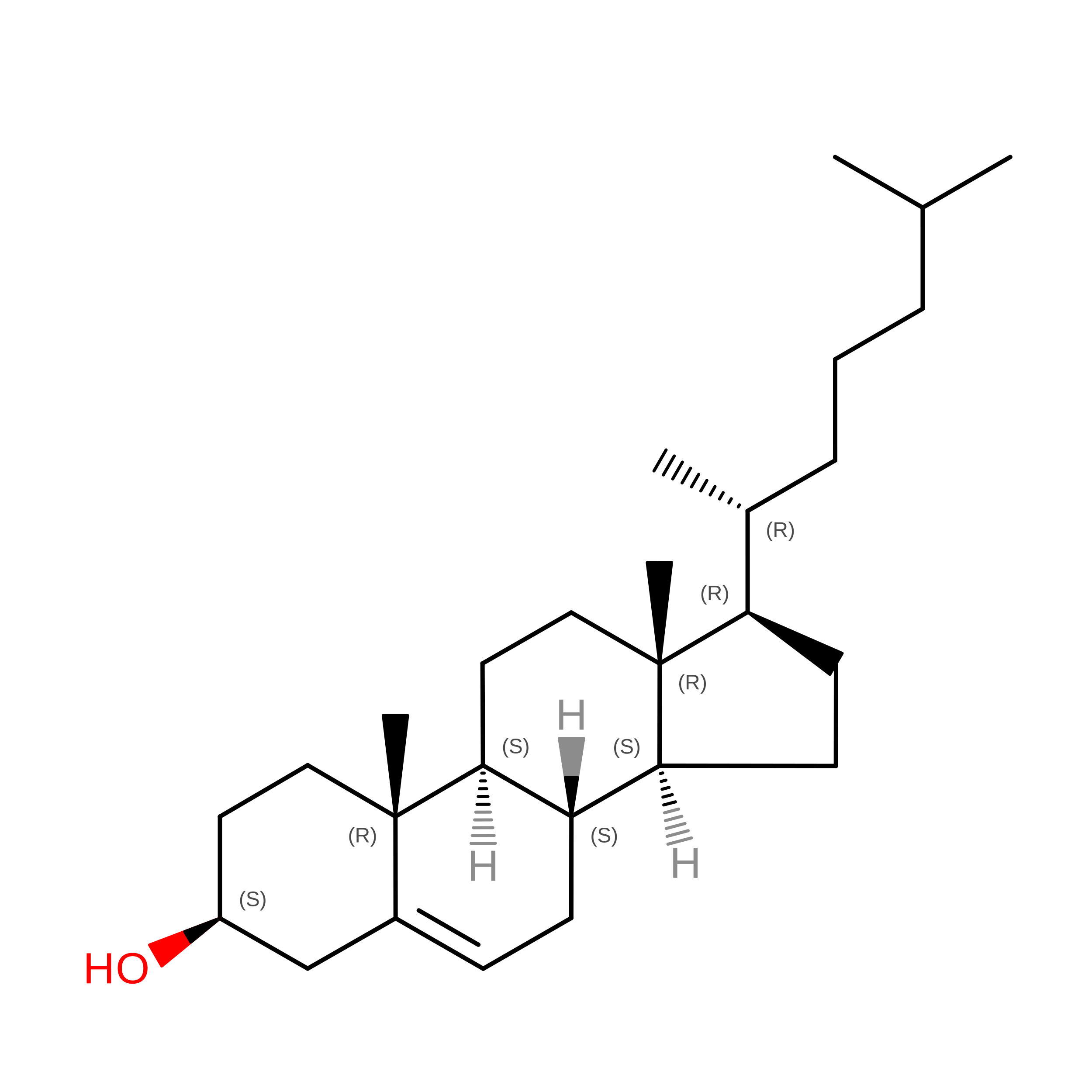
CHOLESTEROL
C27 H46 O
HVYWMOMLDIMFJA-DPAQBDIFSA-N
ACD
(Subject of Investigation/LOI)

Query on ACD


Download:Ideal Coordinates CCD File
C [auth A],
H [auth B]
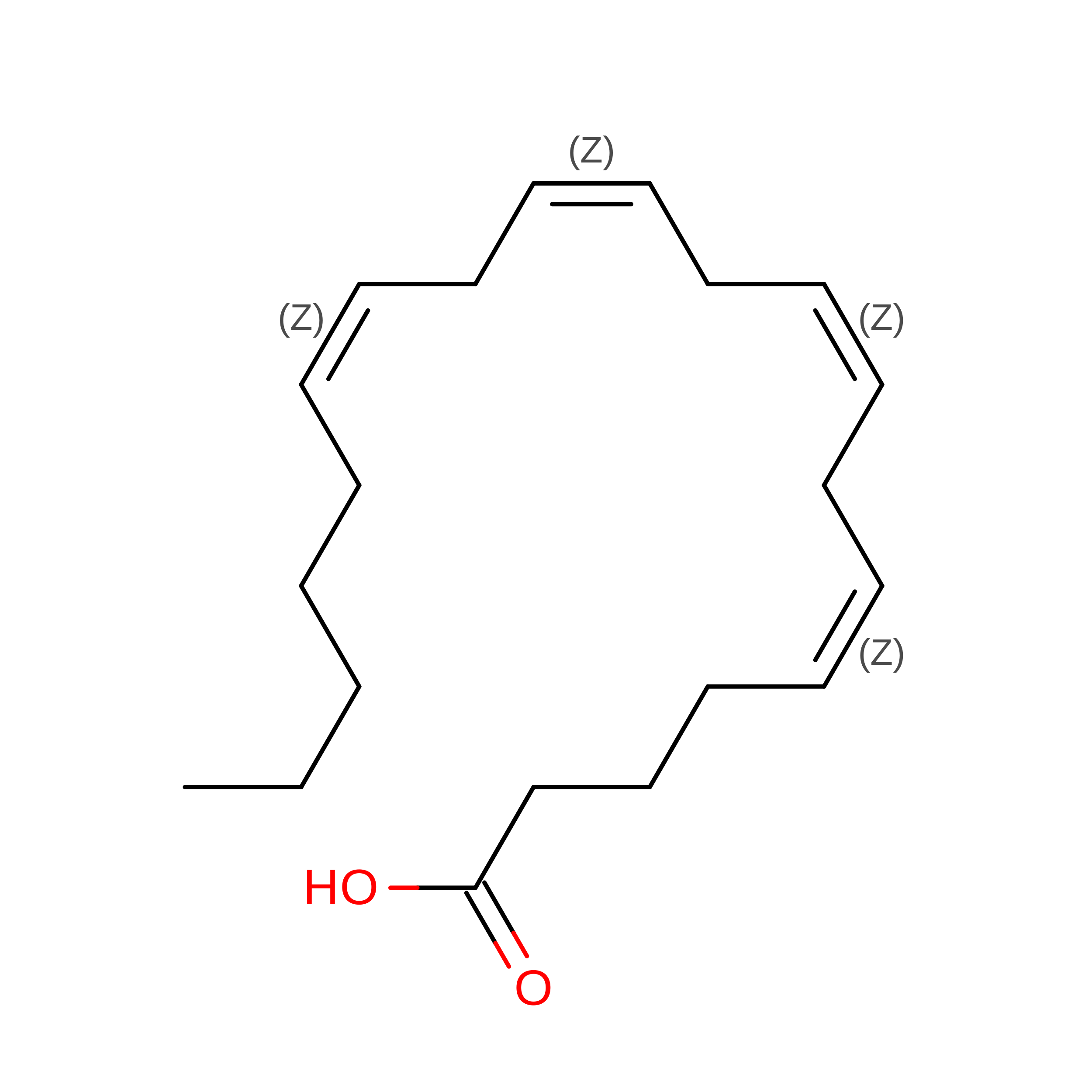
ARACHIDONIC ACID
C20 H32 O2
YZXBAPSDXZZRGB-DOFZRALJSA-N
K
(Subject of Investigation/LOI)

Query on K


Download:Ideal Coordinates CCD File
E [auth A],
F [auth A],
G [auth A]
POTASSIUM ION
K
NPYPAHLBTDXSSS-UHFFFAOYSA-N

Experimental Data & Validation

Experimental Data

  • Method: ELECTRON MICROSCOPY
  • Resolution: 2.76 Å
  • Aggregation State: PARTICLE 
  • Reconstruction Method: SINGLE PARTICLE 
EM Software:
TaskSoftware PackageVersion
RECONSTRUCTIONcryoSPARC4.3.1

Structure Validation

View Full Validation Report


Entry History 

& Funding Information

Deposition Data


Funding OrganizationLocationGrant Number
National Natural Science Foundation of China (NSFC)China82030081, 81874235

Revision History  (Full details and data files)

  • Version 1.0: 2026-03-18
    Type: Initial release
  • Version 1.1: 2026-11-11
    Changes: Data collection, Database references