Download Mendeley
Cryo-EM structures of photocomplexes from the free-living aerobic anoxygenic phototrophic bacterium Erythrobacter sanguineus.
Yue, X.Y., Wang, G.L., Zou, M.J., Ma, F., Wang-Otomo, Z.Y., Madigan, M.T., Yu, L.J.(2026) Structure 34: 334
- PubMed: 41274286 Search on PubMed
- DOI: https://doi.org/10.1016/j.str.2025.10.017
- Primary Citation Related Structures:
9LT4, 9LTI - PubMed Abstract:
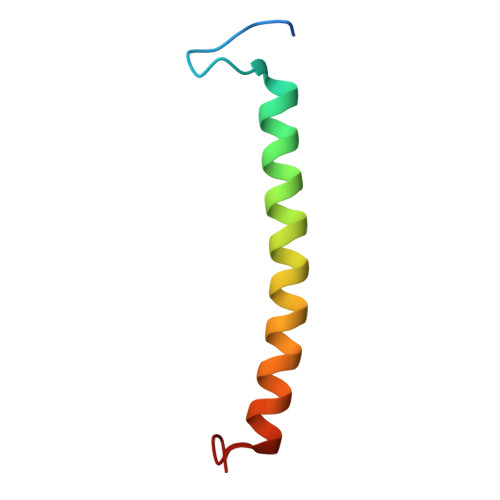
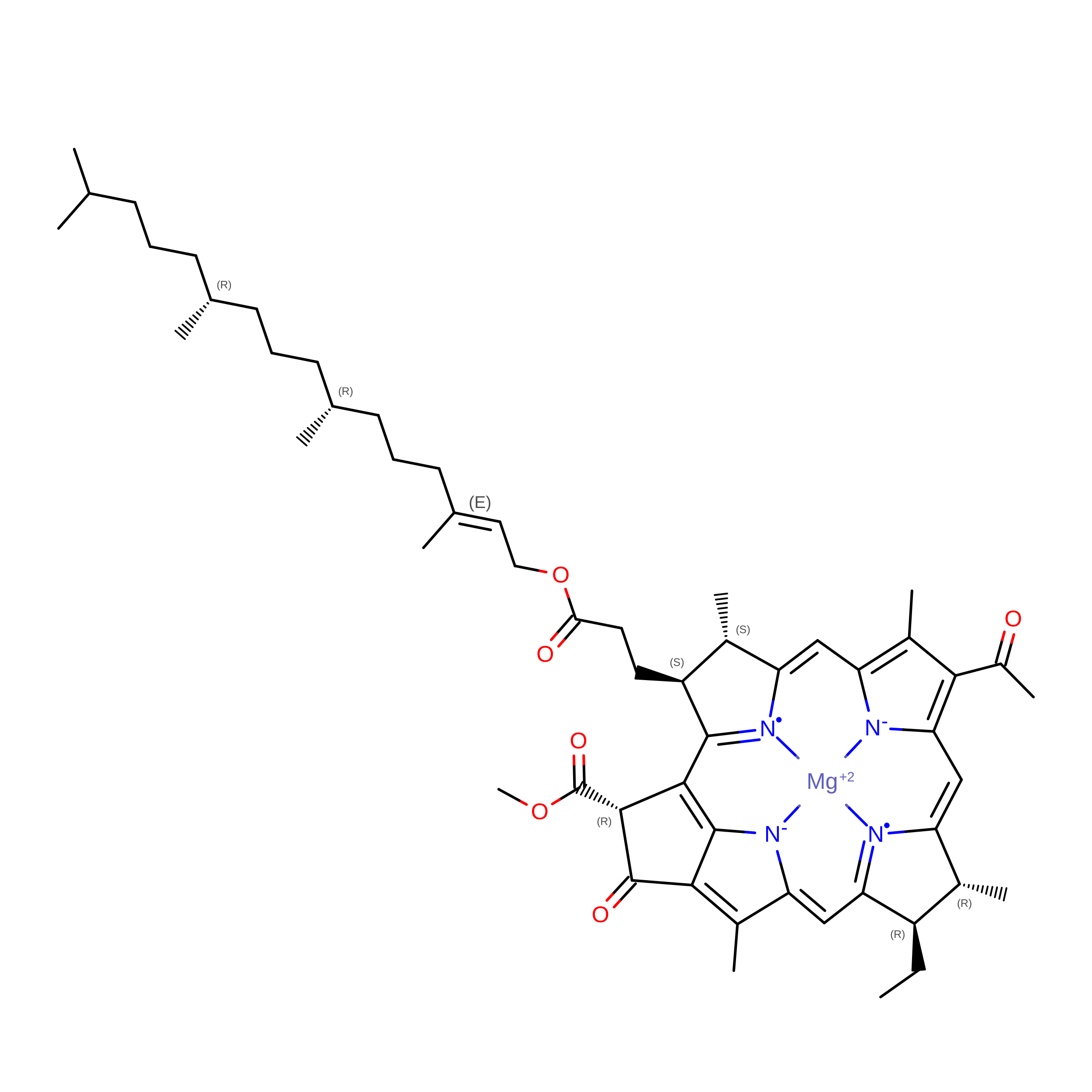
Aerobic anoxygenic phototrophic bacteria (AAPB) are widely distributed in nature and they are important members of the marine phototrophic community. However, a structural and functional understanding of the AAPB photosynthetic apparatus is still lacking. Here, we present cryo-EM structures of the LH1-RC (core) and LH2 (peripheral) photocomplexes from the model aerobic phototroph Erythrobacter (Ery.) sanguineus. The LH1 αβ-heterodimers bind the carotenoids bacteriorubixanthinal and caloxanthin-pigments that are absent from anaerobic anoxygenic phototrophs-to form a closed ring structure. Ery. sanguineus LH1-RC contains a lipid-anchored polypeptide unrelated to any of the auxiliary proteins identified in the core complexes of purple bacteria so far. The Ery. sanguineus LH2 complex shows unique absorption characteristics, with its Q y transition being blue-shifted to 814 nm. This work provides structural insights into the unusual photosynthetic properties of AAPB and points to new avenues to further explore their biology.
- Photosynthesis Research Center, State Key Laboratory of Forage Breeding-by-Design and Utilization, Institute of Botany, Chinese Academy of Sciences, Beijing 100093, China; University of Chinese Academy of Sciences, Beijing 100049, China.
Organizational Affiliation: