Download Mendeley
Cnp1 N-terminal dynamics regulate L1 loop recognition by Mis15 to orchestrate kinetochore assembly in Schizosaccharomyces pombe.
Xiong, Y., Jian, Y., Zhang, Y., Zhang, M., Zhang, X., Zhang, K., Fu, C., Tian, T., Zang, J.(2026) J Mol Cell Biol 18
- PubMed: 41453208 Search on PubMed
- DOI: https://doi.org/10.1093/jmcb/mjaf056
- Primary Citation Related Structures:
9LRV, 9LRW - PubMed Abstract:
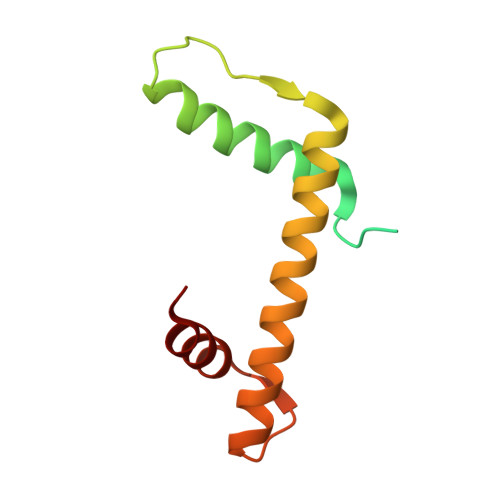
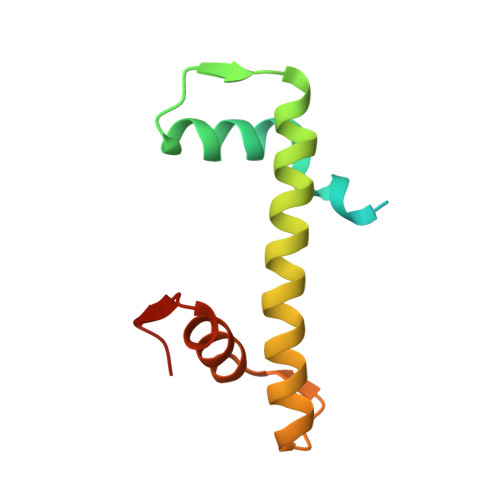
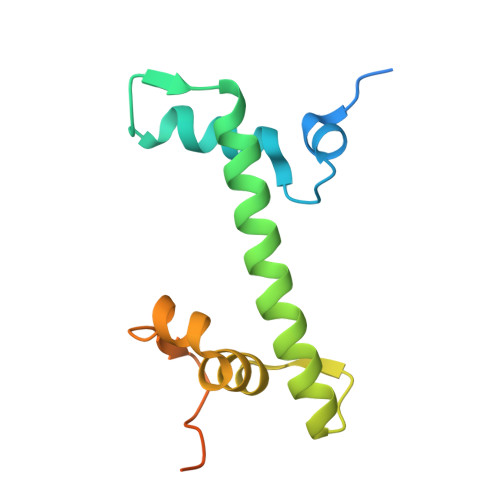
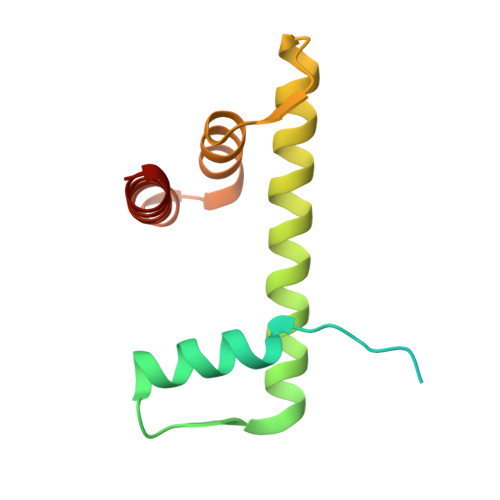
Centromeres are defined by the histone H3 variant CENP-A, which serve as the foundation for kinetochore assembly and ensure faithful chromosome segregation. CENP-A nucleosomes possess distinctive dynamic features, including flexible DNA ends at the entry/exit sites and a mobile N-terminal region, which are properties proposed to facilitate kinetochore assembly, yet the underlying molecular mechanisms remain elusive. Here, we present cryo-electron microscopy structures of Cnp1, the Schizosaccharomyces pombe (S. pombe) ortholog of CENP-A, alone and in complex with Mis15, the fission yeast ortholog of CENP-N. By integrating structural, biochemical, and molecular dynamics analyses, we demonstrate that the N-terminal region of Cnp1 regulates both DNA-end breathing and the conformational mobility of the L1 loop, a critical structural element for Mis15 recognition. Either enhanced dynamics caused by N-terminal deletion or reduced dynamics from targeted residue substitution disrupt Mis15 binding in vitro and impair its centromeric localization in vivo, thereby compromising the earliest steps of constitutive centromere-associated network assembly. Our findings establish the Cnp1 N-terminus as a dynamic allosteric modulator of chromatin architecture and reveal an L1 loop modulation mechanism that links nucleosome flexibility to kinetochore specification and chromosome segregation fidelity in fission yeast.
- Department of Health Management Center, The First Affiliated Hospital of USTC, Division of Life Sciences and Medicine, University of Science and Technology of China, Hefei 230036, China.
Organizational Affiliation: