Download Mendeley
Molecular basis of tRNA aminocarboxypropyl-transferase TapT for substrate recognition.
Wang, W.Y., Liang, H.R., Wu, Y.C., Liu, P.W., Wang, Z., Jiang, Y.Y., Pan, H.X., Tang, G.L., Pu, J.Y., Sun, A.A.(2025) Nucleic Acids Res 53
- PubMed: 41261853 Search on PubMedSearch on PubMed Central
- DOI: https://doi.org/10.1093/nar/gkaf1202
- Primary Citation Related Structures:
9KYT, 9KZ5, 9KZA - PubMed Abstract:
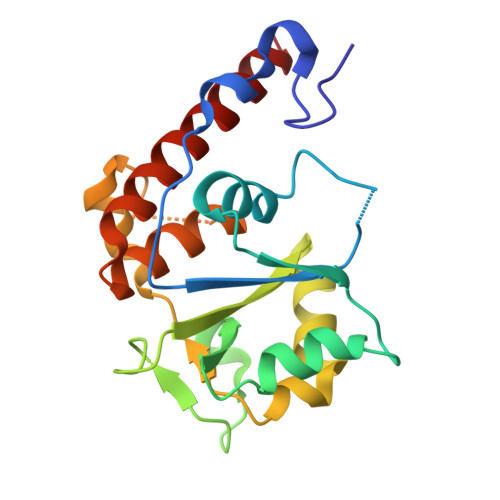
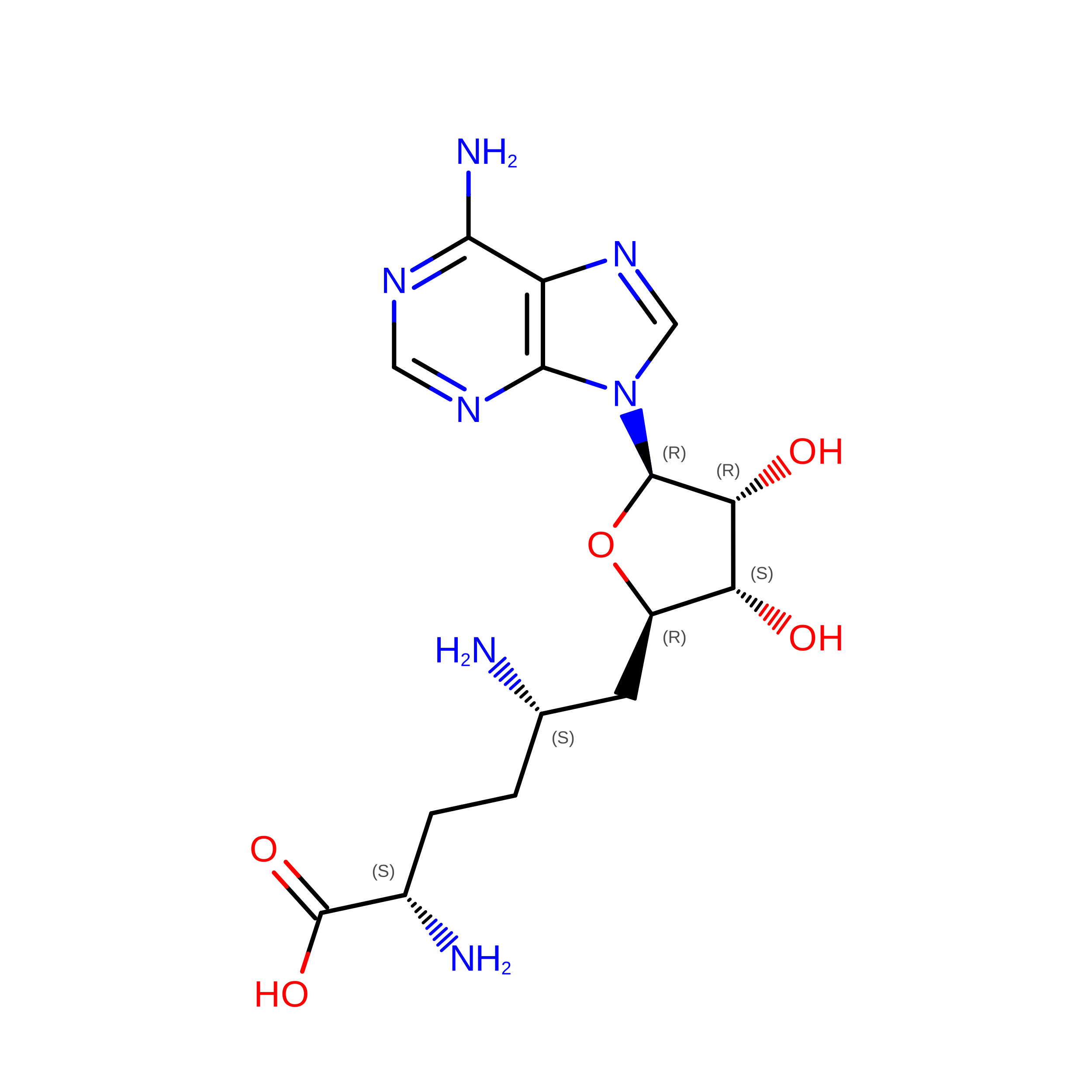
3-(3-amino-3-carboxypropyl) uridine (acp3U) is a highly conserved modification found in variable- and D-loops of transfer RNAs (tRNAs) in bacteria and eukarya. TapT has been identified as the enzyme responsible for acp3U modification at position 47 of Escherichia coli tRNAs in the presence of S-adenosylmethionine (SAM), while the specific substrate binding details and catalytic mechanism of TapT remain unknown. Here, we determined the three-dimensional structure of TapT in a SAM-bound state. The overall structure adopts SPOUT folding, with SAM located in an adaptive pocket. The cofactor recognition mode was further evaluated by additional structures of S-methyl-5'-thioadenosine or sinefungin to TapT, together with isothermal titration calorimetry to explore binding affinity and liquid chromatography-mass spectrometry experiments to detect enzymatic activity. Furthermore, we performed fluorescence polarization assays to explore the tRNA recognition mechanism of TapT. It thus provides a thorough molecular basis for TapT substrate recognition and may promote further application in biochemistry, molecular biology, and tumor diagnostics.
- Key Laboratory of Glyco-drug Research of Zhejiang Province, School of Chemistry and Materials Science, Hangzhou Institute for Advanced Study, University of Chinese Academy of Sciences, Hangzhou 310024, China.
Organizational Affiliation: