9KPL | pdb_00009kpl

Crystal structure of T. rubripes Mincle with glucose


Experimental Data Snapshot

  • Method: X-RAY DIFFRACTION
  • Resolution: 1.80 Å
  • R-Value Free: 
    0.215 (Depositor), 0.220 (DCC) 
  • R-Value Work: 
    0.180 (Depositor) 
  • R-Value Observed: 
    0.182 (Depositor) 

Starting Model: in silico
View more details

wwPDB Validation 3D Report Full Report

Validation slider image for 9KPL

Ligand Structure Quality Assessment 


This is version 1.0 of the entry. See complete history

Literature

Phylogenetic and structural insights into the origin of C-type lectin Mincle in vertebrates.

Ito, T.Guenther, C.Ishikawa, E.Yabuki, T.Nagae, M.Nakatani, Y.Yamasaki, S.

(2025) Immunogenetics 77: 18-18

  • DOI: https://doi.org/10.1007/s00251-025-01375-x
  • Primary Citation Related Structures: 
    9KPL, 9KS7

  • PubMed Abstract: 

    Our bodies are continuously exposed to injurious insults by infection and tissue damage, which are primarily sensed by innate immune receptors to maintain homeostasis. Among such receptors is macrophage-inducible C-type lectin (Mincle, gene symbol CLEC4E), a member of the C-type lectin receptor (CLR) family, which functions as an immune sensor for both pathogens and damaged self. To monitor these injurious stimuli, Mincle recognizes disaccharide-based pathogen-derived glycolipids and monosaccharide-based intracellular metabolites, such as β-glucosylceramide. Mincle is well-conserved among mammals; however, there are questions that remain unclear, such as from which lower vertebrate did it arise and whether the original ligand was self or non-self. Here, we found homologues of Mincle and its signaling subunit Fc receptor γ chain (FcRγ) in lower vertebrates, such as reptiles, amphibians, and fishes. The crystal structure of a Mincle homologue revealed that fish Mincle possesses a narrower sugar-binding pocket than that of mammalian Mincle, and accommodates only monosaccharide moieties. These results suggest that Mincle may have evolved from a self-recognizing receptor, and its sugar-binding pocket widened during evolution, presumably to adapt to disaccharide-based glycolipids derived from life-threatening pathogens.


  • Organizational Affiliation
    • Department of Molecular Immunology, Research Institute for Microbial Diseases, Osaka University, Suita, Osaka, Japan.

Macromolecule Content 

  • Total Structure Weight: 35.71 kDa 
  • Atom Count: 2,559 
  • Modeled Residue Count: 268 
  • Deposited Residue Count: 288 
  • Unique protein chains: 1

Macromolecules

Find similar proteins by:|  3D Structure
Entity ID: 1
MoleculeChains  Sequence LengthOrganismDetailsImage
C-type lectin domain-containing proteinA,
B [auth E]
144Takifugu rubripesMutation(s): 0 
UniProt
Find proteins for A0A3B5KEF3 (Takifugu rubripes)
Explore A0A3B5KEF3 
Go to UniProtKB:  A0A3B5KEF3
Entity Groups
Sequence Clusters30% Identity50% Identity70% Identity90% Identity95% Identity100% Identity
UniProt GroupA0A3B5KEF3
Sequence Annotations
Expand
Reference Sequence

Small Molecules

Ligands 3 Unique
IDChains Name / Formula / InChI Key2D Diagram3D Interactions
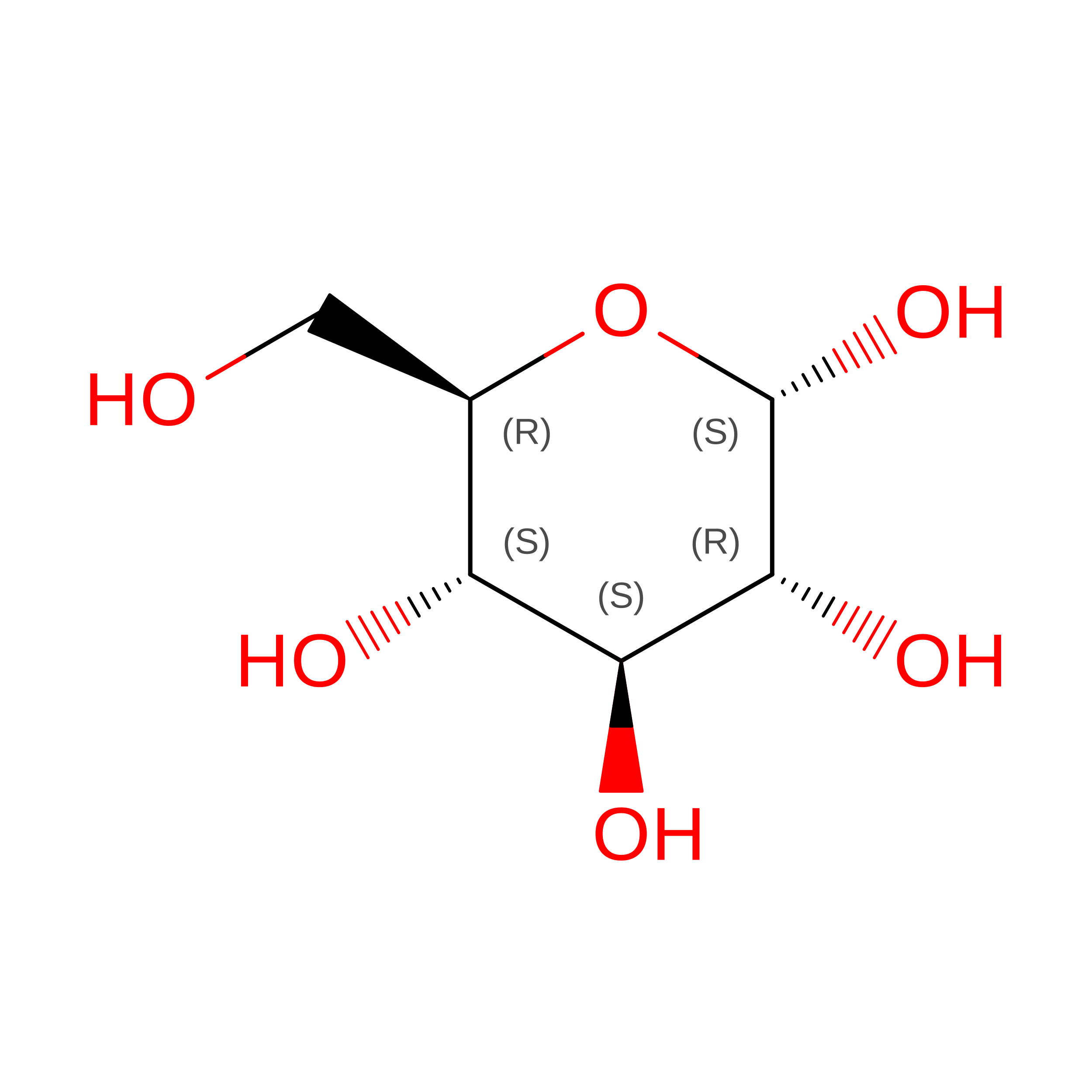
GLC
(Subject of Investigation/LOI)

Query on GLC


Download:Ideal Coordinates CCD File
C [auth A],
G [auth E]
alpha-D-glucopyranose
C6 H12 O6
WQZGKKKJIJFFOK-DVKNGEFBSA-N
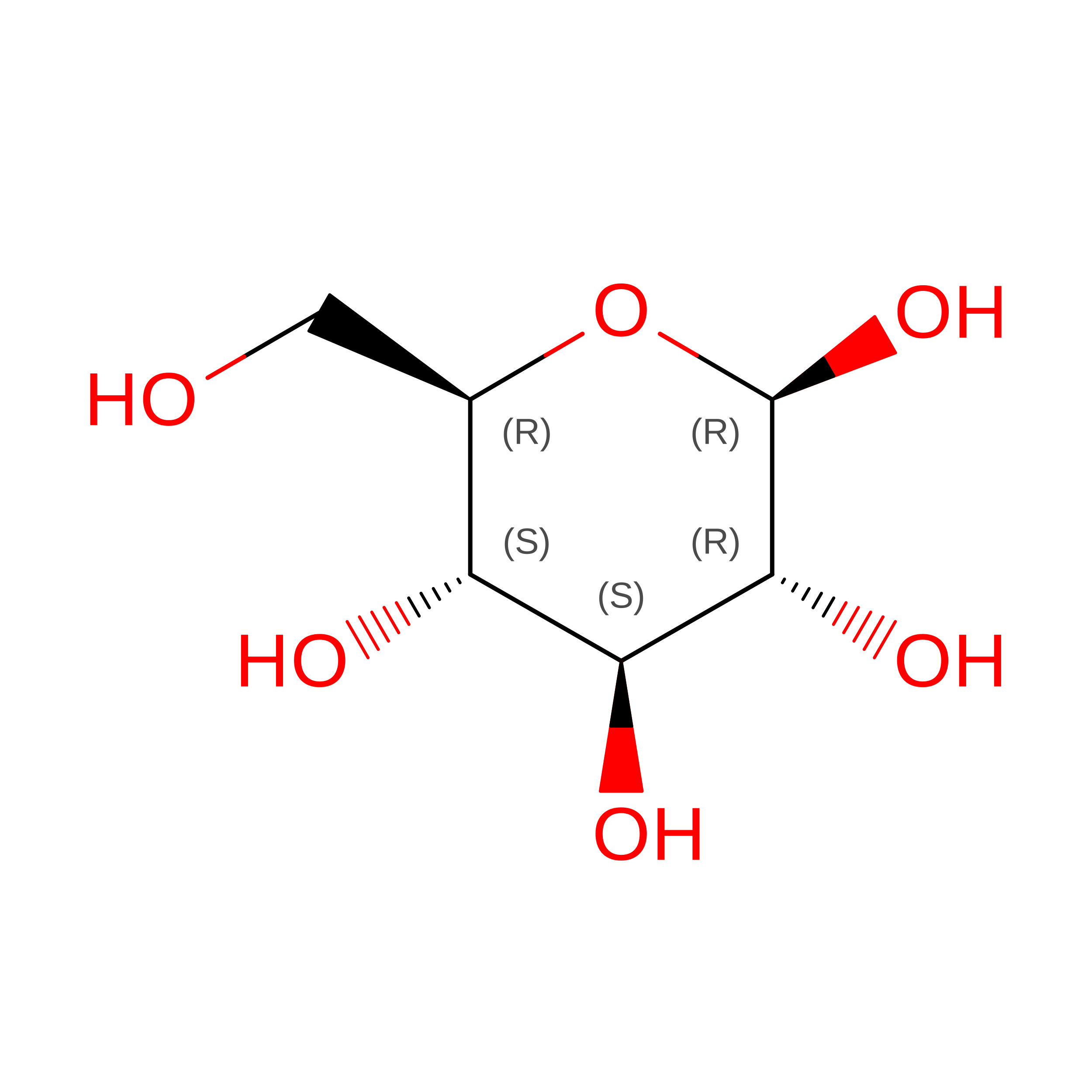
BGC
(Subject of Investigation/LOI)

Query on BGC


Download:Ideal Coordinates CCD File
D [auth A],
H [auth E]
beta-D-glucopyranose
C6 H12 O6
WQZGKKKJIJFFOK-VFUOTHLCSA-N
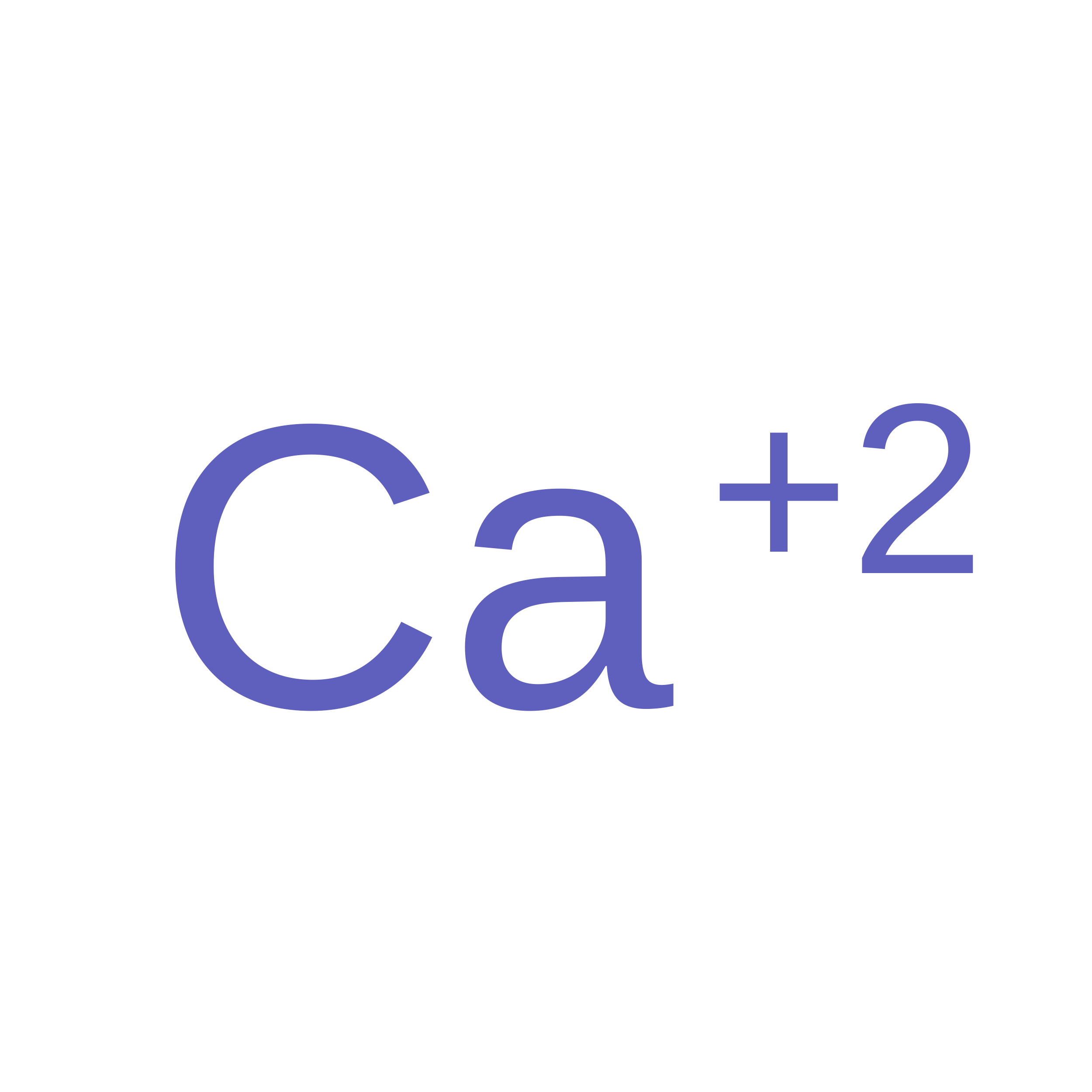
CA

Query on CA


Download:Ideal Coordinates CCD File
E [auth A],
F [auth A],
I [auth E],
J [auth E]
CALCIUM ION
Ca
BHPQYMZQTOCNFJ-UHFFFAOYSA-N

Experimental Data & Validation

Experimental Data

  • Method: X-RAY DIFFRACTION
  • Resolution: 1.80 Å
  • R-Value Free:  0.215 (Depositor), 0.220 (DCC) 
  • R-Value Work:  0.180 (Depositor) 
  • R-Value Observed: 0.182 (Depositor) 
Space Group: P 1 21 1
Unit Cell:
Length ( Å )Angle ( ˚ )
a = 48.353α = 90
b = 69.86β = 115.774
c = 51.584γ = 90
Software Package:
Software NamePurpose
PHENIXrefinement
XDSdata reduction
Aimlessdata scaling
MOLREPphasing

Structure Validation

View Full Validation Report


Ligand Structure Quality Assessment 


Entry History 

& Funding Information

Deposition Data


Funding OrganizationLocationGrant Number
Japan Society for the Promotion of Science (JSPS)Japan--

Revision History  (Full details and data files)

  • Version 1.0: 2025-04-02
    Type: Initial release