Download Mendeley
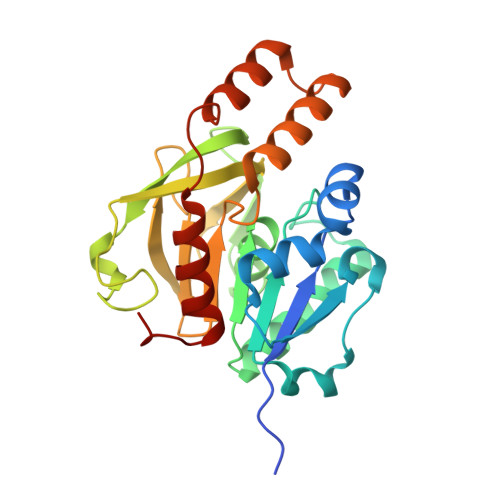
Crystal structure of plant gamma-glutamyl peptidase 1: implications for sulfur metabolism and secondary metabolite biosynthesis.
Sone, K., Ito, T., Sawada, H., Yamada, C., Kashima, T., Miyanaga, A., Ohkama-Ohtsu, N., Fushinobu, S.(2026) FEBS J 293: 1400-1414
- PubMed: 41176694 Search on PubMedSearch on PubMed Central
- DOI: https://doi.org/10.1111/febs.70316
- Primary Citation Related Structures:
9K7I, 9K7J, 9K7K, 9K7L - PubMed Abstract:
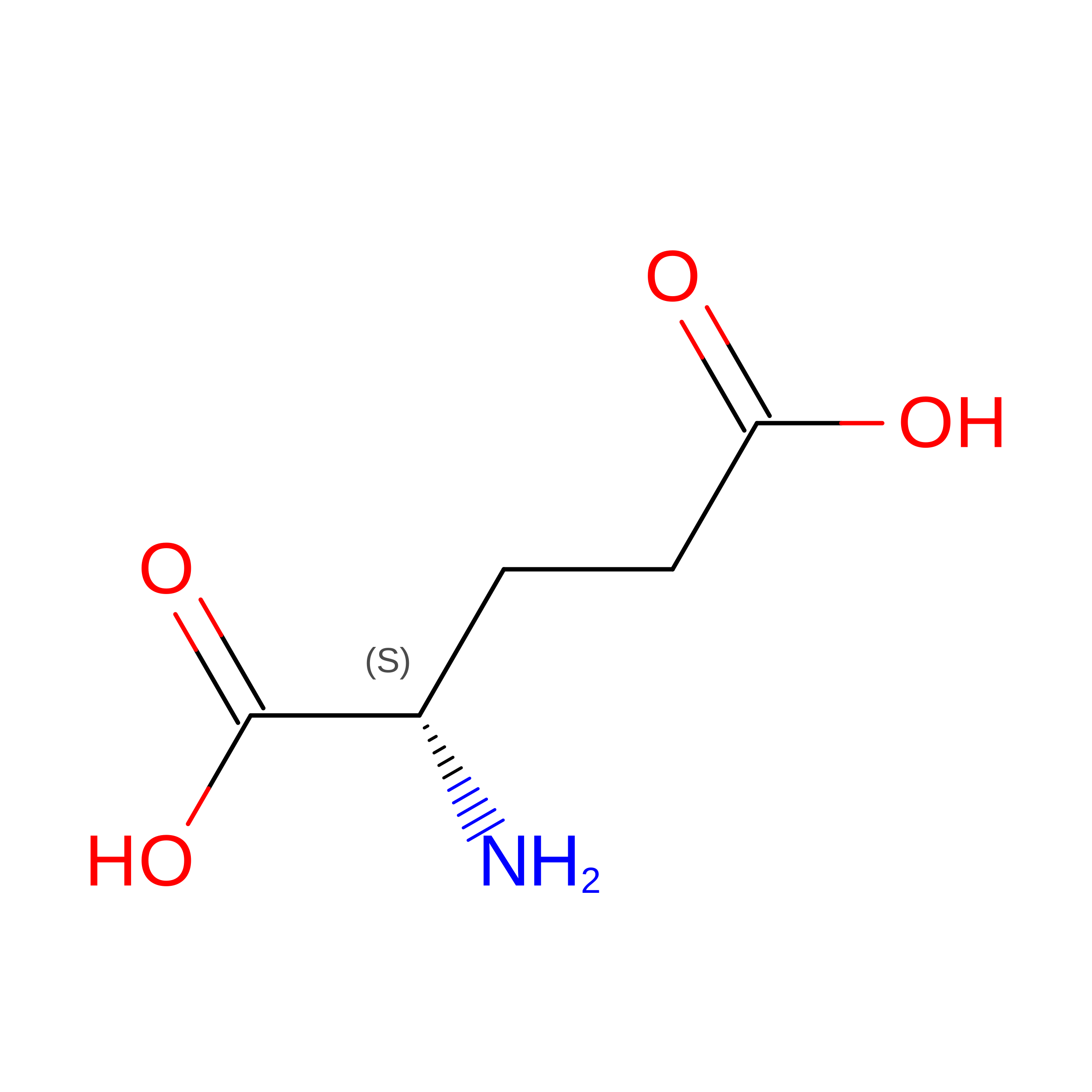
Gamma-glutamyl peptidase 1 (GGP1) plays a dual role in primary and secondary sulfur metabolism in Arabidopsis thaliana. During glutathione (GSH) turnover, GGP1 hydrolyzes the isopeptide bond of GSH to degrade the tripeptide into glutamate and cysteinylglycine. During glucosinolate and camalexin biosynthesis, GGP1 processes GSH conjugates by hydrolyzing the same isopeptide bond of γ-glutamate. In the present study, we determined the crystal structures of the following GGP1 forms: ligand-free, glutamate complex, covalent γ-glutamate intermediate, and disulfide-linked S-S inactive forms. The intermediate structure, in which γ-Glu is covalently linked to the catalytic nucleophile cysteine (C100), was trapped by mutating the catalytic histidine to asparagine (H192N). In the glutamate complex and γ-glutamate intermediate structures, glutamate bound to the S1 subsite is extensively recognized by several hydrogen bonds. The substrate recognition of the cysteinylglycine moiety at the S1' and S2' subsites was revealed by predicting the complex structure with a GSH conjugate. Mutational analysis indicated that R206 plays an important role in substrate binding by forming a salt bridge with glycine at the S2' subsite. An open pocket is present beyond the thiol side chain of cysteine in the S1' subsite, which contributed to the dual activity of GGP1 toward GSH and the GSH conjugates. The S-S inactive structure was obtained by soaking GGP1 crystals in cysteinylglycine, and C100 partially formed a disulfide bond with a neighboring C154 residue. The partial inactivation of GGP1 in the presence of a pro-oxidant (cysteinylglycine) has suggested its possible role in oxidative stress regulation in Arabidopsis.
- Department of Biotechnology, The University of Tokyo, Japan.
Organizational Affiliation: