Download Mendeley
Structural Insights into an Antiparallel Chair-Type G-Quadruplex From the Intron of NOP56 Oncogene.
Yan, Z., He, A., Wan, L., Gao, Q., Jiang, Y., Wang, Y., Wang, E., Li, C., Yang, Y., Li, Y., Guo, P., Han, D.(2025) Adv Sci (Weinh) 12: e2406230-e2406230
- PubMed: 40047221 Search on PubMed
- DOI: https://doi.org/10.1002/advs.202406230
- Primary Citation Related Structures:
8XGP, 9JX5 - PubMed Abstract:
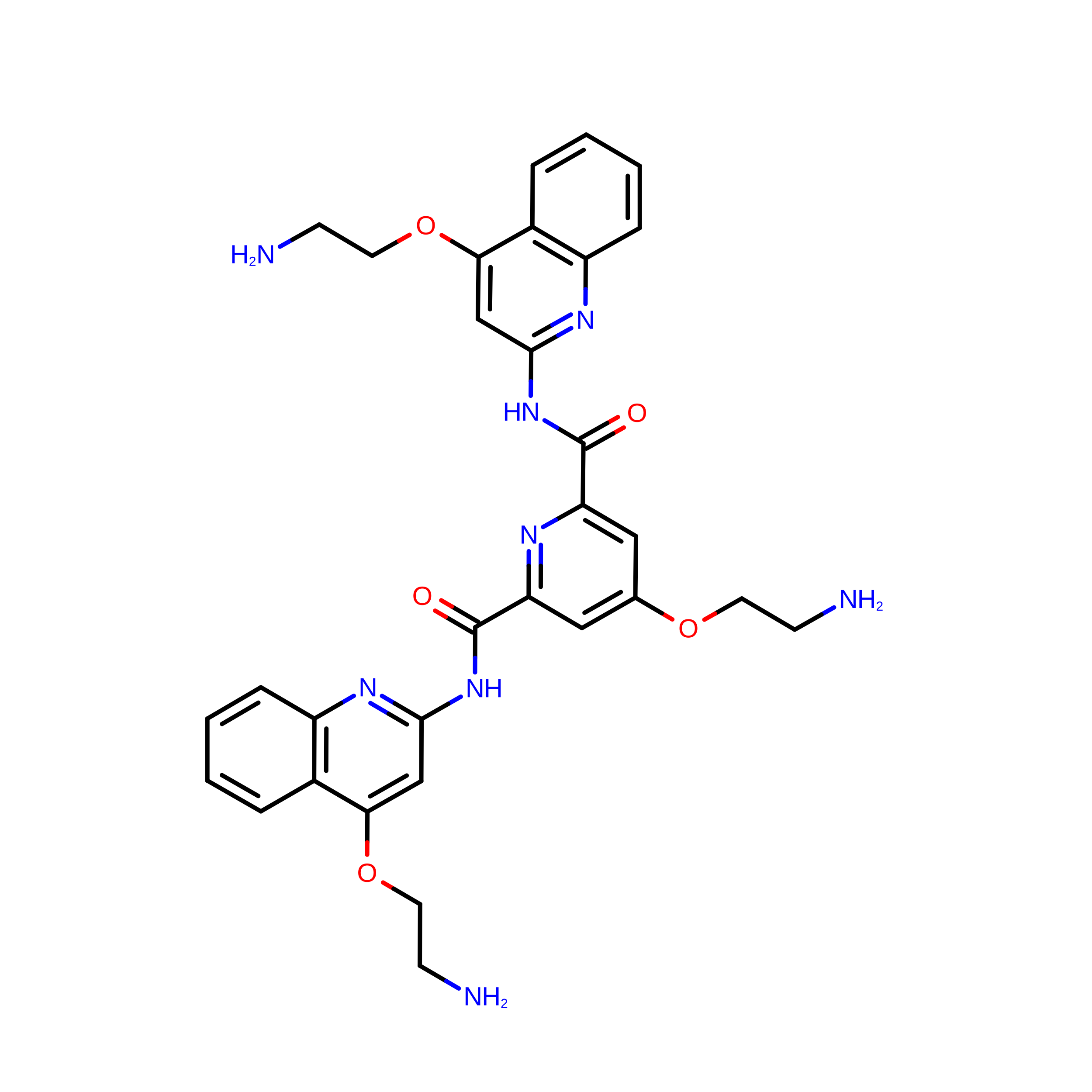
G-quadruplex (G4) structures play important roles in various biological processes, especially the gene regulation. Nucleolar protein 56 (NOP56) is an essential component in ribosome biogenesis while its overexpression associates with various types of cancers, rendering it a significant therapeutic target. Here for the first time, an antiparallel chair-type G4 structure formed by a 21-nt DNA sequence from the intron 1 of NOP56 is reported, and its high-resolution structure is determined using solution nuclear magnetic resonance spectroscopy. The NOP56-G4 has a special fold containing two G-tetrads and a C·G·C·G tetrad, which is further capped by a C∙C base pair. The G4 ligand pyridostatin (PDS) binds at the terminal G-tetrad through π-π stacking and electrostatic interactions, increasing the melting temperature of NOP56-G4 by ≈14 °C. This study further shows that PDS can significantly reduce NOP56 mRNA levels in three cancer cell lines. This work provides an unprecedented high-resolution structural basis for a special G4 structure from the intron of NOP56 and suggests a feasibility of targeting intronic G4 for gene regulation, propelling new avenues for G4 structure-based drug design and therapeutic strategy.
- Zhejiang Cancer Hospital, Hangzhou Institute of Medicine (HIM), Chinese Academy of Sciences, Hangzhou, Zhejiang, 310022, China.
Organizational Affiliation: