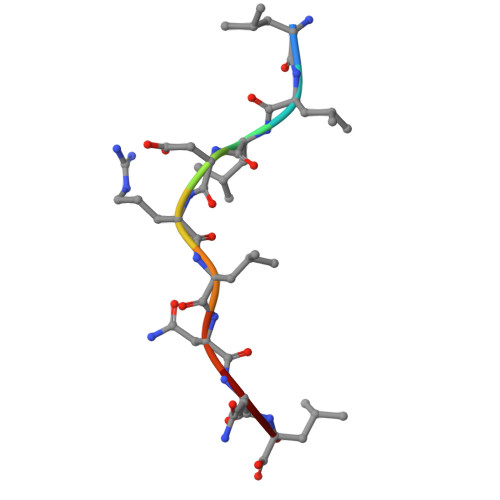
9J4U | pdb_00009j4u

Structural basis for recognition of SARS-CoV-2 conserved nucleocapside epitopes by dominant T cell receptors


Experimental Data Snapshot

  • Method: X-RAY DIFFRACTION
  • Resolution: 2.17 Å
  • R-Value Free: 
    0.239 (Depositor), 0.238 (DCC) 
  • R-Value Work: 
    0.193 (Depositor), 0.193 (DCC) 
  • R-Value Observed: 
    0.195 (Depositor) 

Starting Models: experimental
View more details

wwPDB Validation   3D Report Full Report


This is version 1.1 of the entry. See complete history


Literature

Structural insights into clonal restriction and diversity in T cell recognition of two immunodominant SARS-CoV-2 nucleocapsid epitopes.

Yuan, P.Chen, G.Li, Y.Liu, X.Saravanakumar, S.Zhao, J.Ji, Q.Wang, H.Lin, Y.W.Elbahnasawy, M.Weng, N.P.Pierce, B.G.Mariuzza, R.A.Wu, D.

(2025) Nat Commun 16: 11457-11457

  • DOI: https://doi.org/10.1038/s41467-025-66322-6
  • Primary Citation of Related Structures:  
    9J4T, 9J4U, 9J4V, 9WBD

  • PubMed Abstract: 

    T cells play a crucial role in clearing SARS-CoV-2 and in forming long-term memory responses to that coronavirus. The highly immunogenic nucleocapsid (N) protein of SARS-CoV-2 is much more conserved than the spike (S) protein across variants of concern, making it an attractive vaccine target for activating cytotoxic CD8 + T cells. Of particular interest are the immunodominant N epitopes LLL and SPR. Whereas LLL elicits a clonally restricted T cell response, the response to SPR is highly diverse. To understand the basis for this difference, here we determine structures of T cell receptors (TCRs) bound to LLL-HLA-A2 and SPR-HLA-B7, revealing the structural underpinnings of highly restricted Vα gene usage by LLL-specific TCRs, as well as multiple structural solutions to recognizing SPR and thereby generating a clonally diverse T cell response to that epitope. These structures also provide frameworks for understanding T cell recognition of SARS-CoV-2 variants and other coronaviruses. Finally, we compare the X-ray structures of TCR-LLL-HLA-A2 and TCR-SPR-HLA-B7 complexes with models predicted by multiple versions of AlphaFold, highlighting some success while showing room for improvement. Overall, our findings expand understanding of coronavirus T cell recognition, informing vaccine design and advances in computational modeling approaches.


  • Organizational Affiliation
    • Department of Hepatopancreatobiliary Surgery, The First Affiliated Hospital, Hengyang Medical School, University of South China, Hengyang, Hunan, China.

Macromolecules
Find similar proteins by:  (by identity cutoff)  |  3D Structure
Entity ID: 1
MoleculeChains Sequence LengthOrganismDetailsImage
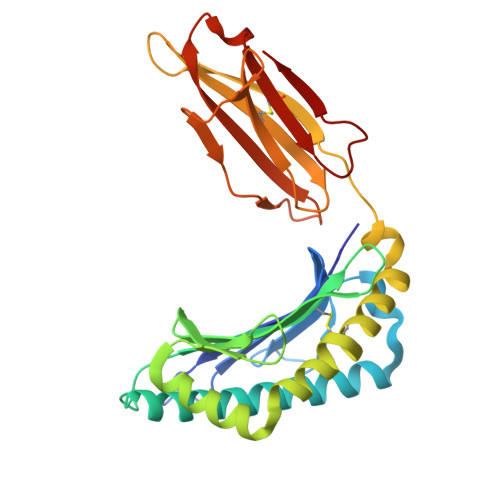
MHC class I antigen276Homo sapiensMutation(s): 0 
Gene Names: HLA-A
UniProt
Find proteins for Q8WLS4 (Homo sapiens)
Explore Q8WLS4 
Go to UniProtKB:  Q8WLS4
Entity Groups  
Sequence Clusters30% Identity50% Identity70% Identity90% Identity95% Identity100% Identity
UniProt GroupQ8WLS4
Sequence Annotations
Expand
  • Reference Sequence
Find similar proteins by:  (by identity cutoff)  |  3D Structure
Entity ID: 2
MoleculeChains Sequence LengthOrganismDetailsImage
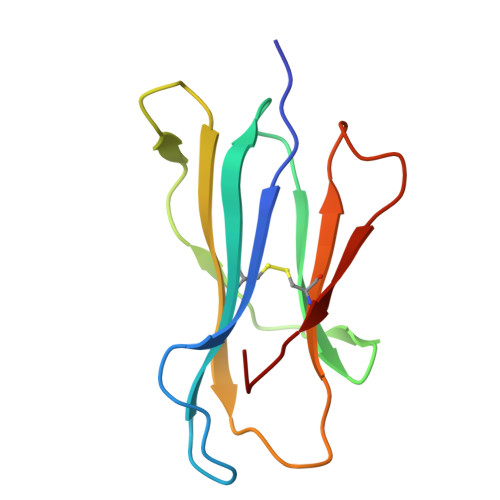
Beta-2-microglobulin100Homo sapiensMutation(s): 0 
Gene Names: B2MCDABP0092HDCMA22P
UniProt & NIH Common Fund Data Resources
Find proteins for P61769 (Homo sapiens)
Explore P61769 
Go to UniProtKB:  P61769
PHAROS:  P61769
GTEx:  ENSG00000166710 
Entity Groups  
Sequence Clusters30% Identity50% Identity70% Identity90% Identity95% Identity100% Identity
UniProt GroupP61769
Sequence Annotations
Expand
  • Reference Sequence
Find similar proteins by:  (by identity cutoff)  |  3D Structure
Entity ID: 3
MoleculeChains Sequence LengthOrganismDetailsImage
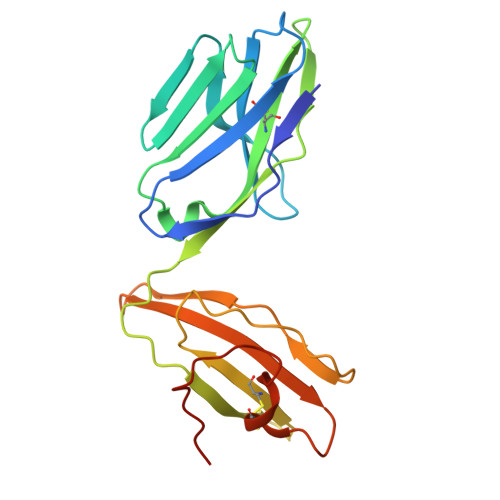
LLL epitope specific TCR APHLAC [auth D]204Homo sapiensMutation(s): 0 
Entity Groups  
Sequence Clusters30% Identity50% Identity70% Identity90% Identity95% Identity100% Identity
Sequence Annotations
Expand
  • Reference Sequence
Find similar proteins by:  (by identity cutoff)  |  3D Structure
Entity ID: 4
MoleculeChains Sequence LengthOrganismDetailsImage
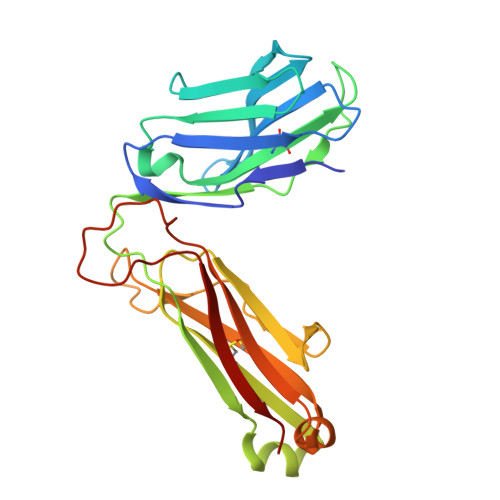
LLL epitope specific TCR BETAD [auth E]244Homo sapiensMutation(s): 0 
Entity Groups  
Sequence Clusters30% Identity50% Identity70% Identity90% Identity95% Identity100% Identity
Sequence Annotations
Expand
  • Reference Sequence

Find similar proteins by:  Sequence   |   3D Structure  

Entity ID: 5
MoleculeChains Sequence LengthOrganismDetailsImage
NucleoproteinE [auth C]9Severe acute respiratory syndrome coronavirus 2Mutation(s): 0 
UniProt
Find proteins for P0DTC9 (Severe acute respiratory syndrome coronavirus 2)
Explore P0DTC9 
Go to UniProtKB:  P0DTC9
Entity Groups  
UniProt GroupP0DTC9
Sequence Annotations
Expand
  • Reference Sequence
Experimental Data & Validation

Experimental Data

  • Method: X-RAY DIFFRACTION
  • Resolution: 2.17 Å
  • R-Value Free:  0.239 (Depositor), 0.238 (DCC) 
  • R-Value Work:  0.193 (Depositor), 0.193 (DCC) 
  • R-Value Observed: 0.195 (Depositor) 
Space Group: P 1 21 1
Unit Cell:
Length ( Å )Angle ( ˚ )
a = 54.757α = 90
b = 148.273β = 109.15
c = 64.21γ = 90
Software Package:
Software NamePurpose
PHENIXrefinement
XDSdata reduction
XDSdata scaling
REFMACphasing

Structure Validation

View Full Validation Report


Entry History & Funding Information

Deposition Data


Funding OrganizationLocationGrant Number
National Natural Science Foundation of China (NSFC)China32270995
National Natural Science Foundation of China (NSFC)China32100985

Revision History  (Full details and data files)

  • Version 1.0: 2025-08-13
    Type: Initial release
  • Version 1.1: 2026-01-07
    Changes: Database references