Download Mendeley
Dietary isothiocyanates inhibit the oxidative activity of salivary aldehyde dehydrogenase ALDH3A1 and modulate aroma release.
Boichot, V., Chaloyard, J., Gourrat, K., Moreno, J., Saliou, J.M., Heydel, J.M., Canon, F., Neiers, F., Schwartz, M.(2026) Food Chem 508: 148324-148324
- PubMed: 41672019 Search on PubMed
- DOI: https://doi.org/10.1016/j.foodchem.2026.148324
- Primary Citation Related Structures:
9IG2 - PubMed Abstract:
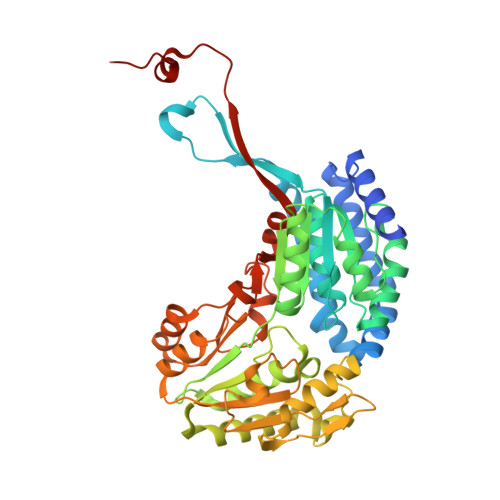
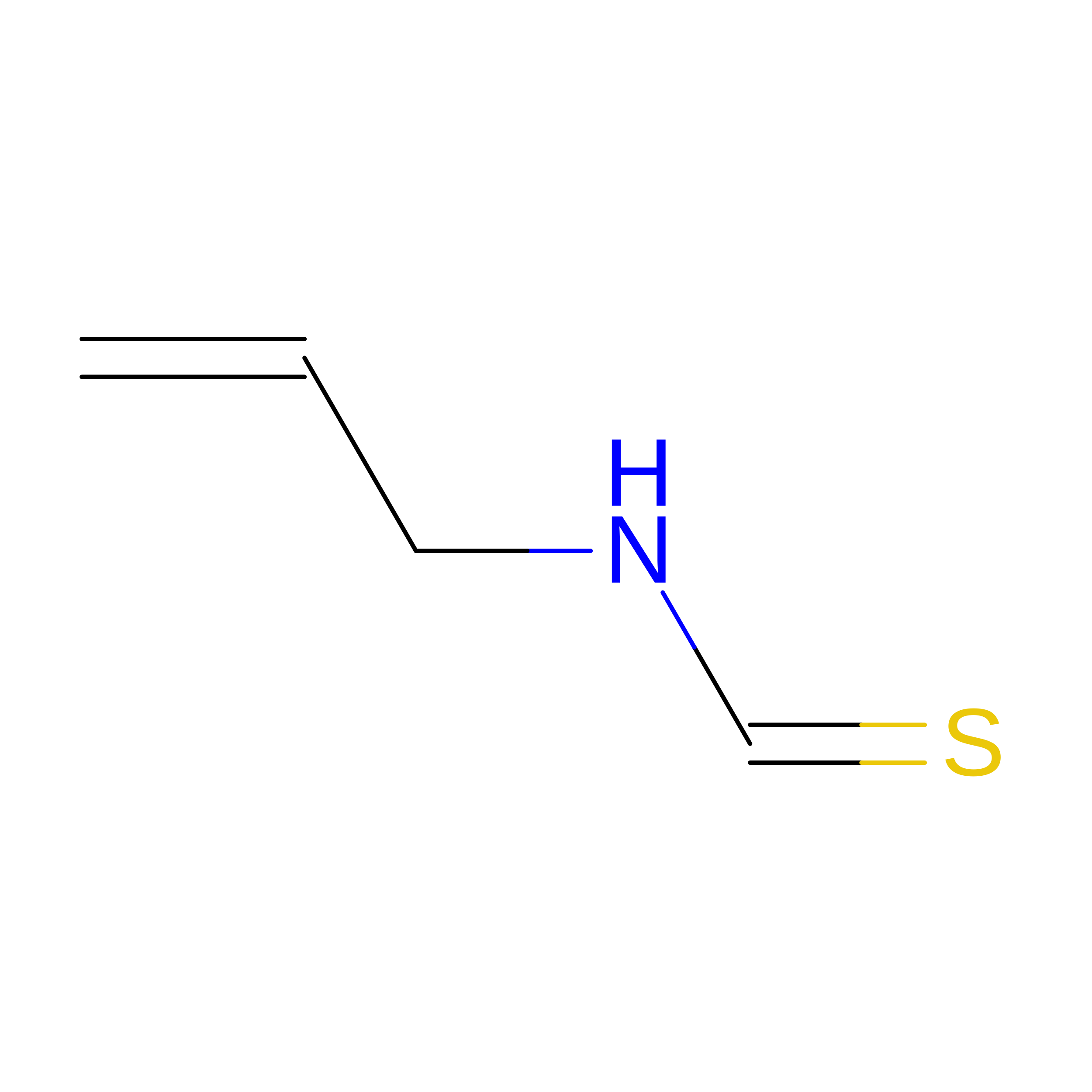
This study investigates the inhibitory effects of dietary isothiocyanates (ITCs) on the enzymatic activity of salivary aldehyde dehydrogenase ALDH3A1, a key enzyme involved in the metabolism of odorant aldehydes and abundantly expressed in the oronasal sphere. Using a combination of enzymology, X-ray crystallography and mass spectrometry, we demonstrate that ITCs significantly inhibit ALDH3A1 activity both in vitro and ex vivo in saliva. Our findings reveal that allyl-isothiocyanate forms a covalent adduct with the ALDH3A1 catalytic cysteine residue (Cys243) leading to an irreversible inhibition. This inhibition disrupts the metabolic conversion of aldehydes in saliva, thereby impacting aroma release. GC-MS analysis confirmed that ITC-mediated inhibition of salivary ALDH activity modulates the concentration of odorant metabolites in both liquid and gas phases. These results highlight the significant influence of dietary ITCs on salivary enzymatic activity and potential implications for aroma release and flavor modulation in the oral cavity.
- Université Bourgogne Europe, INRAE, Institut Agro, CNRS, UMR CSGA, F-21000 Dijon, France.
Organizational Affiliation: