Download Mendeley
Structural basis of microtubule-mediated signal transduction.
Choi, S.R., Blum, T.B., Giono, M., Roy, B., Vakonakis, I., Schmid, D., Oelgarth, N., Ranganathan, A., Gossert, A.D., Shivashankar, G.V., Zippelius, A., Steinmetz, M.O.(2026) Cell 189: 461
- PubMed: 41365297 Search on PubMed
- DOI: https://doi.org/10.1016/j.cell.2025.11.011
- Primary Citation Related Structures:
9H1O, 9H75 - PubMed Abstract:
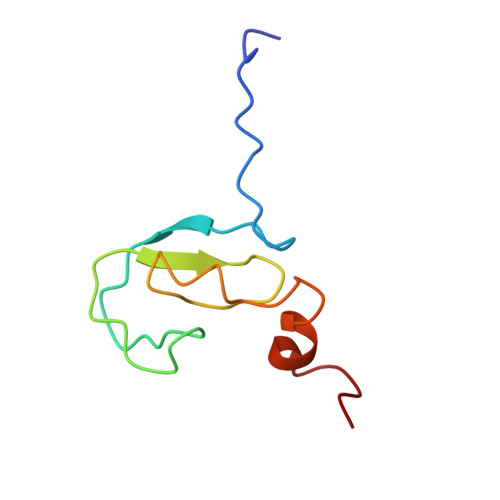
Microtubules have long been recognized as upstream mediators of intracellular signaling, but the mechanisms underlying this fundamental function remain elusive. Here, we identify the structural basis by which microtubules regulate the guanine nucleotide exchange factor H1 (GEFH1), a key activator of the Ras homolog family member A (RhoA) pathway. We show that specific features of the microtubule lattice bind the C1 domain of GEFH1, leading to the sequestration and inactivation of this signaling protein. Targeted mutations in C1 residues disrupt this interaction, triggering GEFH1 release and activation of RhoA-dependent immune responses. Building on this sequestration-and-release mechanism, we identify microtubule-binding C1 domains in additional signaling proteins, including other guanine nucleotide exchange factors (GEFs), kinases, a GTPase-activating protein (GAP), and a tumor suppressor, and show that microtubule-mediated regulation via C1 domains is conserved in the Ras association domain-containing protein 1A (RASSF1A). Our findings establish a structural framework for understanding how microtubules can function as spatiotemporal signal sensors, integrating and processing diverse signaling pathways to control important cellular processes.
- PSI Center for Life Sciences, 5232 Villigen PSI, Switzerland. Electronic address: sung-ryul.choi@psi.ch.
Organizational Affiliation: