Funding Organization(s): National Institutes of Health/National Institute of General Medical Sciences (NIH/NIGMS), Department of Energy (DOE, United States)
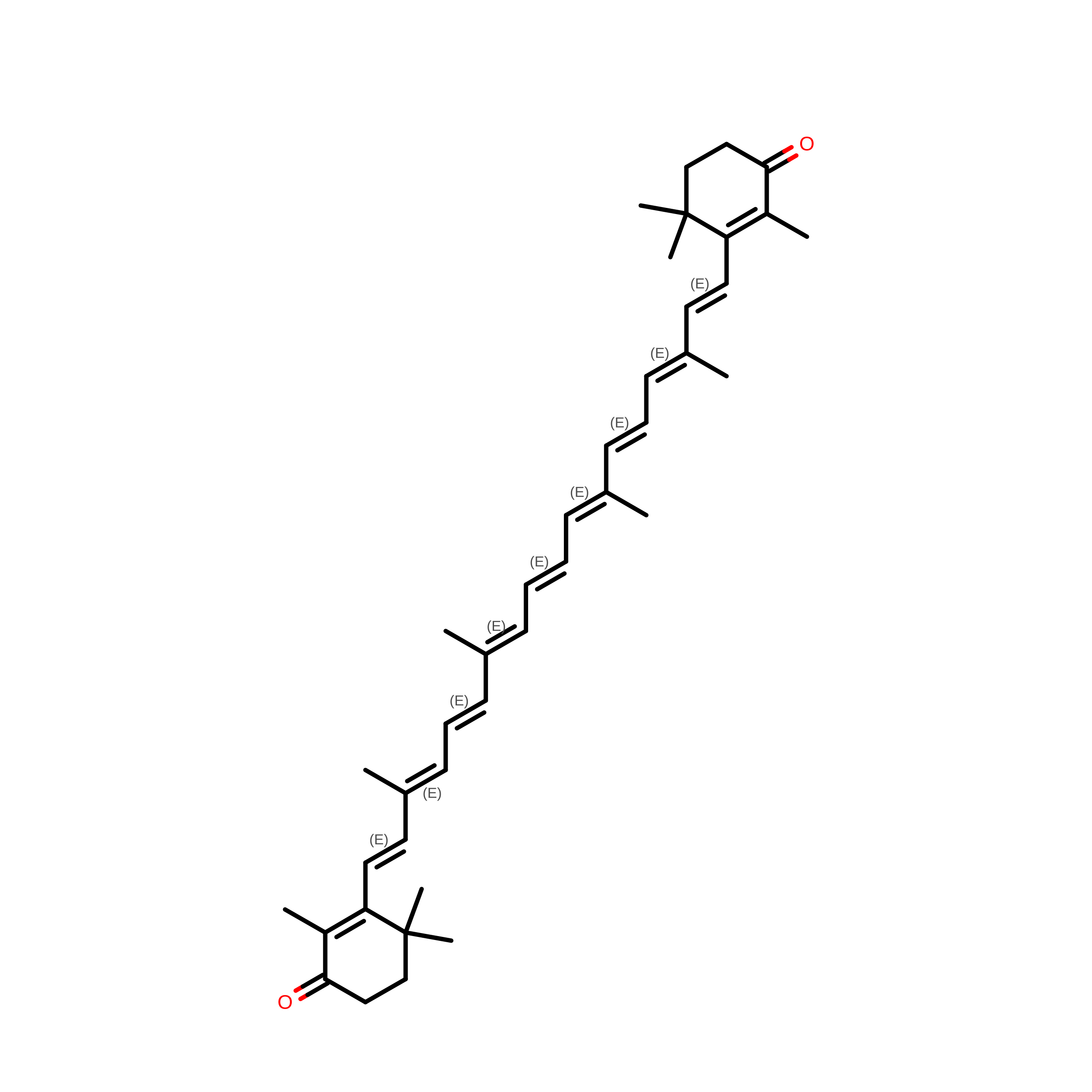
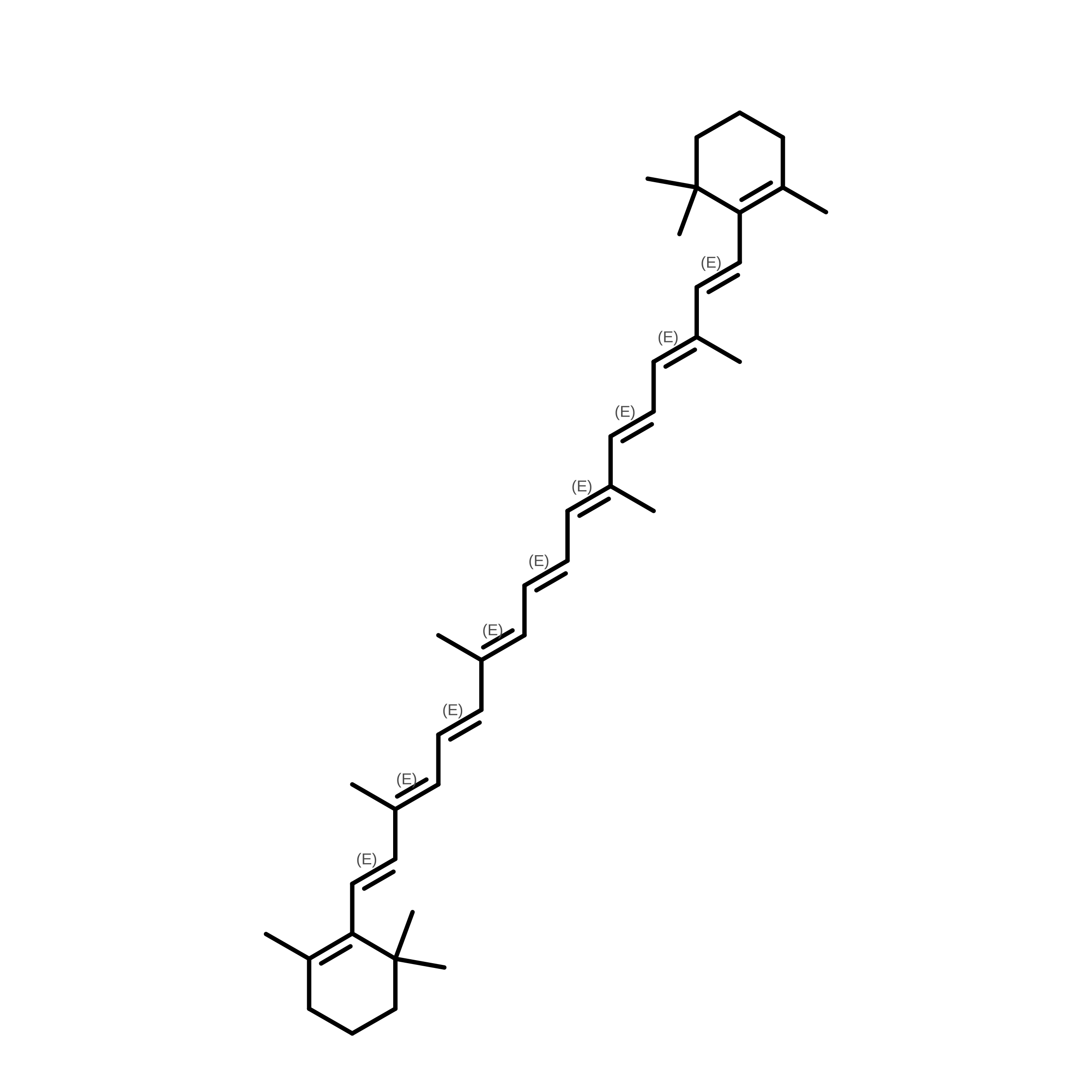
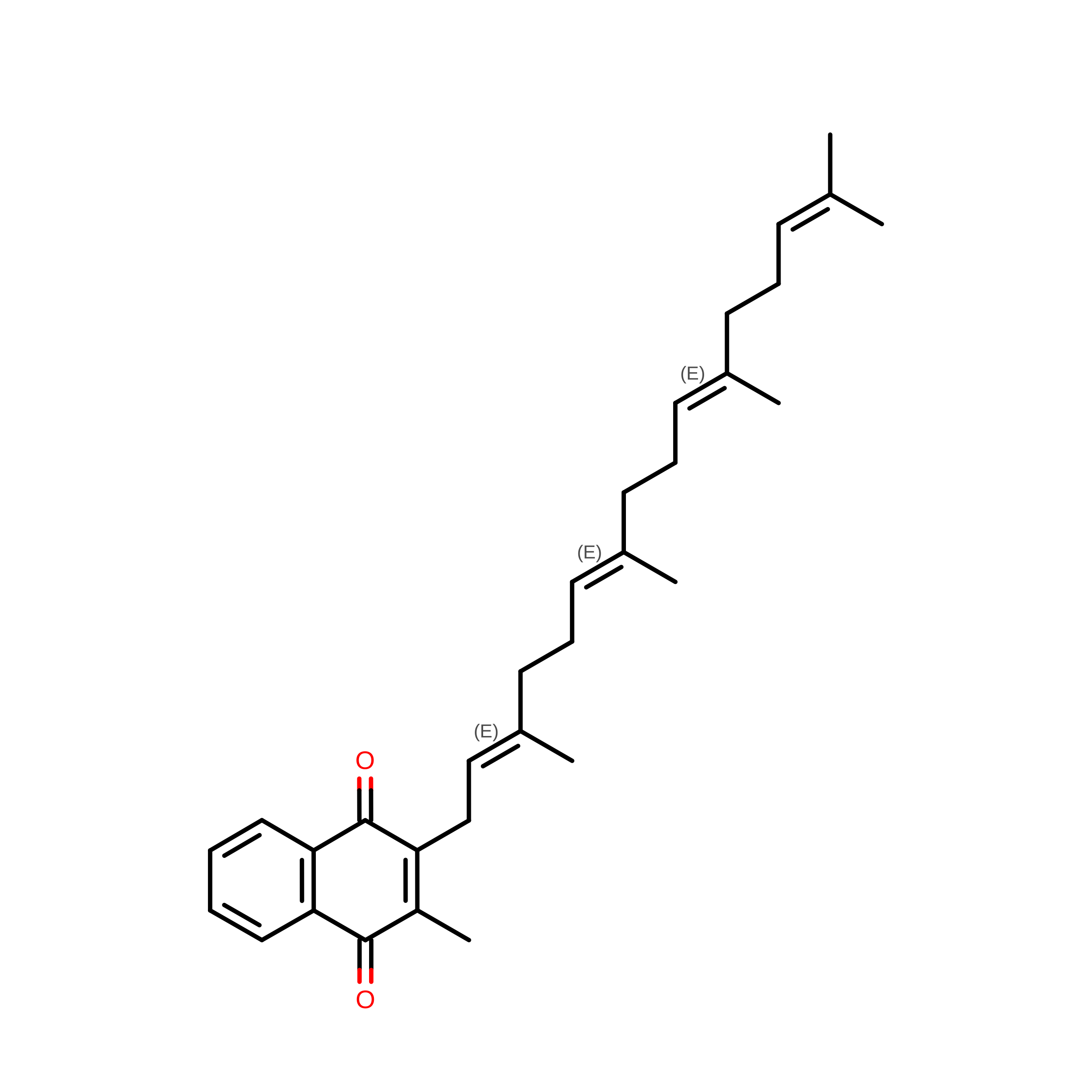
Thylakoid-free cyanobacteria are thought to preserve ancestral traits of early-evolving organisms capable of oxygenic photosynthesis. However, and until recently, photosynthesis studies in thylakoid-free cyanobacteria were only possible in the model strain Gloeobacter violaceus , limiting our understanding of photosynthesis evolution. Here, we report the isolation, biochemical characterization, cryo-EM structure, and phylogenetic analysis of photosystem I (PSI) from a recently discovered thylakoid-free cyanobacterium, Anthocerotibacter panamensis , a distant relative of the genus Gloeobacter . We find that A. panamensis PSI exhibits a distinct carotenoid composition and has one conserved low-energy chlorophyll site, which was lost in G. violaceus . Furthermore, PSI in thylakoid-free cyanobacteria has changed at the sequence level to a degree comparable to that of other strains, yet its subunit composition and oligomeric form might be identical to that of the most recent common ancestor of cyanobacteria. This study therefore provides a glimpse into the ancient evolution of photosynthesis.
Organizational Affiliation:
Department of Life Science, National Taiwan University, Taipei 10617, Taiwan (Republic of China).
Department of Chemistry, Yale University, New Haven, CT 06511.
Department of Biochemistry, University of Wisconsin, Madison, WI 53706.
School of Biological and Behavioural Sciences, Queen Mary University of London, London E1 4NS, United Kingdom.
Department of Molecular Biophysics and Biochemistry, Yale University, New Haven, CT 06511.
Institute of Plant Biology, National Taiwan University, Taipei 10617, Taiwan (Republic of China).








 Download Mendeley