9DYS | pdb_00009dys

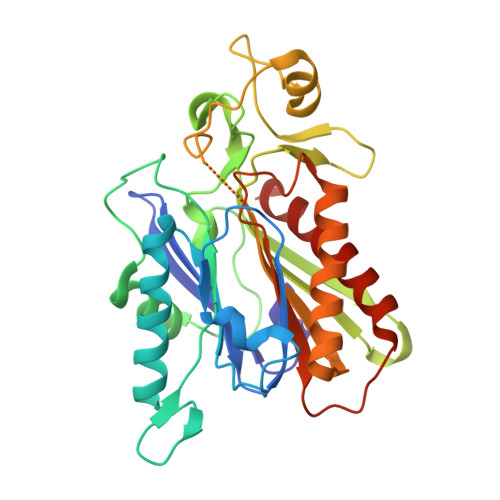
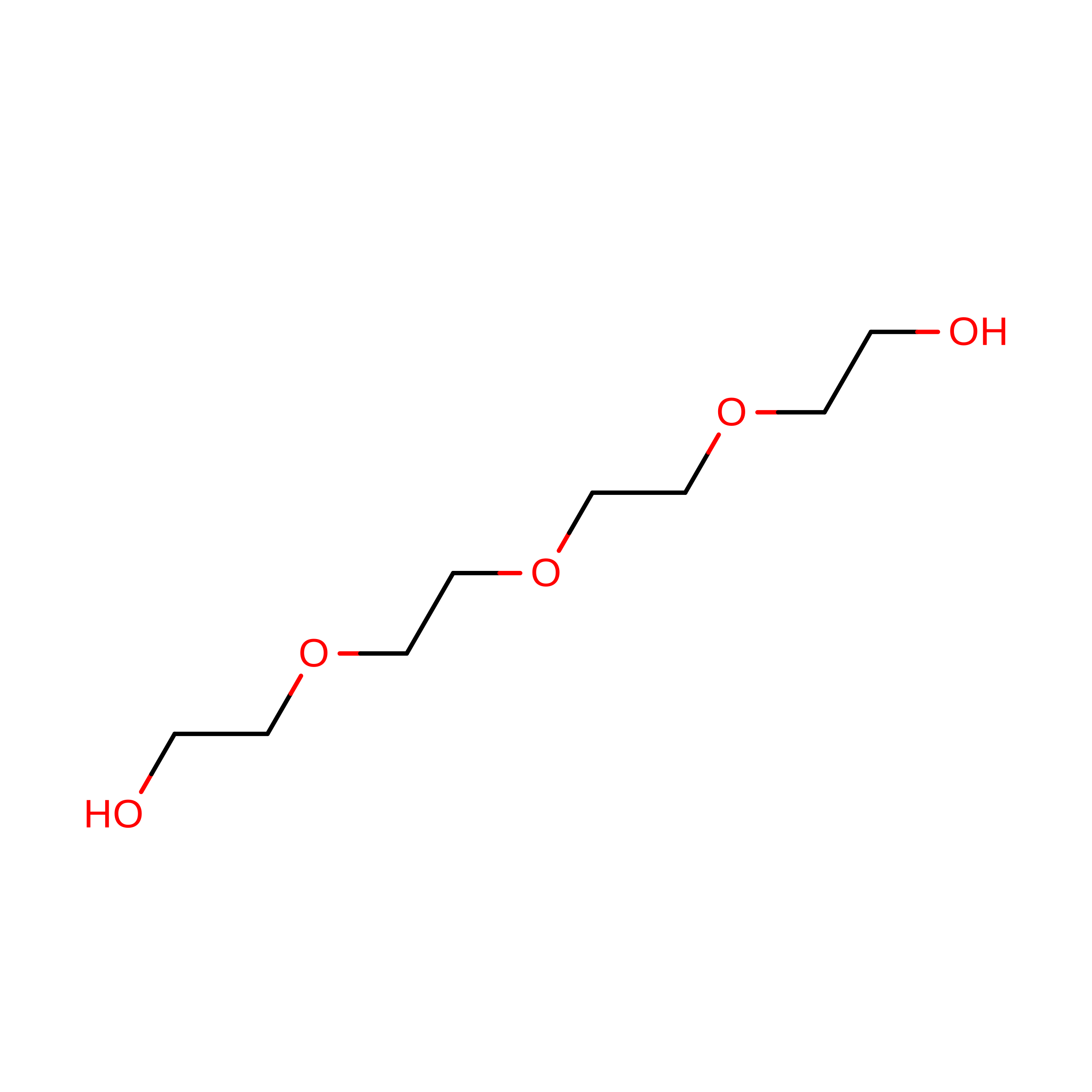
X-ray Crystallographic Structure of the Poly(Hexamethylene Adipamide) (Nylon66) Hydrolase Nyl50 at Room Temperature bound to tetraethylene glycol


Experimental Data Snapshot

  • Method: X-RAY DIFFRACTION
  • Resolution: 1.85 Å
  • R-Value Free: 
    0.172 (Depositor), 0.180 (DCC) 
  • R-Value Work: 
    0.151 (Depositor), 0.158 (DCC) 
  • R-Value Observed: 
    0.152 (Depositor) 

Starting Model: experimental
View more details

wwPDB Validation 3D Report Full Report

Validation slider image for 9DYS

This is version 1.0 of the entry. See complete history

Literature

Identification and characterization of substrate- and product-selective nylon hydrolases.

Drufva, E.E.Cahill, J.F.Saint-Vincent, P.M.B.Williams, A.N.Bocharova, V.Capra, N.Meilleur, F.Carper, D.L.Bourgery, C.Miyazaki, K.Yonemura, M.Shiraishi, Y.Parks, J.M.Zhou, M.Dishner, I.T.Foster, J.C.Koehler, S.J.Valentino, H.R.Sedova, A.Kertesz, V.Vasileva, D.P.Hochanadel, L.H.Figg, C.A.Negoro, S.Kato, D.I.Chen, S.H.Michener, J.K.

(2024) bioRxiv 

  • DOI: https://doi.org/10.1101/2024.11.14.623603
  • Primary Citation Related Structures: 
    9CXR, 9DYS

  • PubMed Abstract: 

    Enzymes have evolved to rapidly and selectively hydrolyze diverse natural and anthropogenic polymers, but only a limited group of related enzymes have been shown to hydrolyze synthetic polyamides. In this work, we synthesized and characterized a panel of 95 diverse enzymes from the N-terminal nucleophile hydrolase superfamily with 30-50% pairwise amino acid identity. We found that nearly 40% of the enzymes had substantial nylon hydrolase activity, in many cases comparable to that of the best-characterized nylon hydrolase, NylC. There was no relationship between phylogeny and activity, nor any evidence of prior selection for nylon hydrolase activity. Several newly-identified hydrolases showed significant substrate selectivity, generating up to 20-fold higher product titers with Nylon 6,6 versus Nylon 6. Finally, we determined the crystal structure and oligomerization state of a Nylon 6,6-selective hydrolase to elucidate structural factors that could affect activity and selectivity. These new enzymes provide insights into the widespread potential for nylon hydrolase evolution and opportunities for analysis and engineering of improved hydrolases.


  • Organizational Affiliation
    • Biosciences Division, Oak Ridge National Laboratory, Oak Ridge, TN, USA 37830.

Macromolecule Content 

  • Total Structure Weight: 63.12 kDa 
  • Atom Count: 4,609 
  • Modeled Residue Count: 605 
  • Deposited Residue Count: 610 
  • Unique protein chains: 1

Macromolecules

Find similar proteins by:|  3D Structure
Entity ID: 1
MoleculeChains  Sequence LengthOrganismDetailsImage
Poly(hexamethylene adipamide) hydrolase
A, B
305Alphaproteobacteria bacteriumMutation(s): 0 
Gene Names: EPN97_01225
UniProt
Find proteins for A0ACD6BAK9 (Alphaproteobacteria bacterium)
Explore A0ACD6BAK9 
Go to UniProtKB:  A0ACD6BAK9
Entity Groups
Sequence Clusters30% Identity50% Identity70% Identity90% Identity95% Identity100% Identity
UniProt GroupA0ACD6BAK9
Sequence Annotations
Expand
Reference Sequence

Experimental Data & Validation

Experimental Data

  • Method: X-RAY DIFFRACTION
  • Resolution: 1.85 Å
  • R-Value Free:  0.172 (Depositor), 0.180 (DCC) 
  • R-Value Work:  0.151 (Depositor), 0.158 (DCC) 
  • R-Value Observed: 0.152 (Depositor) 
Space Group: P 2 21 21
Unit Cell:
Length ( Å )Angle ( ˚ )
a = 53.879α = 90
b = 96.511β = 90
c = 105.188γ = 90
Software Package:
Software NamePurpose
REFMACrefinement
Aimlessdata scaling
CrysalisProdata reduction

Structure Validation

View Full Validation Report


Entry History 

& Funding Information

Deposition Data


Funding OrganizationLocationGrant Number
Department of Energy (DOE, United States)United StatesDE-AC05-00OR22725

Revision History  (Full details and data files)

  • Version 1.0: 2025-01-29
    Type: Initial release