Download Mendeley
Structure-Based Design of Reversible, Quinoline-2(1 H )‐one Inhibitors of Serine- and Metallo-Carbapenemases.
Jacobs, L.M.C., Jaishankar, P., Zheng, J., Hantz, E.R., Lee, I., Narramneni, K., Poore, N., Torres, N., Jackson, J.K., Williams, O., Darch, S.E., Shaw, L.N., Chen, Y., Renslo, A.R.(2026) ACS Omega 11: 15316-15327
- PubMed: 41835567 Search on PubMedSearch on PubMed Central
- DOI: https://doi.org/10.1021/acsomega.5c12676
- Primary Citation Related Structures:
9D2U, 9D54, 9D5Q, 9D5R, 9D8T, 9D9N, 9DAG, 9DB7, 9DE3, 9DEW, 9DTJ, 9O2W - PubMed Abstract:
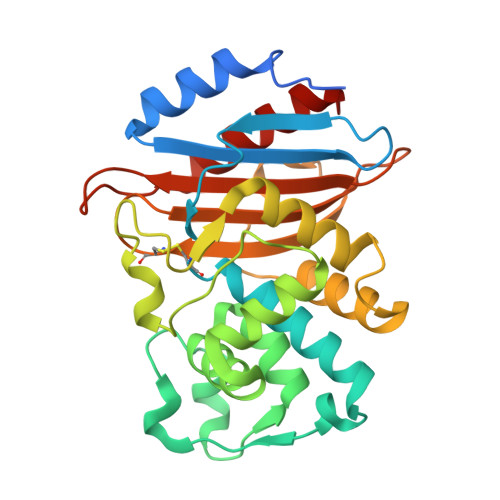
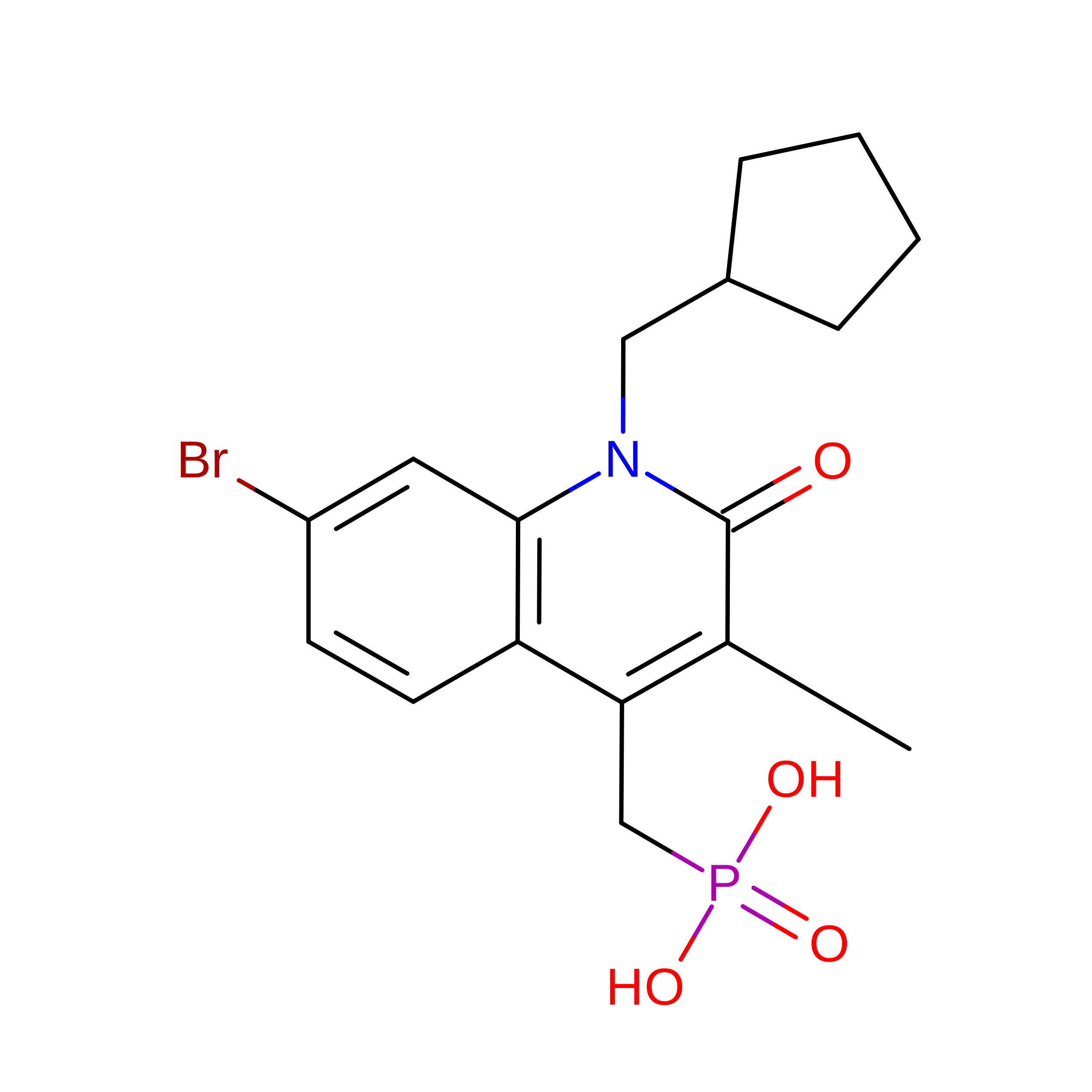
Carbapenems are essential β-lactam antibiotics whose clinical utility is now threatened by emerging carbapenemases, including the Class A serine β-lactamase KPC-2 and the Class B metallo-β-lactamase NDM-1. Here, we describe a comprehensive, structure-based assessment of active-site binding determinants for KPC-2 and NDM-1 in the context of reversible, noncovalent inhibition by a quinoline-2-(1 H )-one phosphonate scaffold. Systematic substitution of the scaffold core revealed the N1 and C7 positions as most tolerant of diverse substitution, while the less tolerant C3 and C6 positions nevertheless drive affinity and binding mode when modified with a C3-methyl or C6-fluoro substituent, respectively. We also describe biophysical and computational studies aimed at determining the pharmacological significance of the 2:1 ligand binding stoichiometry observed in several NDM-1 complex structures, concluding that only one of these binding events is relevant for potent NDM-1 inhibition. Although the current inhibitors lack significant whole-cell activity, the structural and biochemical findings described provide valuable information for the targeting of evolutionarily and mechanistically diverse carbapenemases.
- Department of Molecular Medicine, University of South Florida College of Medicine, 12901 Bruce B. Downs Boulevard, MDC 3522, Tampa, Florida 33612, United States.
Organizational Affiliation: