Download Mendeley
The effects of naturally occurring mutations on functionality of oxylipin metabolizing dehydrogenase reductase nine.
Wirth, S.E., Pakhomova, S., Belyaeva, O.V., Boeglin, W.E., Brash, A.R., Newcomer, M.E., Kedishvili, N.Y., Popov, K.M.(2025) J Biological Chem 301: 110704-110704
- PubMed: 40945732 Search on PubMedSearch on PubMed Central
- DOI: https://doi.org/10.1016/j.jbc.2025.110704
- Primary Citation Related Structures:
9B2G - PubMed Abstract:
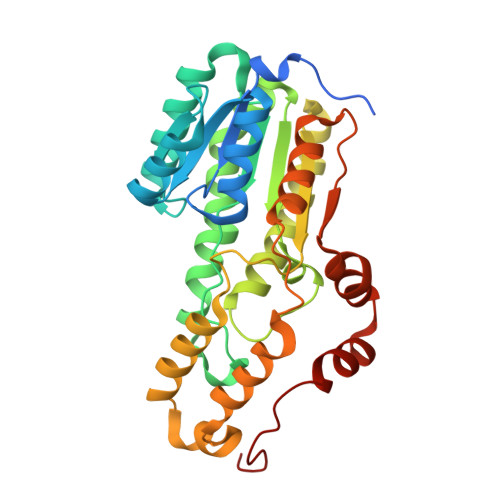
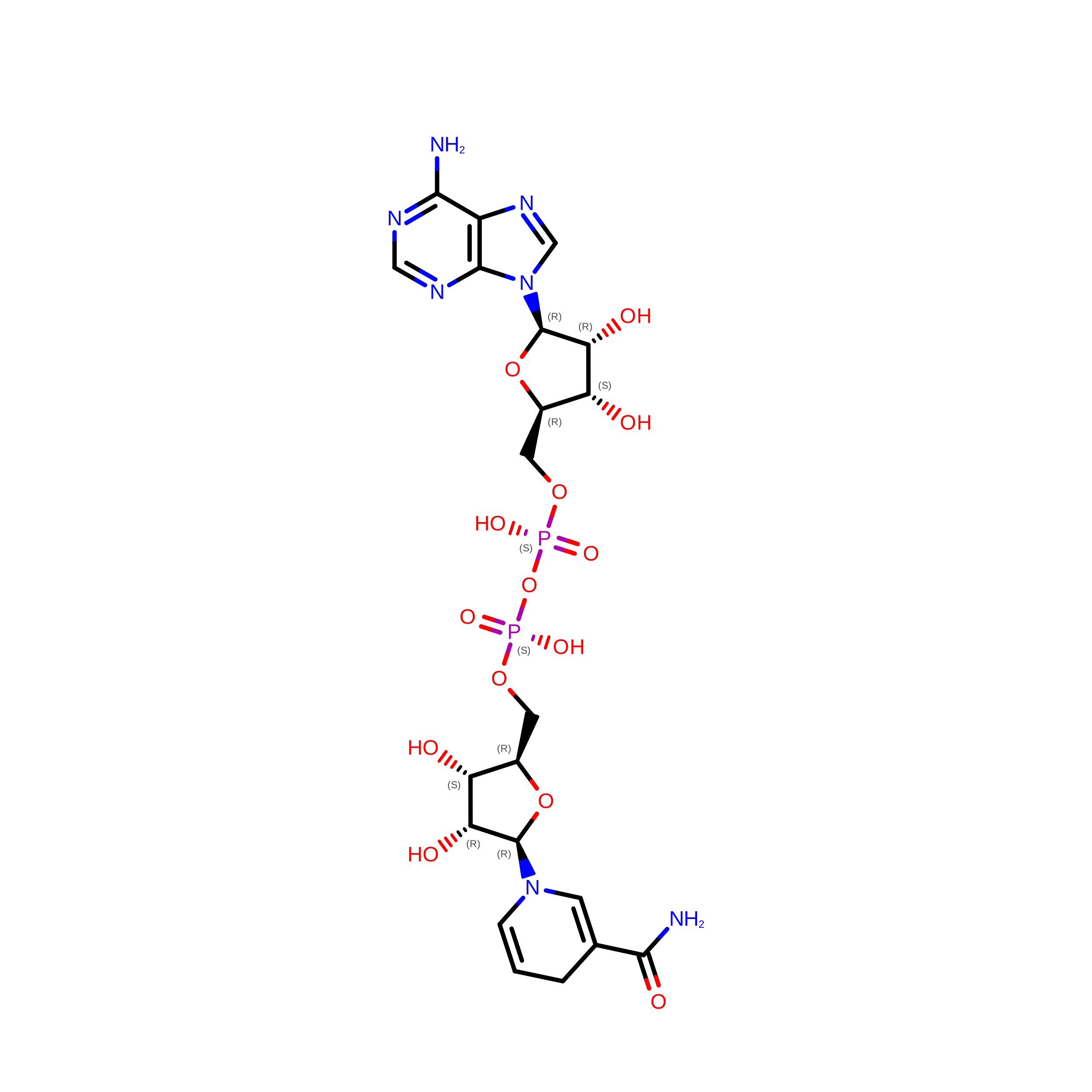
Recent evidence suggests that dehydrogenase reductase 9 (DHRS9) can oxidize and alter the biological activity of a diverse group of oxylipin substrates, underscoring the importance of DHRS9 in regulating various biological processes, including inflammation, cell proliferation, and tissue repair. Importantly, mutations in the DHRS9 gene resulting in amino acid substitutions S202L and D286H have been linked to an early-onset case of epilepsy; whether these mutations affect the function of DHRS9 has not been investigated. The results of this study demonstrate that both mutations cause a significant loss of DHRS9 functionality. However, in the case of the S202L variant, the loss of catalytic activity likely stems from the impaired protein folding and/or protein stability. On the other hand, the D286H DHRS9 mutant protein is relatively more stable than the S202L variant, but its K m value for NAD + (2.85 mM) is nearly 12-fold higher than that of the wild-type enzyme. The three-dimensional structure of DHRS9, solved in this study, provides insights into the functions of the S202 and D286 residues. In addition, it reveals a strikingly large substrate binding cavity, consistent with the fact that the enzyme can process oxygenated hydrocarbons with abundant rotational freedom and differing lengths (18-22 C). Considering that expression levels of DHRS9 in human tissues are highly sensitive to inflammatory conditions and the existence of naturally occurring mutations in DHRS9, the structural and functional characterization of DHRS9 reported in this study is critical for a better understanding of the role of DHRS9 in inflammatory processes.
- Department of Biochemistry and Molecular Genetics, University of Alabama at Birmingham, Birmingham, Alabama, USA.
Organizational Affiliation: